
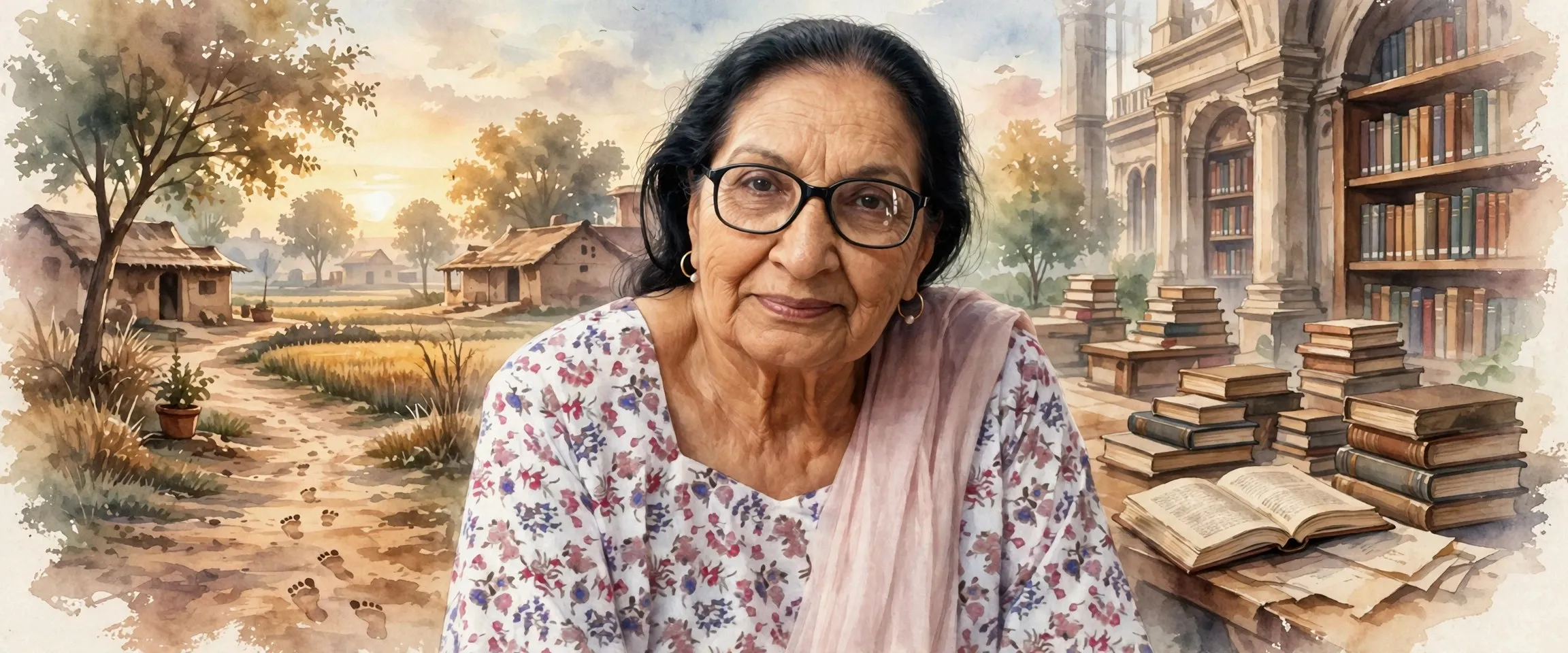
Nange Pairan Da Safar (A Journey on Bare Feet) is Dalip Kaur Tiwana's award winning autobiography, the story of her road from Rabbon village in Ludhiana district to professor and dean at Punjabi University, Patiala. It won the Gurmukh Singh Musafir Award in 1982 and appeared in English as A Journey on Bare Feet.
Punjabi, Gurmukhi, with an English translation- Punjabi name
- ਨੰਗੇ ਪੈਰਾਂ ਦਾ ਸਫ਼ਰ
- Author
- Dalip Kaur Tiwana (1935 to 2020)
- Language
- Punjabi, Gurmukhi
- Form
- Autobiography
- Title means
- A Journey on Bare Feet
- Award
- Gurmukh Singh Musafir Award, Languages Department, Punjab, 1982
All 8 facts
- English translation
- A Journey on Bare Feet, Orient Longman
- Series
- First of her three autobiographies, before Poochte Ho To Suno and Turdyaan Turdyaan
About the book
Nange Pairan Da Safar, in English A Journey on Bare Feet, is the autobiography of Dalip Kaur Tiwana, one of the foremost novelists and short story writers of contemporary Punjabi literature. In her novels, among them Eho Hamara Jeevna and Katha Kaho Urvashi, Tiwana wrote about women carrying lives that custom had made heavy. In this book she turns to the one life she knew from inside: her own, from a childhood in Rabbon village in Ludhiana district to the head of the Punjabi department at Punjabi University, Patiala.
The Punjab government's Languages Department honoured the book with the Gurmukh Singh Musafir Award in 1982. It was the first of three autobiographies Tiwana wrote, followed by Poochte Ho To Suno and Turdyaan Turdyaan, and it remains the best known: the life story of a woman who walked, as her title says, barefoot, without the cushioning that privilege is supposed to give, from a landowning village family into the front rank of Punjabi letters.
What is Nange Pairan Da Safar about?
It is about Tiwana's own journey. She was born on 4 May 1935 in Rabbon, in a well-to-do landowning family, and educated at Patiala, where her uncle, Sardar Sahib Tara Singh Sidhu, was Inspector General of Prisons. She took first class honours in her M.A. and a PhD from Panjab University, Chandigarh, then joined the newly founded Punjabi University, Patiala in 1963 as a lecturer and rose to professor, head of department and dean of the faculty of languages. The autobiography tells that road as she lived it: the studies, the writing that began with the story collection Sadhana in 1961, the novels that followed one after another, and what it cost a woman of her generation to hold a public, literary life together.
A life told in the first person
Readers of Tiwana's fiction know her ground. The Sikh Encyclopedia sums it up: she has mostly written about the mindscape of downtrodden women and their secondary position in society, women who, even when educated and economically independent, cannot assert themselves as equals for fear of what is at stake. Tragedy and irony, it says, are the main elements of her fiction, and the complex inner duality of the female psyche her chief theme. Nange Pairan Da Safar matters because in it that examination turns inward. The novelist who spent a career asking what Punjabi society does to its women asks the same question of her own life, and answers it in the first person.
Themes: the woman writer's road
The bare feet of the title are the book's argument in one image. A journey made without shoes is made without protection: every stone is felt. Tiwana's life, as the record shows it, joined two worlds that were not made to meet, the village world of Rabbon, where a daughter of a landowning family had a set path, and the university world of Patiala, where she built a career of firsts and honours. The autobiography holds the two together. It is also a document of Punjabi literary life in the second half of the twentieth century, written by a woman who stood near its centre, as Sahitya Akademi winner, professor and, later, the writer who in 2015 returned her Padma Shri in protest against growing intolerance.
The author
Dalip Kaur Tiwana was born on 4 May 1935 in Rabbon village, Ludhiana district, and died on 31 January 2020. She joined Punjabi University, Patiala in 1963 and retired as professor and dean, remaining a life fellow and writer in residence on its campus. She married the sociologist and poet Bhupinder Singh. Her second novel, Eho Hamara Jeevna, won the Sahitya Akademi Award in 1971; Katha Kaho Urvashi won the Saraswati Samman in 2001; she received the Padma Shri in 2004 and returned it on 14 October 2015. Her stories and novels have been translated into English, Hindi, Urdu and other languages, and several of her novels were telecast by Doordarshan.
Translation and recognition
The book's own honours begin with the Gurmukh Singh Musafir Award of 1982, given by the Languages Department of the Punjab government for this autobiography. In English it travels as A Journey on Bare Feet, published by Orient Longman, one of a shelf of translations that includes Such Is Her Fate, Gone Are the Rivers and The Tale of the Phoenix. For readers who cannot read Gurmukhi, it is the most direct way into the life behind some of the most read Punjabi novels of the last century.
Why does Nange Pairan Da Safar still matter?
Because Punjabi literature has many great novels by women and few full autobiographies by them, and this is the fullest of its kind from its generation: a Sahitya Akademi winning novelist accounting for her own life with the same honesty she demanded for her characters. Anyone who has read Eho Hamara Jeevna or Katha Kaho Urvashi and wondered what kind of life produced them will find the answer here, told by the woman who lived it, walking barefoot all the way.
ਕਿਤਾਬ ਬਾਰੇ
ਨੰਗੇ ਪੈਰਾਂ ਦਾ ਸਫ਼ਰ, ਅੰਗਰੇਜ਼ੀ ਵਿੱਚ ਅ ਜਰਨੀ ਆਨ ਬੇਅਰ ਫੀਟ, ਦਲੀਪ ਕੌਰ ਟਿਵਾਣਾ ਦੀ ਸਵੈ-ਜੀਵਨੀ ਹੈ, ਜੋ ਸਮਕਾਲੀ ਪੰਜਾਬੀ ਸਾਹਿਤ ਦੀਆਂ ਸਭ ਤੋਂ ਪ੍ਰਮੁੱਖ ਨਾਵਲਕਾਰਾਂ ਅਤੇ ਕਹਾਣੀਕਾਰਾਂ ਵਿੱਚੋਂ ਇੱਕ ਹਨ। ਆਪਣੇ ਨਾਵਲਾਂ, ਜਿਨ੍ਹਾਂ ਵਿੱਚ ਇਹੁ ਹਮਾਰਾ ਜੀਵਣਾ ਅਤੇ ਕਥਾ ਕਹੁ ਉਰਵਸ਼ੀ ਸ਼ਾਮਲ ਹਨ, ਵਿੱਚ ਟਿਵਾਣਾ ਨੇ ਉਨ੍ਹਾਂ ਔਰਤਾਂ ਬਾਰੇ ਲਿਖਿਆ ਜਿਨ੍ਹਾਂ ਦੀਆਂ ਜ਼ਿੰਦਗੀਆਂ ਰਸਮਾਂ ਨੇ ਭਾਰੀ ਬਣਾ ਦਿੱਤੀਆਂ ਸਨ। ਇਸ ਕਿਤਾਬ ਵਿੱਚ ਉਹ ਉਸ ਇੱਕ ਜ਼ਿੰਦਗੀ ਵੱਲ ਮੁੜਦੀ ਹੈ ਜਿਸ ਨੂੰ ਉਹ ਅੰਦਰੋਂ ਜਾਣਦੀ ਸੀ: ਆਪਣੀ, ਲੁਧਿਆਣਾ ਜ਼ਿਲ੍ਹੇ ਦੇ ਪਿੰਡ ਰੱਬੋਂ ਦੇ ਬਚਪਨ ਤੋਂ ਲੈ ਕੇ ਪੰਜਾਬੀ ਯੂਨੀਵਰਸਿਟੀ, ਪਟਿਆਲਾ ਵਿੱਚ ਪੰਜਾਬੀ ਵਿਭਾਗ ਦੀ ਮੁਖੀ ਬਣਨ ਤੱਕ।
ਪੰਜਾਬ ਸਰਕਾਰ ਦੇ ਭਾਸ਼ਾ ਵਿਭਾਗ ਨੇ 1982 ਵਿੱਚ ਇਸ ਕਿਤਾਬ ਨੂੰ ਗੁਰਮੁਖ ਸਿੰਘ ਮੁਸਾਫ਼ਿਰ ਪੁਰਸਕਾਰ ਨਾਲ ਸਨਮਾਨਿਤ ਕੀਤਾ। ਇਹ ਟਿਵਾਣਾ ਵੱਲੋਂ ਲਿਖੀਆਂ ਤਿੰਨ ਸਵੈ-ਜੀਵਨੀਆਂ ਵਿੱਚੋਂ ਪਹਿਲੀ ਸੀ, ਜਿਸ ਤੋਂ ਬਾਅਦ ਪੂਛਤੇ ਹੋ ਤੋ ਸੁਨੋ ਅਤੇ ਤੁਰਦਿਆਂ ਤੁਰਦਿਆਂ ਆਈਆਂ, ਅਤੇ ਇਹੀ ਸਭ ਤੋਂ ਵੱਧ ਜਾਣੀ ਜਾਂਦੀ ਹੈ: ਇੱਕ ਔਰਤ ਦੀ ਜੀਵਨ ਕਹਾਣੀ ਜੋ, ਜਿਵੇਂ ਉਸ ਦਾ ਸਿਰਲੇਖ ਕਹਿੰਦਾ ਹੈ, ਨੰਗੇ ਪੈਰੀਂ ਤੁਰੀ, ਬਿਨਾਂ ਉਸ ਸਹੂਲਤ ਦੇ ਜੋ ਵਿਸ਼ੇਸ਼ ਅਧਿਕਾਰ ਦੇਣੀ ਚਾਹੀਦੀ ਹੈ, ਇੱਕ ਜ਼ਿਮੀਂਦਾਰ ਪਿੰਡ ਪਰਿਵਾਰ ਵਿੱਚੋਂ ਪੰਜਾਬੀ ਸਾਹਿਤ ਦੀ ਪਹਿਲੀ ਕਤਾਰ ਤੱਕ।
ਨੰਗੇ ਪੈਰਾਂ ਦਾ ਸਫ਼ਰ ਕਿਸ ਬਾਰੇ ਹੈ?
ਇਹ ਟਿਵਾਣਾ ਦੇ ਆਪਣੇ ਸਫ਼ਰ ਬਾਰੇ ਹੈ। ਉਸ ਦਾ ਜਨਮ 4 ਮਈ 1935 ਨੂੰ ਰੱਬੋਂ ਵਿੱਚ, ਇੱਕ ਖੁਸ਼ਹਾਲ ਜ਼ਿਮੀਂਦਾਰ ਪਰਿਵਾਰ ਵਿੱਚ ਹੋਇਆ, ਅਤੇ ਉਸ ਨੇ ਪਟਿਆਲੇ ਪੜ੍ਹਾਈ ਕੀਤੀ, ਜਿਥੇ ਉਸ ਦੇ ਚਾਚਾ, ਸਰਦਾਰ ਸਾਹਿਬ ਤਾਰਾ ਸਿੰਘ ਸਿੱਧੂ, ਜੇਲ੍ਹਾਂ ਦੇ ਇੰਸਪੈਕਟਰ ਜਨਰਲ ਸਨ। ਉਸ ਨੇ ਐਮ.ਏ. ਵਿੱਚ ਫਰਸਟ ਕਲਾਸ ਆਨਰਜ਼ ਅਤੇ ਪੰਜਾਬ ਯੂਨੀਵਰਸਿਟੀ, ਚੰਡੀਗੜ੍ਹ ਤੋਂ ਪੀ.ਐਚ.ਡੀ. ਕੀਤੀ, ਫਿਰ 1963 ਵਿੱਚ ਨਵੀਂ ਬਣੀ ਪੰਜਾਬੀ ਯੂਨੀਵਰਸਿਟੀ, ਪਟਿਆਲਾ ਵਿੱਚ ਲੈਕਚਰਾਰ ਵਜੋਂ ਸ਼ਾਮਲ ਹੋਈ ਅਤੇ ਪ੍ਰੋਫੈਸਰ, ਵਿਭਾਗ ਦੀ ਮੁਖੀ ਅਤੇ ਭਾਸ਼ਾਵਾਂ ਦੀ ਫੈਕਲਟੀ ਦੀ ਡੀਨ ਬਣੀ। ਸਵੈ-ਜੀਵਨੀ ਉਸ ਰਾਹ ਨੂੰ ਉਸੇ ਤਰ੍ਹਾਂ ਦੱਸਦੀ ਹੈ ਜਿਵੇਂ ਉਸ ਨੇ ਜੀਵਿਆ: ਪੜ੍ਹਾਈ, 1961 ਵਿੱਚ ਕਹਾਣੀ ਸੰਗ੍ਰਹਿ ਸਾਧਨਾ ਨਾਲ ਸ਼ੁਰੂ ਹੋਇਆ ਲੇਖਣ, ਇੱਕ ਤੋਂ ਬਾਅਦ ਇੱਕ ਆਏ ਨਾਵਲ, ਅਤੇ ਉਸ ਦੀ ਪੀੜ੍ਹੀ ਦੀ ਇੱਕ ਔਰਤ ਲਈ ਜਨਤਕ, ਸਾਹਿਤਿਕ ਜੀਵਨ ਨੂੰ ਸੰਭਾਲਣ ਦੀ ਕੀਮਤ।
ਪਹਿਲੇ ਪੁਰਖ ਵਿੱਚ ਦੱਸੀ ਜ਼ਿੰਦਗੀ
ਟਿਵਾਣਾ ਦੇ ਗਲਪ ਦੇ ਪਾਠਕ ਉਸ ਦੀ ਜ਼ਮੀਨ ਜਾਣਦੇ ਹਨ। ਸਿੱਖ ਵਿਸ਼ਵਕੋਸ਼ ਇਸ ਦਾ ਸਾਰ ਦਿੰਦਾ ਹੈ: ਉਸ ਨੇ ਬਹੁਤਾ ਦੱਬੀਆਂ-ਕੁਚਲੀਆਂ ਔਰਤਾਂ ਦੇ ਮਨ ਅਤੇ ਸਮਾਜ ਵਿੱਚ ਉਨ੍ਹਾਂ ਦੀ ਦੂਜੀ ਥਾਂ ਬਾਰੇ ਲਿਖਿਆ ਹੈ, ਉਹ ਔਰਤਾਂ ਜੋ ਪੜ੍ਹੀਆਂ-ਲਿਖੀਆਂ ਅਤੇ ਆਰਥਿਕ ਤੌਰ ਉੱਤੇ ਸੁਤੰਤਰ ਹੋਣ ਦੇ ਬਾਵਜੂਦ, ਜੋ ਦਾਅ ਉੱਤੇ ਹੈ ਉਸ ਦੇ ਡਰੋਂ, ਆਪਣੇ ਆਪ ਨੂੰ ਬਰਾਬਰ ਵਜੋਂ ਪੇਸ਼ ਨਹੀਂ ਕਰ ਸਕਦੀਆਂ। ਦੁਖਾਂਤ ਅਤੇ ਵਿਅੰਗ ਉਸ ਦੇ ਗਲਪ ਦੇ ਮੁੱਖ ਤੱਤ ਹਨ, ਅਤੇ ਨਾਰੀ ਮਨ ਦੀ ਗੁੰਝਲਦਾਰ ਅੰਦਰੂਨੀ ਦਵੈਤ ਉਸ ਦਾ ਮੁੱਖ ਵਿਸ਼ਾ ਹੈ। ਨੰਗੇ ਪੈਰਾਂ ਦਾ ਸਫ਼ਰ ਇਸ ਲਈ ਮਹੱਤਵਪੂਰਨ ਹੈ ਕਿਉਂਕਿ ਇਸ ਵਿੱਚ ਉਹੀ ਪੜਤਾਲ ਅੰਦਰ ਵੱਲ ਮੁੜਦੀ ਹੈ। ਜਿਸ ਨਾਵਲਕਾਰ ਨੇ ਸਾਰਾ ਕੈਰੀਅਰ ਇਹ ਪੁੱਛਦੇ ਬਿਤਾਇਆ ਕਿ ਪੰਜਾਬੀ ਸਮਾਜ ਆਪਣੀਆਂ ਔਰਤਾਂ ਨਾਲ ਕੀ ਕਰਦਾ ਹੈ, ਉਹੀ ਸਵਾਲ ਉਹ ਆਪਣੀ ਜ਼ਿੰਦਗੀ ਤੋਂ ਪੁੱਛਦੀ ਹੈ, ਅਤੇ ਜਵਾਬ ਪਹਿਲੇ ਪੁਰਖ ਵਿੱਚ ਦਿੰਦੀ ਹੈ।
ਵਿਸ਼ੇ: ਔਰਤ ਲੇਖਕ ਦਾ ਰਾਹ
ਸਿਰਲੇਖ ਦੇ ਨੰਗੇ ਪੈਰ ਕਿਤਾਬ ਦੀ ਦਲੀਲ ਇੱਕੋ ਬਿੰਬ ਵਿੱਚ ਹਨ। ਨੰਗੇ ਪੈਰੀਂ ਕੀਤਾ ਸਫ਼ਰ ਬਿਨਾਂ ਸੁਰੱਖਿਆ ਕੀਤਾ ਸਫ਼ਰ ਹੈ: ਹਰ ਕੰਕਰ ਮਹਿਸੂਸ ਹੁੰਦਾ ਹੈ। ਟਿਵਾਣਾ ਦੀ ਜ਼ਿੰਦਗੀ, ਜਿਵੇਂ ਰਿਕਾਰਡ ਦਿਖਾਉਂਦਾ ਹੈ, ਦੋ ਦੁਨੀਆਵਾਂ ਨੂੰ ਜੋੜਦੀ ਸੀ ਜੋ ਮਿਲਣ ਲਈ ਨਹੀਂ ਬਣੀਆਂ ਸਨ, ਰੱਬੋਂ ਦੀ ਪਿੰਡ ਵਾਲੀ ਦੁਨੀਆ, ਜਿਥੇ ਜ਼ਿਮੀਂਦਾਰ ਪਰਿਵਾਰ ਦੀ ਧੀ ਦਾ ਰਾਹ ਤੈਅ ਸੀ, ਅਤੇ ਪਟਿਆਲੇ ਦੀ ਯੂਨੀਵਰਸਿਟੀ ਵਾਲੀ ਦੁਨੀਆ, ਜਿਥੇ ਉਸ ਨੇ ਪਹਿਲਾਂ ਅਤੇ ਸਨਮਾਨਾਂ ਦਾ ਕੈਰੀਅਰ ਬਣਾਇਆ। ਸਵੈ-ਜੀਵਨੀ ਦੋਵਾਂ ਨੂੰ ਇਕੱਠਾ ਫੜਦੀ ਹੈ। ਇਹ ਵੀਹਵੀਂ ਸਦੀ ਦੇ ਦੂਜੇ ਅੱਧ ਵਿੱਚ ਪੰਜਾਬੀ ਸਾਹਿਤਿਕ ਜੀਵਨ ਦਾ ਇੱਕ ਦਸਤਾਵੇਜ਼ ਵੀ ਹੈ, ਇੱਕ ਔਰਤ ਵੱਲੋਂ ਲਿਖਿਆ ਜੋ ਇਸ ਦੇ ਕੇਂਦਰ ਲਾਗੇ ਖੜ੍ਹੀ ਸੀ, ਸਾਹਿਤ ਅਕਾਦਮੀ ਜੇਤੂ, ਪ੍ਰੋਫੈਸਰ ਅਤੇ, ਬਾਅਦ ਵਿੱਚ, ਉਹ ਲੇਖਕ ਜਿਸ ਨੇ 2015 ਵਿੱਚ ਵਧਦੀ ਅਸਹਿਣਸ਼ੀਲਤਾ ਦੇ ਵਿਰੋਧ ਵਿੱਚ ਆਪਣਾ ਪਦਮ ਸ਼੍ਰੀ ਵਾਪਸ ਕੀਤਾ।
ਲੇਖਕ
ਦਲੀਪ ਕੌਰ ਟਿਵਾਣਾ ਦਾ ਜਨਮ 4 ਮਈ 1935 ਨੂੰ ਲੁਧਿਆਣਾ ਜ਼ਿਲ੍ਹੇ ਦੇ ਪਿੰਡ ਰੱਬੋਂ ਵਿੱਚ ਹੋਇਆ, ਅਤੇ ਦੇਹਾਂਤ 31 ਜਨਵਰੀ 2020 ਨੂੰ ਹੋਇਆ। ਉਹ 1963 ਵਿੱਚ ਪੰਜਾਬੀ ਯੂਨੀਵਰਸਿਟੀ, ਪਟਿਆਲਾ ਵਿੱਚ ਸ਼ਾਮਲ ਹੋਈ ਅਤੇ ਪ੍ਰੋਫੈਸਰ ਅਤੇ ਡੀਨ ਵਜੋਂ ਸੇਵਾਮੁਕਤ ਹੋਈ, ਇਸ ਦੇ ਕੈਂਪਸ ਵਿੱਚ ਜੀਵਨ ਮੈਂਬਰ ਅਤੇ ਲੇਖਕ ਵਜੋਂ ਰਹਿੰਦੀ ਰਹੀ। ਉਸ ਦਾ ਵਿਆਹ ਸਮਾਜ ਸ਼ਾਸਤਰੀ ਅਤੇ ਕਵੀ ਭੁਪਿੰਦਰ ਸਿੰਘ ਨਾਲ ਹੋਇਆ। ਉਸ ਦੇ ਦੂਜੇ ਨਾਵਲ, ਇਹੁ ਹਮਾਰਾ ਜੀਵਣਾ, ਨੇ 1971 ਵਿੱਚ ਸਾਹਿਤ ਅਕਾਦਮੀ ਇਨਾਮ ਜਿੱਤਿਆ; ਕਥਾ ਕਹੁ ਉਰਵਸ਼ੀ ਨੇ 2001 ਵਿੱਚ ਸਰਸਵਤੀ ਸਨਮਾਨ ਜਿੱਤਿਆ; ਉਸ ਨੂੰ 2004 ਵਿੱਚ ਪਦਮ ਸ਼੍ਰੀ ਮਿਲਿਆ ਅਤੇ ਉਸ ਨੇ 14 ਅਕਤੂਬਰ 2015 ਨੂੰ ਇਹ ਵਾਪਸ ਕਰ ਦਿੱਤਾ। ਉਸ ਦੀਆਂ ਕਹਾਣੀਆਂ ਅਤੇ ਨਾਵਲ ਅੰਗਰੇਜ਼ੀ, ਹਿੰਦੀ, ਉਰਦੂ ਅਤੇ ਹੋਰ ਭਾਸ਼ਾਵਾਂ ਵਿੱਚ ਅਨੁਵਾਦ ਹੋਏ ਹਨ, ਅਤੇ ਉਸ ਦੇ ਕਈ ਨਾਵਲ ਦੂਰਦਰਸ਼ਨ ਵੱਲੋਂ ਪ੍ਰਸਾਰਿਤ ਕੀਤੇ ਗਏ।
ਅਨੁਵਾਦ ਅਤੇ ਮਾਨਤਾ
ਕਿਤਾਬ ਦੇ ਆਪਣੇ ਸਨਮਾਨ 1982 ਦੇ ਗੁਰਮੁਖ ਸਿੰਘ ਮੁਸਾਫ਼ਿਰ ਪੁਰਸਕਾਰ ਨਾਲ ਸ਼ੁਰੂ ਹੁੰਦੇ ਹਨ, ਜੋ ਪੰਜਾਬ ਸਰਕਾਰ ਦੇ ਭਾਸ਼ਾ ਵਿਭਾਗ ਵੱਲੋਂ ਇਸ ਸਵੈ-ਜੀਵਨੀ ਲਈ ਦਿੱਤਾ ਗਿਆ। ਅੰਗਰੇਜ਼ੀ ਵਿੱਚ ਇਹ ਅ ਜਰਨੀ ਆਨ ਬੇਅਰ ਫੀਟ ਨਾਂ ਨਾਲ ਚਲਦੀ ਹੈ, ਜੋ ਓਰੀਐਂਟ ਲੌਂਗਮੈਨ ਵੱਲੋਂ ਛਾਪੀ ਗਈ, ਉਨ੍ਹਾਂ ਅਨੁਵਾਦਾਂ ਵਿੱਚੋਂ ਇੱਕ ਜਿਨ੍ਹਾਂ ਵਿੱਚ ਸੱਚ ਇਜ਼ ਹਰ ਫੇਟ, ਗੌਨ ਆਰ ਦ ਰਿਵਰਜ਼ ਅਤੇ ਦ ਟੇਲ ਆਫ਼ ਦ ਫੀਨਿਕਸ ਸ਼ਾਮਲ ਹਨ। ਜੋ ਪਾਠਕ ਗੁਰਮੁਖੀ ਨਹੀਂ ਪੜ੍ਹ ਸਕਦੇ, ਉਨ੍ਹਾਂ ਲਈ ਇਹ ਪਿਛਲੀ ਸਦੀ ਦੇ ਸਭ ਤੋਂ ਵੱਧ ਪੜ੍ਹੇ ਜਾਂਦੇ ਪੰਜਾਬੀ ਨਾਵਲਾਂ ਵਿੱਚੋਂ ਕਈਆਂ ਦੇ ਪਿੱਛੇ ਦੀ ਜ਼ਿੰਦਗੀ ਵਿੱਚ ਜਾਣ ਦਾ ਸਭ ਤੋਂ ਸਿੱਧਾ ਰਾਹ ਹੈ।
ਨੰਗੇ ਪੈਰਾਂ ਦਾ ਸਫ਼ਰ ਅੱਜ ਵੀ ਮਹੱਤਵਪੂਰਨ ਕਿਉਂ ਹੈ?
ਕਿਉਂਕਿ ਪੰਜਾਬੀ ਸਾਹਿਤ ਵਿੱਚ ਔਰਤਾਂ ਦੇ ਮਹਾਨ ਨਾਵਲ ਬਹੁਤ ਹਨ ਅਤੇ ਉਨ੍ਹਾਂ ਵੱਲੋਂ ਪੂਰੀਆਂ ਸਵੈ-ਜੀਵਨੀਆਂ ਘੱਟ, ਅਤੇ ਇਹ ਆਪਣੀ ਪੀੜ੍ਹੀ ਦੀ ਇਸ ਕਿਸਮ ਦੀ ਸਭ ਤੋਂ ਭਰਪੂਰ ਕਿਤਾਬ ਹੈ: ਇੱਕ ਸਾਹਿਤ ਅਕਾਦਮੀ ਜੇਤੂ ਨਾਵਲਕਾਰ ਆਪਣੀ ਜ਼ਿੰਦਗੀ ਦਾ ਹਿਸਾਬ ਉਸੇ ਇਮਾਨਦਾਰੀ ਨਾਲ ਦਿੰਦੀ ਹੈ ਜੋ ਉਸ ਨੇ ਆਪਣੇ ਪਾਤਰਾਂ ਲਈ ਮੰਗੀ ਸੀ। ਜਿਸ ਨੇ ਵੀ ਇਹੁ ਹਮਾਰਾ ਜੀਵਣਾ ਜਾਂ ਕਥਾ ਕਹੁ ਉਰਵਸ਼ੀ ਪੜ੍ਹ ਕੇ ਸੋਚਿਆ ਹੋਵੇ ਕਿ ਇਹ ਕਿਸ ਤਰ੍ਹਾਂ ਦੀ ਜ਼ਿੰਦਗੀ ਨੇ ਲਿਖੇ, ਉਸ ਨੂੰ ਜਵਾਬ ਇਥੇ ਮਿਲੇਗਾ, ਉਸ ਔਰਤ ਵੱਲੋਂ ਦੱਸਿਆ ਜਿਸ ਨੇ ਇਹ ਜੀਵੀ, ਸਾਰਾ ਰਾਹ ਨੰਗੇ ਪੈਰੀਂ ਤੁਰ ਕੇ।
Editions and translations
- Nange Pairan Da SafarPunjabi · Gurmukhi · original autobiographyOriginal
- A Journey on Bare FeetEnglish translation, Orient LongmanTranslation
The author
Connected
More to read
Jugti is free and independent. Reader support keeps the Kosh growing.
Support