
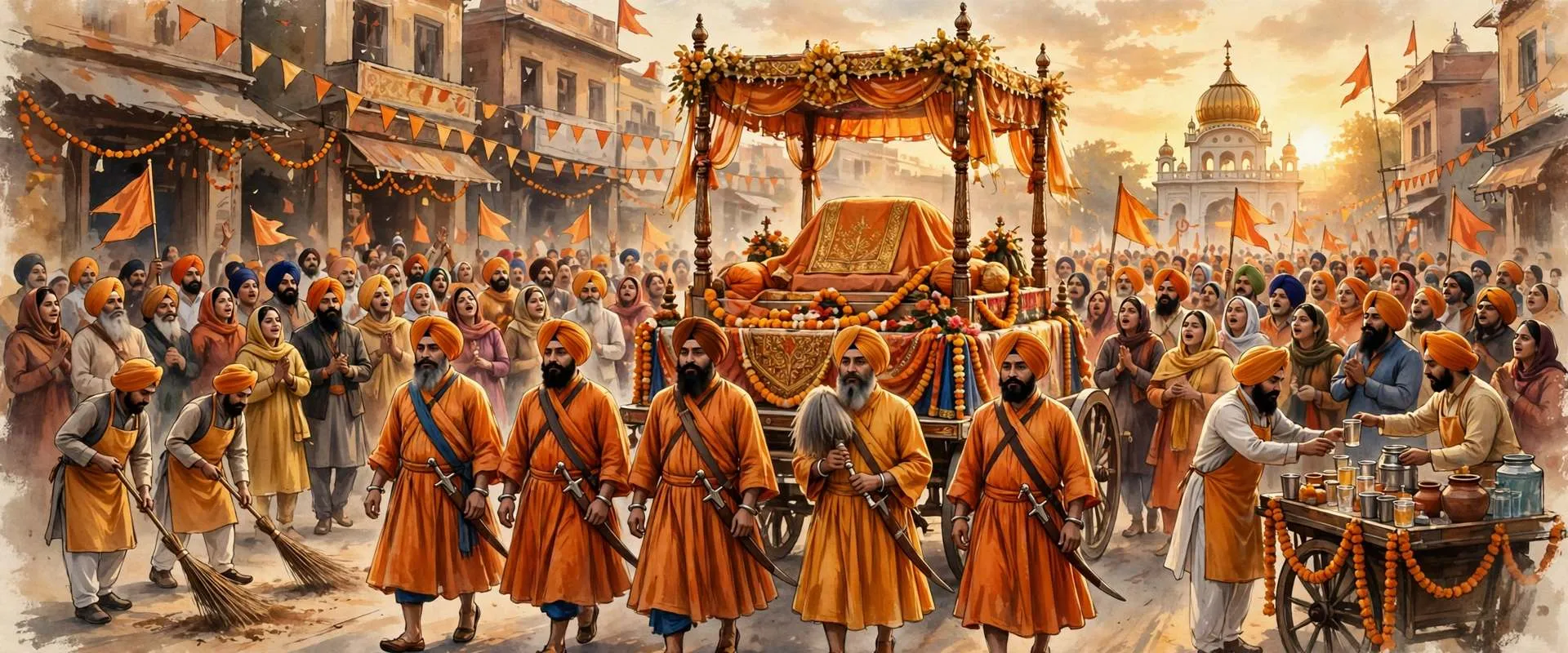
Nagar kirtan (ਨਗਰ ਕੀਰਤਨ) is a Sikh procession in which the sangat walks through a town singing shabads, led by the Panj Piare and centred on the Guru Granth Sahib carried on a decorated float. Nagar means town and kirtan means singing divine hymns, so the procession takes worship to the doorsteps of the whole community.
How it's used
- 1ਵਿਸਾਖੀ ਵਾਲੇ ਦਿਨ ਸਾਰੇ ਪਿੰਡ ਵਿੱਚ ਨਗਰ ਕੀਰਤਨ ਨਿਕਲਿਆ।On the day of Vaisakhi a nagar kirtan went out through the whole village. Vaisakhi procession
- 2ਪੰਜ ਪਿਆਰਿਆਂ ਦੇ ਮਗਰ ਮਗਰ ਸੰਗਤ ਸ਼ਬਦ ਗਾਉਂਦੀ ਚੱਲੀ।Behind the Panj Piare the sangat walked on, singing shabads. the order of the procession
- 3ਸੇਵਾਦਾਰਾਂ ਨੇ ਨਗਰ ਕੀਰਤਨ ਅੱਗੇ ਰਸਤਾ ਸਾਫ਼ ਕੀਤਾ ਅਤੇ ਪਾਣੀ ਪਿਲਾਇਆ।The sevadars cleaned the road ahead of the nagar kirtan and served water. seva along the route
Show 1 more example
- 4ਨਗਰ ਕੀਰਤਨ ਗੁਰਦੁਆਰੇ ਪਹੁੰਚ ਕੇ ਅਰਦਾਸ ਨਾਲ ਸਮਾਪਤ ਹੋਇਆ।The nagar kirtan reached the gurdwara and concluded with ardas. how it ends
ਨਗਰ ਕੀਰਤਨ ਸਿੱਖ ਧਰਮ ਦੀ ਉਹ ਜਲੂਸ ਯਾਤਰਾ ਹੈ ਜਿਸ ਵਿੱਚ ਸੰਗਤ ਕਸਬੇ ਜਾਂ ਮੁਹੱਲੇ ਦੀਆਂ ਗਲੀਆਂ ਵਿੱਚ ਸ਼ਬਦ ਗਾਉਂਦੀ ਹੋਈ ਤੁਰਦੀ ਹੈ। ਸਜੀ ਹੋਈ ਪਾਲਕੀ ਜਾਂ ਫਲੋਟ ਉੱਤੇ ਸ੍ਰੀ ਗੁਰੂ ਗ੍ਰੰਥ ਸਾਹਿਬ ਜੀ ਬਿਰਾਜਮਾਨ ਹੁੰਦੇ ਹਨ, ਅਗੇ ਪੰਜ ਪਿਆਰੇ ਚੱਲਦੇ ਹਨ ਅਤੇ ਮਗਰ ਸਾਰੀ ਸੰਗਤ ਕੀਰਤਨ ਕਰਦੀ ਹੈ। ਇਸ ਦਾ ਭਾਵ ਹੈ: ਰੱਬ ਦਾ ਸੁਨੇਹਾ ਹਰ ਘਰ ਦੇ ਬੂਹੇ ਤੱਕ ਪਹੁੰਚਾਣਾ।
Nagar kirtan (ਨਗਰ ਕੀਰਤਨ) is a Sikh procession in which the sangat walks through a town or neighbourhood singing shabads, with the Guru Granth Sahib carried on a decorated float at its heart. Nagar means town, and kirtan means the singing of divine hymns, so the name itself says what happens: hymn singing taken out into the town, to the doorsteps of the whole community.
What does nagar kirtan mean in Punjabi?
It means neighbourhood kirtan: the congregation moving through the town singing holy hymns together. SikhiWiki explains the idea behind it plainly: a nagar kirtan brings the message of God to the doorstep of the community, instead of keeping worship inside the gurdwara walls. It is held wherever Sikhs live, all over the world, and is especially common around Vaisakhi.
That public character is the point. Anyone on the street can hear the shabads, join the walk, or simply receive the prashad and refreshments that sevadars offer along the route. A council notice for a nagar kirtan in New Zealand describes the same pattern and the same values carried with it: love, interfaith harmony, compassion, selfless service, community and equality.
How does a nagar kirtan proceed?
The Panj Piare, the five beloved ones, normally lead the procession, dressed in colourful bana for the occasion. Behind them comes at least one main float carrying the Guru Granth Sahib, with sevadars on the float performing kirtan and attending to the Guru. The sangat walks behind, singing shabads, while other sevadars sweep and clear the road ahead as an act of respect and service.
Many in the procession walk barefoot and with heads covered, in reverence for the scripture being carried. Food and drinks are served from stationary points or from floats that follow, and bystanders bow their heads as the Guru Granth Sahib passes and are offered prashad. The procession ends back at the gurdwara, where the sangat stands for ardas, the concluding prayer, as the scripture re-enters.
When is a nagar kirtan held?
A nagar kirtan is held most often around Vaisakhi, the month SikhiWiki notes as its most common season, and for gurpurabs and other major anniversaries, when processions through towns and cities form a standard part of the observance. In the diaspora, from Southall to Canadian and New Zealand cities, the local nagar kirtan has also become the day the wider neighbourhood meets the Sikh community in the street.
Related words
Sources (2)
Jugti is free and independent. Reader support keeps the Kosh growing.
Support