
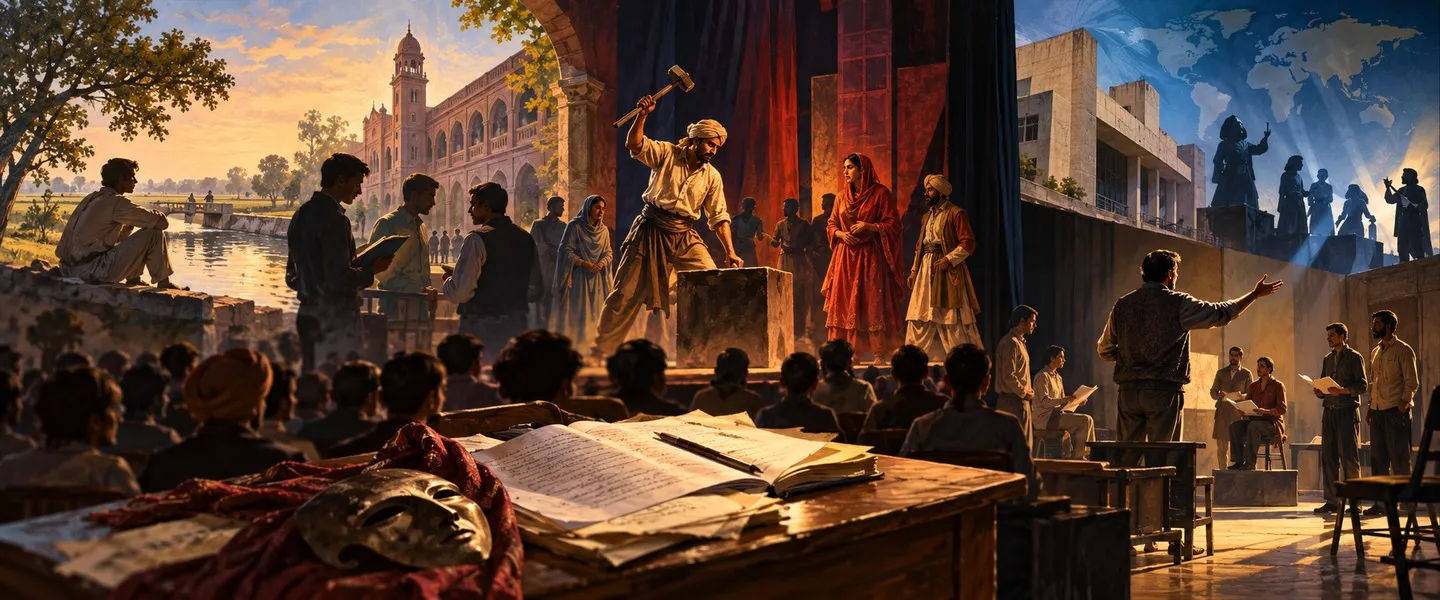
ਬਲਵੰਤ ਗਾਰਗੀ ਇੱਕ ਮੋਹਰੀ ਪੰਜਾਬੀ ਨਾਟਕਕਾਰ ਅਤੇ ਰੰਗਮੰਚ ਨਿਰਦੇਸ਼ਕ ਸਨ, ਜਿਨ੍ਹਾਂ ਨੇ 1968 ਵਿੱਚ ਪੰਜਾਬ ਯੂਨੀਵਰਸਿਟੀ ਵਿੱਚ ਭਾਰਤੀ ਰੰਗਮੰਚ ਵਿਭਾਗ ਦੀ ਸਥਾਪਨਾ ਕੀਤੀ। ਉਨ੍ਹਾਂ ਦਾ ਨਾਟਕ ਲੋਹਾ ਕੁੱਟ ਬਾਰਾਂ ਭਾਸ਼ਾਵਾਂ ਵਿੱਚ ਅਨੁਵਾਦ ਹੋਇਆ, ਅਤੇ ਉਨ੍ਹਾਂ ਦੇ ਵਿਦਿਆਰਥੀਆਂ ਵਿੱਚ ਅਨੁਪਮ ਖੇਰ ਅਤੇ ਕਿਰਨ ਖੇਰ ਸ਼ਾਮਲ ਸਨ।
ਜੀਵਨ ਇੱਕ ਨਜ਼ਰ ਵਿੱਚ
- 1916ਜਨਮ Sehna, Barnala (Punjab)
- 1944ਪਹਿਲੀ ਕਿਤਾਬ ਲੋਹਾ-ਕੁੱਟ
- 1962ਸਨਮਾਨ ਸਾਹਿਤ ਅਕਾਦਮੀ
- 1968ਸਥਾਪਨਾ Panjab University
- 1973ਸਨਮਾਨ ਪਦਮ ਸ਼੍ਰੀ
- 1998ਸਨਮਾਨ Sangeet Natak Akademi
- 2003ਦੇਹਾਂਤ ਮੁੰਬਈ
- ਪੰਜਾਬੀ ਨਾਂ
- ਬਲਵੰਤ ਗਾਰਗੀ
- ਜਨਮ
- 4 ਦਸੰਬਰ 1916, ਸਹਿਣਾ, ਬਰਨਾਲਾ (ਪੰਜਾਬ)
- ਜ਼ਿਲ੍ਹਾ
- ਬਰਨਾਲਾ
- ਤਹਿਸੀਲ
- ਤਪਾ
- ਦੇਹਾਂਤ
- 21 ਅਪ੍ਰੈਲ 2003, ਮੁੰਬਈ
- ਲਿਖਣ ਦੀ ਭਾਸ਼ਾ
- ਪੰਜਾਬੀ, ਅੰਗਰੇਜ਼ੀ
All 10 facts
- ਪ੍ਰਸਿੱਧੀ
- ਲੋਹਾ ਕੁੱਟ, ਰੰਗ ਮੰਚ, ਦ ਨੇਕਡ ਟਰਾਇਐਂਗਲ
- ਸਥਾਪਨਾ
- ਭਾਰਤੀ ਰੰਗਮੰਚ ਵਿਭਾਗ, ਪੰਜਾਬ ਯੂਨੀਵਰਸਿਟੀ (1968)
- ਵਿਦਿਆਰਥੀ
- ਅਨੁਪਮ ਖੇਰ, ਕਿਰਨ ਖੇਰ, ਸਤੀਸ਼ ਕੌਸ਼ਿਕ, ਪੂਨਮ ਢਿੱਲੋਂ
- ਸਨਮਾਨ
- ਸਾਹਿਤ ਅਕਾਦਮੀ (1962), ਪਦਮ ਸ਼੍ਰੀ (1973), ਸੰਗੀਤ ਨਾਟਕ ਅਕਾਦਮੀ (1998)
ਮੁੱਢਲਾ ਜੀਵਨ
Balwant Gargi was born on 4 December 1916 in Sehna, a village in what is now Barnala district of Punjab, the second son of Shiv Chand Garg, a head clerk in the Irrigation Department. The Canal House of his birth stood near the Sirhind Canal, close to the spot where Razia Sultana was once imprisoned. He studied at Government College, Lahore, and took his M.A. degrees in English and Political Science from Forman Christian College, Lahore. Drawn to the stage, he trained in theatre under Norah Richards at her school in the Kangra Valley.
From Lahore radio to the stage
Gargi began his working life at a radio station in Lahore in the mid-1940s, and in 1944 he wrote his first play, Loha Kutt (The Blacksmith). Its stark picture of Punjab's countryside made it controversial and announced a new voice in Punjabi theatre. In 1955 he attended a Bertolt Brecht rehearsal in Berlin and studied the working of the Moscow Art Theatre, encounters that shaped him as a director. His influences ranged from J. M. Synge, Garcia Lorca and Brecht to Sanskrit classics and Indian folk forms, and he wrote in both Punjabi and English from the start.
How did Balwant Gargi change Punjabi theatre?
In 1968 Gargi founded the Department of Indian Theatre at Panjab University, Chandigarh, the first university theatre department of its kind in India, and directed it until 1976-77. He built it as a laboratory where village folk forms met modern stagecraft, and the department's open-air theatre is now named after him. His students there included Anupam Kher, Kiron Kher, Satish Kaushik and Poonam Dhillon, who went on to become well-known film actors. He later taught as a visiting professor at Harvard, Yale, Vassar, Mount Holyoke, Trinity College and the University of Hawaii, and in the 1960s at the University of Washington, the setting of his novel The Naked Triangle.
Plays and books
Gargi wrote about a dozen full-length plays and five collections of one-act plays. After Loha Kutt came Saelpathar (1949), Navan Mudh (1950), Ghugi (1950), Kanak di Balli (1968), Mirza-Sahiban (1976), Dhuni di Agg (1977), Saunkan (1979) and Abhisarka (1990), along with Kesro, Sultan Razia and Sohni Mahiwal. His plays were translated into twelve languages and performed in Moscow, London, New Delhi, the United States, Poland, the UK and Germany; his Sohni Mahiwal ran for three years at the Gypsy Theatre in Moscow.
As a scholar he wrote Theatre in India (1962) and Rang Manch (1962), the research work that won him the Sahitya Akademi Award, and Folk Theatre of India (New York, 1966), based on travels in which he interviewed more than 400 folk artists and took over 5,000 photographs. His semi-autobiographical novel The Naked Triangle (Punjabi title Nangi Dhup) drew on his American teaching years; The Purple Moonlight (Kashni Vehra) was another novel, and his short stories include Mircha Wala Sadh, Pattan di Berhi and Kuari Disi.
From 1980 to 1983 he served as emeritus producer at Doordarshan and Akashvani; his televised plays, such as Sanjha Chulha, won appreciation across the country. He also produced Punjabi and Hindi serials and documentaries on folk forms such as Jatra and Ramlila.
Who were Balwant Gargi's famous students?
The clearest measure of Gargi's influence is the generation he trained at Panjab University. Anupam Kher, Kiron Kher, Satish Kaushik and Poonam Dhillon all studied theatre under him at Chandigarh before their film careers. Through them, and through the department he built, his ideas about blending folk tradition with modern staging reached Indian cinema and television far beyond Punjab.
Awards and later life
Gargi's honours include the Sahitya Akademi Award (1962), the Wattumull Special Achievement Award (1967), the Padma Shri (1973), the Shiromani Punjabi Sahitkar Award from Punjab's Language Department, and the Sangeet Natak Akademi Award for Punjabi playwriting (1998), making him one of the few writers to receive both the Sahitya Akademi and Sangeet Natak Akademi awards. In 2017 India issued a commemorative postage stamp in his honour.
He married Jeanne Henry, an American academic he met during his teaching years in the United States; the marriage later ended. His two children, Manu Gargi and Jannat Gargi, settled in the United States and work as film producers in Hollywood.
Legacy
Balwant Gargi died in Mumbai on 21 April 2003. He is remembered as the founder of institutional theatre education in Punjab: the Panjab University department he created in 1968 still trains actors, its open-air stage carries his name, and his plays continue to be staged in a dozen languages. Between Loha Kutt's village blacksmith and a postage stamp, his life traced the journey of Punjabi theatre from the folk stage to the world stage.
ਮੁੱਢਲਾ ਜੀਵਨ
ਬਲਵੰਤ ਗਾਰਗੀ ਦਾ ਜਨਮ 4 ਦਸੰਬਰ 1916 ਨੂੰ ਬਰਨਾਲਾ ਇਲਾਕੇ ਦੇ ਪਿੰਡ ਸਹਿਣਾ ਵਿੱਚ ਹੋਇਆ। ਉਹ ਸਿੰਚਾਈ ਵਿਭਾਗ ਦੇ ਹੈੱਡ ਕਲਰਕ ਸ਼ਿਵ ਚੰਦ ਗਰਗ ਦਾ ਦੂਜਾ ਪੁੱਤਰ ਸੀ। ਉਸ ਦਾ ਜਨਮ ਕੈਨਾਲ ਹਾਊਸ ਵਿੱਚ ਹੋਇਆ, ਜੋ ਸਰਹਿੰਦ ਨਹਿਰ ਦੇ ਨੇੜੇ ਸੀ ਅਤੇ ਉਸ ਥਾਂ ਤੋਂ ਦੂਰ ਨਹੀਂ ਸੀ ਜਿੱਥੇ ਕਦੇ ਰਜ਼ੀਆ ਸੁਲਤਾਨ ਕੈਦ ਰਹੀ ਸੀ। ਉਸ ਨੇ ਲਾਹੌਰ ਦੇ ਸਰਕਾਰੀ ਕਾਲਜ ਵਿੱਚ ਪੜ੍ਹਾਈ ਕੀਤੀ ਅਤੇ ਫਾਰਮਨ ਕ੍ਰਿਸ਼ਚਨ ਕਾਲਜ, ਲਾਹੌਰ ਤੋਂ ਅੰਗਰੇਜ਼ੀ ਅਤੇ ਰਾਜਨੀਤੀ ਸ਼ਾਸਤਰ ਵਿੱਚ ਐਮ.ਏ. ਕੀਤੀ। ਰੰਗਮੰਚ ਵੱਲ ਖਿੱਚ ਨੇ ਉਸ ਨੂੰ ਕਾਂਗੜਾ ਘਾਟੀ ਵਿੱਚ ਨੋਰਾ ਰਿਚਰਡਜ਼ ਕੋਲ ਥੀਏਟਰ ਦੀ ਸਿਖਲਾਈ ਲੈਣ ਲਈ ਪਹੁੰਚਾਇਆ।
ਲਾਹੌਰ ਰੇਡੀਓ ਤੋਂ ਸਟੇਜ ਤੱਕ
ਗਾਰਗੀ ਨੇ ਆਪਣਾ ਕੰਮਕਾਜੀ ਜੀਵਨ 1940 ਦੇ ਦਹਾਕੇ ਦੇ ਅੱਧ ਵਿੱਚ ਲਾਹੌਰ ਦੇ ਇੱਕ ਰੇਡੀਓ ਸਟੇਸ਼ਨ ਤੋਂ ਸ਼ੁਰੂ ਕੀਤਾ ਅਤੇ 1944 ਵਿੱਚ ਉਸ ਨੇ ਆਪਣਾ ਪਹਿਲਾ ਨਾਟਕ 'ਲੋਹਾ ਕੁੱਟ' ਲਿਖਿਆ। ਪੰਜਾਬ ਦੇ ਪੇਂਡੂ ਜੀਵਨ ਦੀ ਇਸ ਦੀ ਸਖ਼ਤ ਤਸਵੀਰ ਨੇ ਵਿਵਾਦ ਖੜ੍ਹਾ ਕਰ ਦਿੱਤਾ ਅਤੇ ਪੰਜਾਬੀ ਥੀਏਟਰ ਵਿੱਚ ਇੱਕ ਨਵੀਂ ਆਵਾਜ਼ ਦਾ ਐਲਾਨ ਹੋ ਗਿਆ। 1955 ਵਿੱਚ ਉਸ ਨੇ ਬਰਲਿਨ ਵਿੱਚ ਬਰਤੋਲਤ ਬ੍ਰੈਖਤ ਦੀ ਰਿਹਰਸਲ ਵੇਖੀ ਅਤੇ ਮਾਸਕੋ ਆਰਟ ਥੀਏਟਰ ਦੇ ਕੰਮ ਨੂੰ ਨੇੜਿਓਂ ਸਮਝਿਆ। ਇਨ੍ਹਾਂ ਤਜਰਬਿਆਂ ਨੇ ਉਸ ਨੂੰ ਨਿਰਦੇਸ਼ਕ ਵਜੋਂ ਸੰਵਾਰਿਆ। ਉਸ 'ਤੇ ਜੇ.ਐੱਮ. ਸਿੰਗ, ਗਾਰਸੀਆ ਲੋਰਕਾ ਅਤੇ ਬ੍ਰੈਖਤ ਤੋਂ ਲੈ ਕੇ ਸੰਸਕ੍ਰਿਤ ਕਲਾਸਿਕਾਂ ਅਤੇ ਭਾਰਤੀ ਲੋਕ ਰੂਪਾਂ ਤੱਕ ਦਾ ਅਸਰ ਸੀ ਅਤੇ ਉਹ ਸ਼ੁਰੂ ਤੋਂ ਹੀ ਪੰਜਾਬੀ ਅਤੇ ਅੰਗਰੇਜ਼ੀ ਦੋਵਾਂ ਵਿੱਚ ਲਿਖਦਾ ਸੀ।
ਬਲਵੰਤ ਗਾਰਗੀ ਨੇ ਪੰਜਾਬੀ ਥੀਏਟਰ ਨੂੰ ਕਿਵੇਂ ਬਦਲਿਆ?
1968 ਵਿੱਚ ਗਾਰਗੀ ਨੇ ਪੰਜਾਬ ਯੂਨੀਵਰਸਿਟੀ, ਚੰਡੀਗੜ੍ਹ ਵਿੱਚ ਭਾਰਤੀ ਥੀਏਟਰ ਵਿਭਾਗ ਦੀ ਨੀਂਹ ਰੱਖੀ। ਇਹ ਭਾਰਤ ਵਿੱਚ ਆਪਣੀ ਕਿਸਮ ਦਾ ਪਹਿਲਾ ਯੂਨੀਵਰਸਿਟੀ ਥੀਏਟਰ ਵਿਭਾਗ ਸੀ ਅਤੇ ਉਹ 1976-77 ਤੱਕ ਇਸ ਦਾ ਨਿਰਦੇਸ਼ਕ ਰਿਹਾ। ਉਸ ਨੇ ਇਸ ਨੂੰ ਇੱਕ ਅਜਿਹੀ ਪ੍ਰਯੋਗਸ਼ਾਲਾ ਬਣਾਇਆ ਜਿੱਥੇ ਪਿੰਡਾਂ ਦੇ ਲੋਕ ਰੂਪ ਆਧੁਨਿਕ ਸਟੇਜ ਕਲਾ ਨਾਲ ਮਿਲਦੇ ਸਨ। ਅੱਜ ਇਸ ਵਿਭਾਗ ਦਾ ਖੁੱਲ੍ਹਾ ਰੰਗਮੰਚ ਉਸ ਦੇ ਨਾਂ 'ਤੇ ਹੈ। ਉੱਥੇ ਉਸ ਦੇ ਵਿਦਿਆਰਥੀਆਂ ਵਿੱਚ ਅਨੁਪਮ ਖੇਰ, ਕਿਰਨ ਖੇਰ, ਸਤੀਸ਼ ਕੌਸ਼ਿਕ ਅਤੇ ਪੂਨਮ ਢਿੱਲੋਂ ਸ਼ਾਮਲ ਸਨ, ਜੋ ਬਾਅਦ ਵਿੱਚ ਮਸ਼ਹੂਰ ਫ਼ਿਲਮੀ ਅਦਾਕਾਰ ਬਣੇ। ਬਾਅਦ ਵਿੱਚ ਉਸ ਨੇ ਹਾਰਵਰਡ, ਯੇਲ, ਵਸਾਰ, ਮਾਊਂਟ ਹੋਲੀਓਕ, ਟ੍ਰਿਨਿਟੀ ਕਾਲਜ ਅਤੇ ਹਵਾਈ ਯੂਨੀਵਰਸਿਟੀ ਵਿੱਚ ਵਿਜ਼ਿਟਿੰਗ ਪ੍ਰੋਫੈਸਰ ਵਜੋਂ ਪੜ੍ਹਾਇਆ ਅਤੇ 1960 ਦੇ ਦਹਾਕੇ ਵਿੱਚ ਵਾਸ਼ਿੰਗਟਨ ਯੂਨੀਵਰਸਿਟੀ ਵਿੱਚ ਵੀ, ਜਿੱਥੋਂ ਦੇ ਤਜਰਬੇ ਉਸ ਦੇ ਨਾਵਲ 'ਦਿ ਨੇਕਡ ਟ੍ਰਾਇਐਂਗਲ' ਵਿੱਚ ਝਲਕਦੇ ਹਨ।
ਨਾਟਕ ਅਤੇ ਪੁਸਤਕਾਂ
ਗਾਰਗੀ ਨੇ ਲਗਭਗ ਇੱਕ ਦਰਜਨ ਪੂਰੇ ਨਾਟਕ ਅਤੇ ਇੱਕਾਂਗੀਆਂ ਦੇ ਪੰਜ ਸੰਗ੍ਰਹਿ ਲਿਖੇ। 'ਲੋਹਾ ਕੁੱਟ' ਤੋਂ ਬਾਅਦ 'ਸੈਲਪੱਥਰ' (1949), 'ਨਵਾਂ ਮੁੱਢ' (1950), 'ਘੁੱਗੀ' (1950), 'ਕਣਕ ਦੀ ਬੱਲੀ' (1968), 'ਮਿਰਜ਼ਾ ਸਾਹਿਬਾਂ' (1976), 'ਧੂਣੀ ਦੀ ਅੱਗ' (1977), 'ਸੌਕਣ' (1979) ਅਤੇ 'ਅਭਿਸਾਰਕਾ' (1990) ਆਏ। ਇਸ ਤੋਂ ਇਲਾਵਾ 'ਕੇਸਰੋ', 'ਸੁਲਤਾਨ ਰਜ਼ੀਆ' ਅਤੇ 'ਸੋਹਣੀ ਮਹੀਂਵਾਲ' ਵੀ ਉਸ ਦੇ ਨਾਟਕ ਹਨ। ਉਸ ਦੇ ਨਾਟਕ ਬਾਰ੍ਹਾਂ ਭਾਸ਼ਾਵਾਂ ਵਿੱਚ ਅਨੁਵਾਦ ਹੋਏ ਅਤੇ ਮਾਸਕੋ, ਲੰਡਨ, ਨਵੀਂ ਦਿੱਲੀ, ਅਮਰੀਕਾ, ਪੋਲੈਂਡ, ਬਰਤਾਨੀਆ ਅਤੇ ਜਰਮਨੀ ਵਿੱਚ ਖੇਡੇ ਗਏ। ਉਸ ਦਾ 'ਸੋਹਣੀ ਮਹੀਂਵਾਲ' ਮਾਸਕੋ ਦੇ ਜਿਪਸੀ ਥੀਏਟਰ ਵਿੱਚ ਤਿੰਨ ਸਾਲ ਤੱਕ ਚੱਲਿਆ।
ਵਿਦਵਾਨ ਵਜੋਂ ਉਸ ਨੇ 'ਥੀਏਟਰ ਇਨ ਇੰਡੀਆ' (1962) ਅਤੇ 'ਰੰਗ ਮੰਚ' (1962) ਲਿਖੀਆਂ। 'ਰੰਗ ਮੰਚ' ਉਹ ਖੋਜ ਪੁਸਤਕ ਹੈ ਜਿਸ 'ਤੇ ਉਸ ਨੂੰ ਸਾਹਿਤ ਅਕਾਦਮੀ ਪੁਰਸਕਾਰ ਮਿਲਿਆ। 'ਫੋਕ ਥੀਏਟਰ ਆਫ ਇੰਡੀਆ' (ਨਿਊਯਾਰਕ, 1966) ਉਸ ਦੇ ਉਨ੍ਹਾਂ ਸਫ਼ਰਾਂ 'ਤੇ ਆਧਾਰਿਤ ਹੈ ਜਿਨ੍ਹਾਂ ਵਿੱਚ ਉਸ ਨੇ 400 ਤੋਂ ਵੱਧ ਲੋਕ ਕਲਾਕਾਰਾਂ ਨਾਲ ਗੱਲਬਾਤ ਕੀਤੀ ਅਤੇ 5,000 ਤੋਂ ਵੱਧ ਤਸਵੀਰਾਂ ਲਈਆਂ। ਉਸ ਦਾ ਅਰਧ-ਆਤਮਕਥਾਤਮਕ ਨਾਵਲ 'ਦਿ ਨੇਕਡ ਟ੍ਰਾਇਐਂਗਲ' (ਪੰਜਾਬੀ ਸਿਰਲੇਖ 'ਨੰਗੀ ਧੁੱਪ') ਅਮਰੀਕਾ ਵਿੱਚ ਪੜ੍ਹਾਉਣ ਦੇ ਸਾਲਾਂ 'ਤੇ ਆਧਾਰਿਤ ਹੈ। 'ਦਿ ਪਰਪਲ ਮੂਨਲਾਈਟ' (ਕਾਸ਼ਨੀ ਵੇਹੜਾ) ਉਸ ਦਾ ਇੱਕ ਹੋਰ ਨਾਵਲ ਸੀ ਅਤੇ ਉਸ ਦੀਆਂ ਕਹਾਣੀਆਂ ਵਿੱਚ 'ਮਿਰਚਾਂ ਵਾਲਾ ਸਾਧ', 'ਪੱਤਣ ਦੀ ਬੇੜ੍ਹੀ' ਅਤੇ 'ਕੁਆਰੀ ਦਿਸੀ' ਸ਼ਾਮਲ ਹਨ।
1980 ਤੋਂ 1983 ਤੱਕ ਉਹ ਦੂਰਦਰਸ਼ਨ ਅਤੇ ਆਕਾਸ਼ਵਾਣੀ ਵਿੱਚ ਐਮੇਰਿਟਸ ਨਿਰਮਾਤਾ ਰਿਹਾ। ਉਸ ਦੇ ਟੈਲੀਵਿਜ਼ਨ ਨਾਟਕ, ਜਿਵੇਂ 'ਸਾਂਝਾ ਚੁੱਲ੍ਹਾ', ਦੇਸ਼ ਭਰ ਵਿੱਚ ਸਰਾਹੇ ਗਏ। ਉਸ ਨੇ ਪੰਜਾਬੀ ਅਤੇ ਹਿੰਦੀ ਸੀਰੀਅਲ ਅਤੇ ਜਾਤਰਾ ਤੇ ਰਾਮਲੀਲਾ ਵਰਗੇ ਲੋਕ ਰੂਪਾਂ 'ਤੇ ਦਸਤਾਵੇਜ਼ੀ ਫ਼ਿਲਮਾਂ ਵੀ ਬਣਾਈਆਂ।
ਬਲਵੰਤ ਗਾਰਗੀ ਦੇ ਮਸ਼ਹੂਰ ਵਿਦਿਆਰਥੀ ਕੌਣ ਸਨ?
ਗਾਰਗੀ ਦੇ ਅਸਰ ਦਾ ਸਭ ਤੋਂ ਸਪੱਸ਼ਟ ਸਬੂਤ ਉਹ ਪੀੜ੍ਹੀ ਹੈ ਜਿਸ ਨੂੰ ਉਸ ਨੇ ਪੰਜਾਬ ਯੂਨੀਵਰਸਿਟੀ ਵਿੱਚ ਤਿਆਰ ਕੀਤਾ। ਅਨੁਪਮ ਖੇਰ, ਕਿਰਨ ਖੇਰ, ਸਤੀਸ਼ ਕੌਸ਼ਿਕ ਅਤੇ ਪੂਨਮ ਢਿੱਲੋਂ ਸਾਰੇ ਫ਼ਿਲਮਾਂ ਵਿੱਚ ਆਉਣ ਤੋਂ ਪਹਿਲਾਂ ਚੰਡੀਗੜ੍ਹ ਵਿੱਚ ਉਸ ਕੋਲ ਥੀਏਟਰ ਪੜ੍ਹਦੇ ਸਨ। ਉਨ੍ਹਾਂ ਰਾਹੀਂ ਅਤੇ ਉਸ ਵਿਭਾਗ ਰਾਹੀਂ ਜੋ ਉਸ ਨੇ ਬਣਾਇਆ, ਲੋਕ ਪਰੰਪਰਾ ਨੂੰ ਆਧੁਨਿਕ ਸਟੇਜ ਨਾਲ ਜੋੜਨ ਦੇ ਉਸ ਦੇ ਵਿਚਾਰ ਪੰਜਾਬ ਤੋਂ ਦੂਰ ਭਾਰਤੀ ਸਿਨਮੇ ਅਤੇ ਟੈਲੀਵਿਜ਼ਨ ਤੱਕ ਪਹੁੰਚੇ।
ਸਨਮਾਨ ਅਤੇ ਆਖ਼ਰੀ ਜੀਵਨ
ਗਾਰਗੀ ਦੇ ਸਨਮਾਨਾਂ ਵਿੱਚ ਸਾਹਿਤ ਅਕਾਦਮੀ ਪੁਰਸਕਾਰ (1962), ਵੱਟੂਮੱਲ ਵਿਸ਼ੇਸ਼ ਉਪਲਬਧੀ ਪੁਰਸਕਾਰ (1967), ਪਦਮ ਸ਼੍ਰੀ (1973), ਪੰਜਾਬ ਦੇ ਭਾਸ਼ਾ ਵਿਭਾਗ ਦਾ ਸ਼੍ਰੋਮਣੀ ਪੰਜਾਬੀ ਸਾਹਿਤਕਾਰ ਪੁਰਸਕਾਰ ਅਤੇ ਪੰਜਾਬੀ ਨਾਟਕ ਲੇਖਣ ਲਈ ਸੰਗੀਤ ਨਾਟਕ ਅਕਾਦਮੀ ਪੁਰਸਕਾਰ (1998) ਸ਼ਾਮਲ ਹਨ। ਉਹ ਉਨ੍ਹਾਂ ਗਿਣਤੀਆਂ ਲੇਖਕਾਂ ਵਿੱਚੋਂ ਹੈ ਜਿਨ੍ਹਾਂ ਨੂੰ ਸਾਹਿਤ ਅਕਾਦਮੀ ਅਤੇ ਸੰਗੀਤ ਨਾਟਕ ਅਕਾਦਮੀ ਦੋਵਾਂ ਦੇ ਪੁਰਸਕਾਰ ਮਿਲੇ। 2017 ਵਿੱਚ ਭਾਰਤ ਨੇ ਉਸ ਦੇ ਸਨਮਾਨ ਵਿੱਚ ਯਾਦਗਾਰੀ ਡਾਕ ਟਿਕਟ ਜਾਰੀ ਕੀਤੀ।
ਉਸ ਨੇ ਜੀਨ ਹੈਨਰੀ ਨਾਲ ਵਿਆਹ ਕੀਤਾ, ਜੋ ਅਮਰੀਕੀ ਵਿਦਵਾਨ ਸੀ ਅਤੇ ਜਿਸ ਨੂੰ ਉਹ ਅਮਰੀਕਾ ਵਿੱਚ ਪੜ੍ਹਾਉਣ ਦੇ ਸਾਲਾਂ ਦੌਰਾਨ ਮਿਲਿਆ ਸੀ। ਬਾਅਦ ਵਿੱਚ ਇਹ ਵਿਆਹ ਟੁੱਟ ਗਿਆ। ਉਸ ਦੇ ਦੋ ਬੱਚੇ, ਮਨੂ ਗਾਰਗੀ ਅਤੇ ਜੰਨਤ ਗਾਰਗੀ, ਅਮਰੀਕਾ ਵਿੱਚ ਵਸ ਗਏ ਅਤੇ ਹਾਲੀਵੁੱਡ ਵਿੱਚ ਫ਼ਿਲਮ ਨਿਰਮਾਤਾ ਵਜੋਂ ਕੰਮ ਕਰਦੇ ਹਨ।
ਵਿਰਾਸਤ
ਬਲਵੰਤ ਗਾਰਗੀ ਦਾ ਦਿਹਾਂਤ 21 ਅਪ੍ਰੈਲ 2003 ਨੂੰ ਮੁੰਬਈ ਵਿੱਚ ਹੋਇਆ। ਉਸ ਨੂੰ ਪੰਜਾਬ ਵਿੱਚ ਸੰਸਥਾਗਤ ਥੀਏਟਰ ਸਿੱਖਿਆ ਦੇ ਬਾਨੀ ਵਜੋਂ ਯਾਦ ਕੀਤਾ ਜਾਂਦਾ ਹੈ। 1968 ਵਿੱਚ ਉਸ ਨੇ ਜੋ ਵਿਭਾਗ ਬਣਾਇਆ ਸੀ ਉਹ ਅੱਜ ਵੀ ਅਦਾਕਾਰ ਤਿਆਰ ਕਰਦਾ ਹੈ, ਉਸ ਦਾ ਖੁੱਲ੍ਹਾ ਰੰਗਮੰਚ ਉਸ ਦੇ ਨਾਂ 'ਤੇ ਹੈ ਅਤੇ ਉਸ ਦੇ ਨਾਟਕ ਬਾਰ੍ਹਾਂ ਭਾਸ਼ਾਵਾਂ ਵਿੱਚ ਖੇਡੇ ਜਾਂਦੇ ਹਨ। 'ਲੋਹਾ ਕੁੱਟ' ਦੇ ਪਿੰਡ ਦੇ ਲੁਹਾਰ ਤੋਂ ਡਾਕ ਟਿਕਟ ਤੱਕ, ਉਸ ਦੇ ਜੀਵਨ ਨੇ ਪੰਜਾਬੀ ਥੀਏਟਰ ਦੇ ਲੋਕ ਸਟੇਜ ਤੋਂ ਵਿਸ਼ਵ ਸਟੇਜ ਤੱਕ ਦੇ ਸਫ਼ਰ ਨੂੰ ਸਮੇਟਿਆ ਹੈ।
ਰਚਨਾਵਾਂ
ਲੋਕ




ਥਾਵਾਂ

ਹੋਰ ਲੇਖਕ ਅਤੇ ਕਵੀ
ਸਾਰੇ ਵੇਖੋ


ਸਰੋਤ (4)
ਜੁਗਤੀ ਮੁਫ਼ਤ ਅਤੇ ਸੁਤੰਤਰ ਹੈ। ਪਾਠਕਾਂ ਦਾ ਸਹਿਯੋਗ ਕੋਸ਼ ਨੂੰ ਵਧਾਉਂਦਾ ਹੈ।
ਸਹਿਯੋਗ