
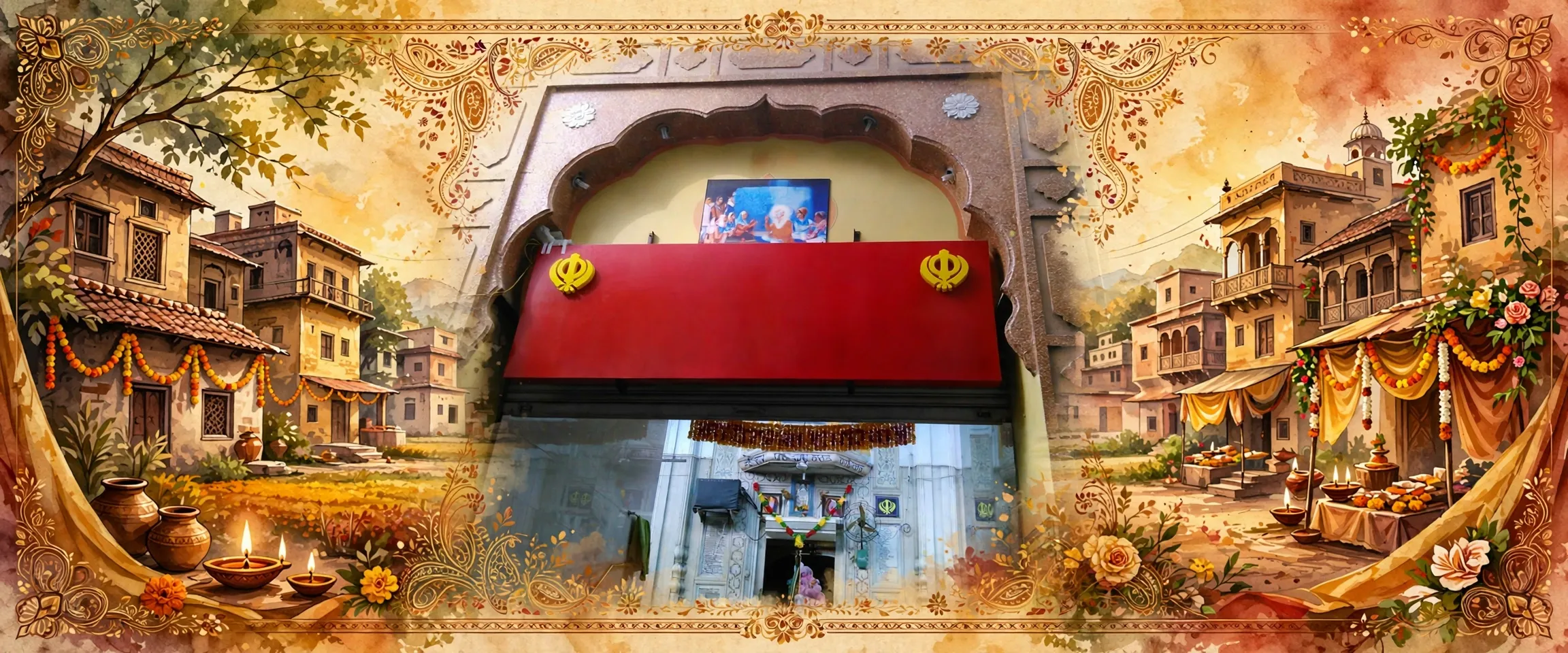
Gurdwara Khandh Sahib stands in the middle of Batala, Gurdaspur district, Punjab, where Guru Nanak Dev Ji's wedding party rested in 1487 before his marriage to Mata Sulakhni Ji. It preserves behind glass a portion of the frail mud wall beside which the young Guru debated the wedding rites, answering a warning that it might fall with the words that it would stand for centuries. Batala celebrates the wedding every year as Babe Da Viah.
- Punjabi name
- ਗੁਰਦੁਆਰਾ ਕੰਧ ਸਾਹਿਬ, ਬਟਾਲਾ
- Type
- Historic gurdwara
- Country
- India
- City
- Batala
- District
- Gurdaspur
- State
- Punjab
All 13 facts
- Location
- Middle of Batala town, on the Amritsar to Pathankot railway line
- Associated with
- Guru Nanak Dev Ji; Mata Sulakhni Ji; Mul Chand Chona
- Marks
- The resting place of Guru Nanak Dev Ji's wedding party, 1487, and the debate over the wedding rites beside the mud wall
- Also called
- Gurdwara Kandh Sahib; Gurdwara Sri Kandh Sahib
- The wall
- A surviving portion of the mud wall (kandh) is preserved inside the gurdwara, shielded in glass
- Related shrine
- Gurdwara Dera Sahib, Batala, at the site of Mul Chand's house, where the wedding itself is remembered to have taken place
- Main festival
- Babe Da Viah, the annual celebration of Guru Nanak Dev Ji's wedding, with a large procession; in its modern form the baraat is re enacted from Sultanpur Lodhi
In the middle of Batala, in Gurdaspur district, a surviving piece of mud wall is kept behind glass, and Sikhs have treasured it for more than five centuries. Gurdwara Khandh Sahib, also spelled Kandh Sahib, marks the resting place of the wedding party of Guru Nanak Dev Ji, who came to Batala in 1487 to marry Mata Sulakhni Ji. The name says what the shrine holds: kandh is Punjabi for a wall. Seated beside this frail, rain soaked wall during an argument about his wedding rites, the young Guru is remembered to have smiled and said the wall would not fall for centuries. The town still celebrates that wedding every year as Babe Da Viah, and the wall still stands.
What is Gurdwara Khandh Sahib, Batala?
Gurdwara Khandh Sahib is a historic gurdwara in Batala town, Gurdaspur district, Punjab, on the Amritsar to Pathankot railway line. It stands where Guru Nanak Dev Ji's marriage party rested before the wedding ceremony in 1487, and it preserves a portion of the mud wall from the sakhi of that visit, shielded in glass. The wedding itself, tradition holds, took place at the house of the bride's father, Mul Chand Chona, a site marked separately by Gurdwara Dera Sahib in the same town. Khandh Sahib is listed among the gurdwaras in India on Jugti, with other Guru Nanak wedding and Sultanpur Lodhi shrines such as Ber Sahib, from where the modern anniversary procession sets out.
The wedding at Batala: what happened in 1487?
The match was arranged through Jai Ram, Guru Nanak Dev Ji's brother in law, and the bride was Sulakhni, daughter of Mul Chand Chona, a revenue official of Pakhoke village near Batala, and his wife Chando Rani. Reference works date the wedding to 24 September 1487, when the Guru was about eighteen, though Janamsakhi traditions differ on details and even on the town, with Batala the location most accounts support. The marriage party travelled from Talwandi, the Guru's home village now known as Nankana Sahib, to Sultanpur Lodhi, where his sister Bibi Nanaki Ji and Jai Ram joined it, and then on to Batala. Accounts of the baraat say Nawab Daulat Khan Lodi sent elephants and horses to add splendour to the procession. At Batala the party was made to rest at the spot Khandh Sahib now marks, while the harder question of the ceremony itself was argued out.
The wall that would not fall
The sakhi at the heart of this shrine is an argument about ritual. Mul Chand wanted a traditional wedding conducted by Brahmin priests. Guru Nanak Dev Ji, already a reformer in his teens, proposed a simpler ceremony and refused the horoscopes and prescribed rites of the day, saying any time was auspicious for a wedding blessed by God. The priests were brought to debate the matter with him, and for that discussion the Guru was seated beside a crooked, decaying mud wall, weakened by recent rain and visibly ready to fall. Some accounts say the seat was chosen in the hope the wall might be pushed onto him; what is certain in the telling is that an elderly woman was sent, or came herself, to warn him of the danger. The Guru smiled and answered that this wall would not fall for centuries, that the will of God would prevail. A portion of that wall is the relic visitors see today, preserved inside the gurdwara behind a glass shield. Whether read as miracle or as memory, the story captures something Sikhs value about the young Guru: unmoved under pressure, courteous to the woman who warned him, and certain that faith needed no one's scaffolding.
Khandh Sahib and Dera Sahib: two shrines, one wedding
Visitors sometimes confuse Batala's two wedding shrines, and the distinction is worth keeping. Khandh Sahib marks where the marriage party rested before the ceremony, and where the debate by the wall took place. Dera Sahib, in the same town, was built where Mul Chand's house stood, the place where the wedding itself is remembered to have taken place. Together the two gurdwaras hold the whole Batala chapter of Guru Nanak Dev Ji's life: the arrival, the argument, the wall, and the marriage to Mata Sulakhni Ji, who would later join him at Sultanpur Lodhi, raise their sons Sri Chand and Lakhmi Das, and in time keep the langar at Kartarpur. Batala's own story is told in Jugti's entry on Batala, one of Punjab's oldest cities.
How is the wedding anniversary celebrated?
Batala marks the anniversary of the wedding every year with a gala celebration, known across Punjab as Babe Da Viah, the wedding of the Baba. A large procession is taken out through the town, and in the modern form of the festival the baraat is re enacted from Sultanpur Lodhi, setting out from Gurdwara Ber Sahib with the Guru Granth Sahib carried in a decorated palki and the sangat following on foot and in vehicles, to be received at Batala with wedding songs. Akhand Path, kirtan and langar fill the days around the procession at Khandh Sahib and Dera Sahib. For a town better known in recent centuries for industry, these days return Batala each year to the event that made its name known wherever Sikhs live.
How do I reach Gurdwara Khandh Sahib?
Khandh Sahib stands in the middle of Batala town, a sub divisional headquarters of Gurdaspur district, and is easy to reach once you are in the town. Batala sits on the Amritsar to Pathankot railway line, with trains from both cities, and on the road network of Majha. Buses connect it with Amritsar, Gurdaspur and the towns of Majha. Inside Batala, ask for Kandh Sahib: the spelling varies on signs and maps, but every local knows the shrine. Combine a visit with Gurdwara Dera Sahib nearby, and cover your head and remove your shoes before entering, as at any gurdwara. The shrine is busiest, and the town at its most festive, around the Babe Da Viah celebrations in the autumn.
ਬਟਾਲੇ ਦੇ ਵਿਚਕਾਰ, ਜ਼ਿਲ੍ਹਾ ਗੁਰਦਾਸਪੁਰ ਵਿੱਚ, ਕੱਚੀ ਕੰਧ ਦਾ ਇੱਕ ਬਚਿਆ ਹਿੱਸਾ ਸ਼ੀਸ਼ੇ ਪਿੱਛੇ ਸੰਭਾਲਿਆ ਹੋਇਆ ਹੈ, ਅਤੇ ਸਿੱਖ ਪੰਜ ਸਦੀਆਂ ਤੋਂ ਵੱਧ ਸਮੇਂ ਤੋਂ ਇਸ ਨੂੰ ਸਤਿਕਾਰਦੇ ਆਏ ਹਨ ਗੁਰਦੁਆਰਾ ਕੰਧ ਸਾਹਿਬ ਉਸ ਥਾਂ ਨੂੰ ਦਰਸਾਉਂਦਾ ਹੈ ਜਿੱਥੇ ਗੁਰੂ ਨਾਨਕ ਦੇਵ ਜੀ ਦੀ ਬਰਾਤ ਠਹਿਰੀ ਸੀ ਗੁਰੂ ਜੀ 1487 ਵਿੱਚ ਮਾਤਾ ਸੁਲਖਨੀ ਜੀ ਨਾਲ ਵਿਆਹ ਕਰਵਾਉਣ ਬਟਾਲੇ ਆਏ ਸਨ ਨਾਂ ਹੀ ਦੱਸਦਾ ਹੈ ਕਿ ਇਸ ਅਸਥਾਨ ਵਿੱਚ ਕੀ ਹੈ: ਕੰਧ ਦਾ ਅਰਥ ਹੈ ਦੀਵਾਰ ਵਿਆਹ ਦੀਆਂ ਰਸਮਾਂ ਬਾਰੇ ਬਹਿਸ ਦੌਰਾਨ ਇਸ ਕਮਜ਼ੋਰ, ਮੀਂਹ ਨਾਲ ਭਿੱਜੀ ਕੰਧ ਕੋਲ ਬੈਠੇ ਨੌਜਵਾਨ ਗੁਰੂ ਜੀ ਬਾਰੇ ਕਿਹਾ ਜਾਂਦਾ ਹੈ ਕਿ ਉਨ੍ਹਾਂ ਮੁਸਕਰਾ ਕੇ ਕਿਹਾ ਸੀ ਕਿ ਇਹ ਕੰਧ ਸਦੀਆਂ ਤੱਕ ਨਹੀਂ ਡਿੱਗੇਗੀ ਸ਼ਹਿਰ ਅੱਜ ਵੀ ਹਰ ਸਾਲ ਉਸ ਵਿਆਹ ਨੂੰ ਬਾਬੇ ਦਾ ਵਿਆਹ ਕਹਿ ਕੇ ਮਨਾਉਂਦਾ ਹੈ, ਅਤੇ ਕੰਧ ਅੱਜ ਵੀ ਖੜ੍ਹੀ ਹੈ
ਗੁਰਦੁਆਰਾ ਕੰਧ ਸਾਹਿਬ, ਬਟਾਲਾ ਕੀ ਹੈ?
ਗੁਰਦੁਆਰਾ ਕੰਧ ਸਾਹਿਬ ਪੰਜਾਬ ਦੇ ਗੁਰਦਾਸਪੁਰ ਜ਼ਿਲ੍ਹੇ ਦੇ ਬਟਾਲਾ ਸ਼ਹਿਰ ਵਿੱਚ ਇੱਕ ਇਤਿਹਾਸਕ ਗੁਰਦੁਆਰਾ ਹੈ, ਜੋ ਅੰਮ੍ਰਿਤਸਰ ਤੋਂ ਪਠਾਨਕੋਟ ਰੇਲਵੇ ਲਾਈਨ ਉੱਤੇ ਹੈ ਇਹ ਉਸ ਥਾਂ ਉੱਤੇ ਹੈ ਜਿੱਥੇ 1487 ਵਿੱਚ ਵਿਆਹ ਦੀ ਰਸਮ ਤੋਂ ਪਹਿਲਾਂ ਗੁਰੂ ਨਾਨਕ ਦੇਵ ਜੀ ਦੀ ਬਰਾਤ ਠਹਿਰੀ ਸੀ, ਅਤੇ ਇੱਥੇ ਉਸ ਫੇਰੀ ਦੀ ਸਾਖੀ ਵਾਲੀ ਕੱਚੀ ਕੰਧ ਦਾ ਇੱਕ ਹਿੱਸਾ ਸ਼ੀਸ਼ੇ ਵਿੱਚ ਸੰਭਾਲਿਆ ਹੋਇਆ ਹੈ ਪਰੰਪਰਾ ਅਨੁਸਾਰ ਵਿਆਹ ਲਾੜੀ ਦੇ ਪਿਤਾ ਮੂਲ ਚੰਦ ਚੋਣਾ ਦੇ ਘਰ ਹੋਇਆ ਸੀ, ਜਿਸ ਥਾਂ ਨੂੰ ਉਸੇ ਸ਼ਹਿਰ ਵਿੱਚ ਗੁਰਦੁਆਰਾ ਡੇਰਾ ਸਾਹਿਬ ਵੱਖਰੇ ਤੌਰ ਉੱਤੇ ਦਰਸਾਉਂਦਾ ਹੈ ਕੰਧ ਸਾਹਿਬ ਜੁਗਤੀ ਉੱਤੇ ਭਾਰਤ ਦੇ ਗੁਰਦੁਆਰਿਆਂ ਵਿੱਚ ਸੂਚੀਬੱਧ ਹੈ, ਗੁਰੂ ਨਾਨਕ ਦੇਵ ਜੀ ਦੇ ਵਿਆਹ ਅਤੇ ਸੁਲਤਾਨਪੁਰ ਲੋਧੀ ਨਾਲ ਜੁੜੇ ਹੋਰ ਅਸਥਾਨਾਂ ਜਿਵੇਂ ਬੇਰ ਸਾਹਿਬ ਦੇ ਨਾਲ, ਜਿੱਥੋਂ ਆਧੁਨਿਕ ਵਰ੍ਹੇਗੰਢ ਦਾ ਜਲੂਸ ਸ਼ੁਰੂ ਹੁੰਦਾ ਹੈ
ਬਟਾਲੇ ਦਾ ਵਿਆਹ: 1487 ਵਿੱਚ ਕੀ ਹੋਇਆ?
ਇਹ ਰਿਸ਼ਤਾ ਗੁਰੂ ਨਾਨਕ ਦੇਵ ਜੀ ਦੇ ਭਣੋਈਏ ਜੈ ਰਾਮ ਰਾਹੀਂ ਤੈਅ ਹੋਇਆ ਸੀ ਲਾੜੀ ਸੁਲਖਨੀ, ਬਟਾਲੇ ਨੇੜੇ ਪੱਖੋਕੇ ਪਿੰਡ ਦੇ ਮਾਲ ਅਧਿਕਾਰੀ ਮੂਲ ਚੰਦ ਚੋਣਾ ਅਤੇ ਉਨ੍ਹਾਂ ਦੀ ਪਤਨੀ ਚੰਦੋ ਰਾਣੀ ਦੀ ਧੀ ਸੀ ਹਵਾਲਾ ਗ੍ਰੰਥ ਵਿਆਹ ਦੀ ਤਾਰੀਖ 24 ਸਤੰਬਰ 1487 ਦੱਸਦੇ ਹਨ, ਜਦੋਂ ਗੁਰੂ ਜੀ ਲਗਭਗ ਅਠਾਰਾਂ ਸਾਲ ਦੇ ਸਨ, ਹਾਲਾਂਕਿ ਜਨਮਸਾਖੀ ਪਰੰਪਰਾਵਾਂ ਵਿੱਚ ਵੇਰਵਿਆਂ ਅਤੇ ਸ਼ਹਿਰ ਬਾਰੇ ਵੀ ਫ਼ਰਕ ਮਿਲਦਾ ਹੈ, ਅਤੇ ਬਟਾਲਾ ਉਹ ਥਾਂ ਹੈ ਜਿਸ ਦਾ ਸਮਰਥਨ ਜ਼ਿਆਦਾਤਰ ਬਿਰਤਾਂਤ ਕਰਦੇ ਹਨ ਬਰਾਤ ਗੁਰੂ ਜੀ ਦੇ ਜੱਦੀ ਪਿੰਡ ਤਲਵੰਡੀ, ਜੋ ਅੱਜ ਨਨਕਾਣਾ ਸਾਹਿਬ ਹੈ, ਤੋਂ ਸੁਲਤਾਨਪੁਰ ਲੋਧੀ ਗਈ, ਜਿੱਥੇ ਉਨ੍ਹਾਂ ਦੀ ਭੈਣ ਬੀਬੀ ਨਾਨਕੀ ਜੀ ਅਤੇ ਜੈ ਰਾਮ ਸ਼ਾਮਲ ਹੋਏ, ਅਤੇ ਫਿਰ ਬਟਾਲੇ ਵੱਲ ਚੱਲੀ ਬਰਾਤ ਬਾਰੇ ਬਿਰਤਾਂਤ ਕਹਿੰਦੇ ਹਨ ਕਿ ਨਵਾਬ ਦੌਲਤ ਖ਼ਾਨ ਲੋਧੀ ਨੇ ਜਲੂਸ ਦੀ ਸ਼ਾਨ ਲਈ ਹਾਥੀ ਅਤੇ ਘੋੜੇ ਭੇਜੇ ਸਨ ਬਟਾਲੇ ਪਹੁੰਚ ਕੇ ਬਰਾਤ ਉਸ ਥਾਂ ਠਹਿਰੀ ਜਿੱਥੇ ਅੱਜ ਕੰਧ ਸਾਹਿਬ ਹੈ, ਜਦੋਂ ਕਿ ਵਿਆਹ ਦੀ ਰਸਮ ਦਾ ਔਖਾ ਸਵਾਲ ਅਜੇ ਤੈਅ ਹੋਣਾ ਬਾਕੀ ਸੀ
ਉਹ ਕੰਧ ਜੋ ਨਾ ਡਿੱਗੀ
ਇਸ ਅਸਥਾਨ ਦੇ ਕੇਂਦਰ ਵਾਲੀ ਸਾਖੀ ਰਸਮਾਂ ਬਾਰੇ ਇੱਕ ਬਹਿਸ ਹੈ ਮੂਲ ਚੰਦ ਬ੍ਰਾਹਮਣ ਪੁਜਾਰੀਆਂ ਰਾਹੀਂ ਪਰੰਪਰਿਕ ਵਿਆਹ ਚਾਹੁੰਦਾ ਸੀ ਗੁਰੂ ਨਾਨਕ ਦੇਵ ਜੀ ਨੇ, ਜੋ ਕਿਸ਼ੋਰ ਅਵਸਥਾ ਵਿੱਚ ਹੀ ਸੁਧਾਰਕ ਸਨ, ਸਾਦੀ ਰਸਮ ਦਾ ਸੁਝਾਅ ਦਿੱਤਾ ਅਤੇ ਉਸ ਸਮੇਂ ਦੀਆਂ ਜਨਮ ਕੁੰਡਲੀਆਂ ਤੇ ਤੈਅ ਰਸਮਾਂ ਤੋਂ ਇਨਕਾਰ ਕੀਤਾ, ਇਹ ਕਹਿ ਕੇ ਕਿ ਪ੍ਰਮਾਤਮਾ ਦੀ ਕਿਰਪਾ ਵਾਲੇ ਵਿਆਹ ਲਈ ਹਰ ਵੇਲਾ ਸ਼ੁਭ ਹੈ ਪੁਜਾਰੀਆਂ ਨੂੰ ਉਨ੍ਹਾਂ ਨਾਲ ਬਹਿਸ ਲਈ ਲਿਆਂਦਾ ਗਿਆ, ਅਤੇ ਉਸ ਬਹਿਸ ਲਈ ਗੁਰੂ ਜੀ ਨੂੰ ਇੱਕ ਟੇਢੀ, ਖਸਤਾ ਕੱਚੀ ਕੰਧ ਕੋਲ ਬਿਠਾਇਆ ਗਿਆ, ਜੋ ਤਾਜ਼ੇ ਮੀਂਹ ਨਾਲ ਕਮਜ਼ੋਰ ਹੋਈ ਸਾਫ਼ ਡਿੱਗਣ ਵਾਲੀ ਲੱਗਦੀ ਸੀ ਕੁਝ ਬਿਰਤਾਂਤ ਕਹਿੰਦੇ ਹਨ ਕਿ ਉਹ ਥਾਂ ਇਸ ਆਸ ਨਾਲ ਚੁਣੀ ਗਈ ਸੀ ਕਿ ਕੰਧ ਉਨ੍ਹਾਂ ਉੱਤੇ ਸੁੱਟੀ ਜਾ ਸਕੇਗੀ ਕਹਾਣੀ ਵਿੱਚ ਜੋ ਗੱਲ ਪੱਕੀ ਹੈ, ਉਹ ਇਹ ਹੈ ਕਿ ਇੱਕ ਬਜ਼ੁਰਗ ਔਰਤ ਨੂੰ ਖ਼ਤਰੇ ਬਾਰੇ ਚੇਤਾਵਨੀ ਦੇਣ ਲਈ ਭੇਜਿਆ ਗਿਆ, ਜਾਂ ਉਹ ਆਪ ਆਈ ਗੁਰੂ ਜੀ ਮੁਸਕਰਾਏ ਅਤੇ ਜਵਾਬ ਦਿੱਤਾ ਕਿ ਇਹ ਕੰਧ ਸਦੀਆਂ ਤੱਕ ਨਹੀਂ ਡਿੱਗੇਗੀ, ਪ੍ਰਮਾਤਮਾ ਦੀ ਰਜ਼ਾ ਹੀ ਚੱਲੇਗੀ ਉਸੇ ਕੰਧ ਦਾ ਇੱਕ ਹਿੱਸਾ ਅੱਜ ਸ਼ਰਧਾਲੂ ਗੁਰਦੁਆਰੇ ਵਿੱਚ ਸ਼ੀਸ਼ੇ ਪਿੱਛੇ ਵੇਖਦੇ ਹਨ ਇਸ ਕਹਾਣੀ ਨੂੰ ਕਰਾਮਾਤ ਵਜੋਂ ਪੜ੍ਹੋ ਜਾਂ ਯਾਦ ਵਜੋਂ, ਇਹ ਨੌਜਵਾਨ ਗੁਰੂ ਬਾਰੇ ਸਿੱਖਾਂ ਦੀ ਪਸੰਦੀਦਾ ਗੱਲ ਨੂੰ ਦਰਸਾਉਂਦੀ ਹੈ: ਦਬਾਅ ਵਿੱਚ ਅਡੋਲ, ਚੇਤਾਵਨੀ ਦੇਣ ਵਾਲੀ ਔਰਤ ਨਾਲ ਨਿਮਰ, ਅਤੇ ਇਸ ਗੱਲ ਵਿੱਚ ਪੱਕਾ ਵਿਸ਼ਵਾਸ ਕਿ ਧਰਮ ਨੂੰ ਕਿਸੇ ਦੇ ਸਹਾਰੇ ਦੀ ਲੋੜ ਨਹੀਂ
ਕੰਧ ਸਾਹਿਬ ਅਤੇ ਡੇਰਾ ਸਾਹਿਬ: ਦੋ ਅਸਥਾਨ, ਇੱਕ ਵਿਆਹ
ਯਾਤਰੀ ਕਈ ਵਾਰ ਬਟਾਲੇ ਦੇ ਦੋ ਵਿਆਹ ਅਸਥਾਨਾਂ ਨੂੰ ਰਲਾ ਦਿੰਦੇ ਹਨ, ਅਤੇ ਇਹ ਫ਼ਰਕ ਸਮਝਣਾ ਜ਼ਰੂਰੀ ਹੈ ਕੰਧ ਸਾਹਿਬ ਉਸ ਥਾਂ ਨੂੰ ਦਰਸਾਉਂਦਾ ਹੈ ਜਿੱਥੇ ਵਿਆਹ ਦੀ ਰਸਮ ਤੋਂ ਪਹਿਲਾਂ ਬਰਾਤ ਠਹਿਰੀ ਸੀ ਅਤੇ ਜਿੱਥੇ ਕੰਧ ਕੋਲ ਬਹਿਸ ਹੋਈ ਸੀ ਡੇਰਾ ਸਾਹਿਬ, ਉਸੇ ਸ਼ਹਿਰ ਵਿੱਚ, ਉਸ ਥਾਂ ਬਣਿਆ ਹੈ ਜਿੱਥੇ ਮੂਲ ਚੰਦ ਦਾ ਘਰ ਸੀ, ਉਹ ਥਾਂ ਜਿੱਥੇ ਵਿਆਹ ਹੋਇਆ ਮੰਨਿਆ ਜਾਂਦਾ ਹੈ ਦੋਵੇਂ ਗੁਰਦੁਆਰੇ ਮਿਲ ਕੇ ਗੁਰੂ ਨਾਨਕ ਦੇਵ ਜੀ ਦੇ ਜੀਵਨ ਦਾ ਪੂਰਾ ਬਟਾਲਾ ਕਾਂਡ ਸੰਭਾਲਦੇ ਹਨ: ਆਮਦ, ਬਹਿਸ, ਕੰਧ, ਅਤੇ ਮਾਤਾ ਸੁਲਖਨੀ ਜੀ ਨਾਲ ਵਿਆਹ ਮਾਤਾ ਜੀ ਬਾਅਦ ਵਿੱਚ ਸੁਲਤਾਨਪੁਰ ਲੋਧੀ ਵਿਖੇ ਉਨ੍ਹਾਂ ਕੋਲ ਰਹੇ, ਉਨ੍ਹਾਂ ਦੇ ਪੁੱਤਰਾਂ ਸ੍ਰੀ ਚੰਦ ਅਤੇ ਲਖਮੀ ਦਾਸ ਨੂੰ ਪਾਲਿਆ, ਅਤੇ ਸਮੇਂ ਨਾਲ ਕਰਤਾਰਪੁਰ ਵਿਖੇ ਲੰਗਰ ਦੀ ਸੇਵਾ ਕੀਤੀ ਬਟਾਲੇ ਦੀ ਆਪਣੀ ਕਹਾਣੀ ਜੁਗਤੀ ਦੀ ਬਟਾਲਾ ਵਾਲੀ ਐਂਟਰੀ ਵਿੱਚ ਹੈ, ਜੋ ਪੰਜਾਬ ਦੇ ਸਭ ਤੋਂ ਪੁਰਾਣੇ ਸ਼ਹਿਰਾਂ ਵਿੱਚੋਂ ਇੱਕ ਹੈ
ਵਿਆਹ ਦੀ ਵਰ੍ਹੇਗੰਢ ਕਿਵੇਂ ਮਨਾਈ ਜਾਂਦੀ ਹੈ?
ਬਟਾਲਾ ਹਰ ਸਾਲ ਵਿਆਹ ਦੀ ਵਰ੍ਹੇਗੰਢ ਧੂਮਧਾਮ ਨਾਲ ਮਨਾਉਂਦਾ ਹੈ, ਜਿਸ ਨੂੰ ਸਾਰੇ ਪੰਜਾਬ ਵਿੱਚ ਬਾਬੇ ਦਾ ਵਿਆਹ ਕਿਹਾ ਜਾਂਦਾ ਹੈ ਸ਼ਹਿਰ ਵਿੱਚੋਂ ਇੱਕ ਵੱਡਾ ਜਲੂਸ ਕੱਢਿਆ ਜਾਂਦਾ ਹੈ, ਅਤੇ ਤਿਉਹਾਰ ਦੇ ਆਧੁਨਿਕ ਰੂਪ ਵਿੱਚ ਬਰਾਤ ਸੁਲਤਾਨਪੁਰ ਲੋਧੀ ਤੋਂ ਗੁਰਦੁਆਰਾ ਬੇਰ ਸਾਹਿਬ ਤੋਂ ਮੁੜ ਰਚਾਈ ਜਾਂਦੀ ਹੈ, ਜਿਸ ਵਿੱਚ ਗੁਰੂ ਗ੍ਰੰਥ ਸਾਹਿਬ ਜੀ ਫੁੱਲਾਂ ਨਾਲ ਸਜੀ ਪਾਲਕੀ ਵਿੱਚ ਬਿਰਾਜਮਾਨ ਹੁੰਦੇ ਹਨ ਅਤੇ ਸੰਗਤ ਪੈਦਲ ਤੇ ਗੱਡੀਆਂ ਵਿੱਚ ਨਾਲ ਚੱਲਦੀ ਹੈ ਬਟਾਲਾ ਵਿਆਹ ਦੇ ਗੀਤਾਂ ਨਾਲ ਉਸ ਦਾ ਸਵਾਗਤ ਕਰਦਾ ਹੈ ਜਲੂਸ ਦੇ ਆਲੇ ਦੁਆਲੇ ਦੇ ਦਿਨਾਂ ਵਿੱਚ ਕੰਧ ਸਾਹਿਬ ਅਤੇ ਡੇਰਾ ਸਾਹਿਬ ਵਿਖੇ ਅਖੰਡ ਪਾਠ, ਕੀਰਤਨ ਅਤੇ ਲੰਗਰ ਹੁੰਦਾ ਹੈ ਹਾਲੀਆ ਸਦੀਆਂ ਵਿੱਚ ਉਦਯੋਗ ਲਈ ਜਾਣੇ ਜਾਂਦੇ ਸ਼ਹਿਰ ਲਈ ਇਹ ਦਿਨ ਬਟਾਲੇ ਨੂੰ ਹਰ ਸਾਲ ਉਸ ਘਟਨਾ ਵੱਲ ਮੋੜਦੇ ਹਨ ਜਿਸ ਨੇ ਇਸ ਦਾ ਨਾਂ ਸਿੱਖਾਂ ਦੇ ਰਹਿਣ ਵਾਲੀ ਹਰ ਥਾਂ ਤੱਕ ਪਹੁੰਚਾਇਆ
ਗੁਰਦੁਆਰਾ ਕੰਧ ਸਾਹਿਬ ਕਿਵੇਂ ਪਹੁੰਚੀਏ?
ਕੰਧ ਸਾਹਿਬ ਬਟਾਲਾ ਸ਼ਹਿਰ ਦੇ ਵਿਚਕਾਰ ਹੈ, ਜੋ ਗੁਰਦਾਸਪੁਰ ਜ਼ਿਲ੍ਹੇ ਦਾ ਸਬ ਡਿਵੀਜ਼ਨਲ ਹੈੱਡਕੁਆਰਟਰ ਹੈ, ਅਤੇ ਸ਼ਹਿਰ ਵਿੱਚ ਪਹੁੰਚ ਕੇ ਇੱਥੇ ਆਉਣਾ ਸੌਖਾ ਹੈ ਬਟਾਲਾ ਅੰਮ੍ਰਿਤਸਰ ਤੋਂ ਪਠਾਨਕੋਟ ਰੇਲਵੇ ਲਾਈਨ ਉੱਤੇ ਹੈ, ਦੋਵਾਂ ਸ਼ਹਿਰਾਂ ਤੋਂ ਰੇਲਾਂ ਚੱਲਦੀਆਂ ਹਨ, ਅਤੇ ਮਾਝੇ ਦੇ ਸੜਕੀ ਜਾਲ ਵਿੱਚ ਹੈ ਬੱਸਾਂ ਇਸ ਨੂੰ ਅੰਮ੍ਰਿਤਸਰ, ਗੁਰਦਾਸਪੁਰ ਅਤੇ ਮਾਝੇ ਦੇ ਕਸਬਿਆਂ ਨਾਲ ਜੋੜਦੀਆਂ ਹਨ ਬਟਾਲੇ ਵਿੱਚ ਕੰਧ ਸਾਹਿਬ ਪੁੱਛੋ: ਨਿਸ਼ਾਨਾਂ ਅਤੇ ਨਕਸ਼ਿਆਂ ਉੱਤੇ ਨਾਂ ਦੇ ਅੱਖਰ ਬਦਲ ਸਕਦੇ ਹਨ, ਪਰ ਹਰ ਸਥਾਨਕ ਵਿਅਕਤੀ ਇਸ ਅਸਥਾਨ ਨੂੰ ਜਾਣਦਾ ਹੈ ਯਾਤਰਾ ਨੂੰ ਨੇੜੇ ਦੇ ਗੁਰਦੁਆਰਾ ਡੇਰਾ ਸਾਹਿਬ ਨਾਲ ਜੋੜੋ, ਅਤੇ ਕਿਸੇ ਵੀ ਗੁਰਦੁਆਰੇ ਵਾਂਗ ਅੰਦਰ ਜਾਣ ਤੋਂ ਪਹਿਲਾਂ ਸਿਰ ਢਕੋ ਅਤੇ ਜੁੱਤੇ ਉਤਾਰੋ ਸਭ ਤੋਂ ਵੱਧ ਭੀੜ, ਅਤੇ ਸ਼ਹਿਰ ਦਾ ਸਭ ਤੋਂ ਤਿਉਹਾਰੀ ਰੂਪ, ਪਤਝੜ ਵਿੱਚ ਬਾਬੇ ਦਾ ਵਿਆਹ ਮਨਾਏ ਜਾਣ ਸਮੇਂ ਹੁੰਦਾ ਹੈ