
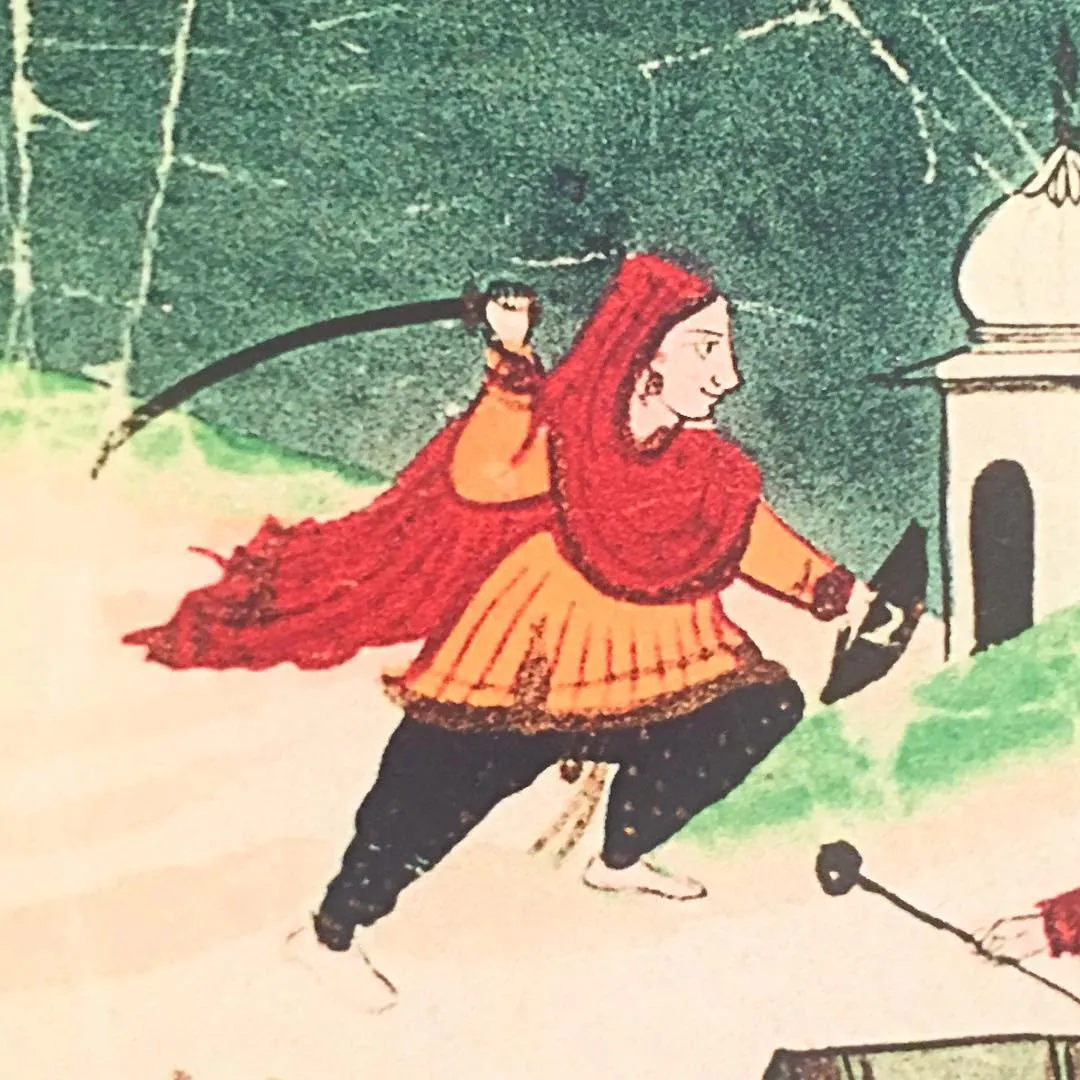
Mai Bhago Ji, also remembered as Mata Bhag Kaur, was a Sikh warrior of Jhabal Kalan in the Majha who in 1705 shamed forty deserters from Guru Gobind Singh Ji's army into returning, rode at their head into the Battle of Khidrana, and survived to serve as one of the Guru's armed bodyguards. She spent her last years teaching at Janwada near Bidar, where Gurdwara Tap Asthan Mai Bhago stands today.
- Punjabi name
- ਮਾਈ ਭਾਗੋ ਜੀ
- Also known as
- Mata Bhag Kaur
- Born
- Jhabal Kalan, Majha (present day Tarn Taran district)
- Dates
- Firm record 1699 to 1708; often dated c. 1670 to c. 1720
- Father
- Bhai Malo Shah, a soldier of Guru Hargobind Ji's army
- Husband
- Bhai Nidhan Singh of Patti
All 9 facts
- Known for
- Leading the forty back; fighting at Khidrana, 1705
- Last years
- Janwada, near Bidar, Karnataka
- Memorials
- Gurdwara Tap Asthan Mai Bhago, Janwada; Bunga Mai Bhago, Nanded
Mai Bhago Ji, also remembered as Mata Bhag Kaur, was a Sikh warrior of Jhabal Kalan in the Majha who led the forty deserters of Anandpur Sahib back to Guru Gobind Singh Ji and fought beside them at the Battle of Khidrana on 29 December 1705. The only survivor of that stand, she recovered from her wounds to serve as one of the Guru's armed bodyguards, and Sikhs honour her as the model of the sant-sipahi, the saint and soldier in one person.
A soldier's daughter of Jhabal
Mai Bhago was born at Jhabal Kalan, in present day Tarn Taran district, into a Dhillon Jat family that had been Sikh for generations. Her grandfather Bhai Pero Shah was the younger brother of Bhai Langah, the chief of eighty four villages who had become a Sikh in the time of Guru Arjan Dev Ji, the fifth Guru. Bhai Langah was remembered as one of the notable Majha Sikhs of the fifth Guru's time, and his brother's family at Jhabal kept that allegiance. Her father, Bhai Malo Shah, had served in the army of Guru Hargobind Ji, and like him she was trained in shastar vidya, the art of arms, growing up alongside her brothers Dilbagh Singh and Bhag Singh in a house where soldiering for the Guru was the family trade. As a young girl she was taken to Anandpur Sahib for darshan of Guru Gobind Singh Ji. She married Bhai Nidhan Singh of Patti, a town of the same Majha country.
The rebuke at Jhabal
In 1705 the forty Sikhs who had signed the bedava at Anandpur came home to their villages around Jhabal, and their story came with them: they had renounced the Guru in the middle of a siege rather than starve with him. Mai Bhago was distressed and angry, and she did not keep it to herself. She criticised the men openly, taunting them for deserting the Guru in his hour of need, until shame did its work and the forty agreed to ride out, find the Guru wherever he was, and beg his forgiveness. She led them herself. Their march across the Malwa, and what happened when they found the Guru at Khidrana, is told on the Forty Mukte page.
The Battle of Khidrana
At Khidrana the forty took position by the pool, the only water for miles, and met the pursuing Mughal army head on. The position was well chosen: an army marching through that dry tract needed the pool as badly as the Guru's party did, and to reach it the pursuers first had to break the forty. Mai Bhago fought in the middle of it; the accounts describe her in the dress of a Khalsa soldier, a keski, a small turban, tied on her head. The stand broke the pursuit and cost every man his life. Her husband Nidhan Singh and her brothers Dilbagh Singh and Bhag Singh were among the dead, their names preserved in the traditional list of the forty. Mai Bhago herself lay gravely wounded on the field, the only one of the party to survive; the Guru, who had watched from a mound and shot arrows into the enemy ranks, had her taken into his care.
Bodyguard of the Guru
Recovered, Mai Bhago did not go home. She stayed with Guru Gobind Singh Ji at Talwandi Sabo and then travelled with him on the long journey south to Nanded, serving as one of his bodyguards. The accounts describe her in warrior's dress, armed with a large lance and a musket, one of a small guard of about ten Sikhs who stayed armed around the Guru; some accounts add that she took to the garb of a Nihang, the Guru's own warrior order. A woman of the Majha, widowed at Khidrana, had become a soldier of the Guru's own household, an almost unheard of place for her time, and the tradition remembers her there with pride. She is linked in this story to Hazur Sahib, Nanded, where the Guru spent his last days.
The Janwada years
After Guru Gobind Singh Ji passed away at Nanded in 1708, Mai Bhago retired further south, to Janwada, eleven kilometres from Bidar in present day Karnataka. There she set up her dera, living in a simple hut, immersed in meditation and teaching Gurmat, the Guru's way, and lived to a ripe old age. Her hut has become Gurdwara Tap Asthan Mai Bhago, the central memorial of her life. At Nanded, a hall inside the Takht Sri Hazur Sahib compound marking where she had lived is still called Bunga Mai Bhago; a bunga there was raised in her memory in 1788 by Jathedar Mohan Singh, and her weapons are preserved in the Takht's collection.
Mai Bhago or Mata Bhag Kaur?
Both names are hers. Bhag Kaur, the fortunate Kaur, is the full name in the Khalsa form, Kaur being the name every initiated Sikh woman bears; Bhago is its affectionate, everyday short form, the name Punjab has always called her by. Mai, like Mata, is a title of respect for a revered elder woman, a mother of the community. Historians note that firm dates for her are few, as for most figures of her time: her life is often dated about 1670 to about 1720, while the documented record runs through the events of 1699 to 1708. What is not in doubt is the place she holds: scholars of Sikh life describe her as the ideal of the Sikh woman, and her image, turbaned and armed in battle, is one of the most reproduced in Sikh popular art. At Sri Muktsar Sahib her name is inseparable from the forty she led, and every retelling of Mela Maghi begins with her rebuke at Jhabal. For Sikh women especially, Mai Bhago remains the standing proof that the Khalsa's call to courage was never addressed to men alone.
Where was Mai Bhago born?
Mai Bhago was born at Jhabal Kalan, a village of the Majha region in present day Tarn Taran district of Punjab, in a Dhillon Jat family of soldiers who had been Sikhs since the time of Guru Arjan Dev Ji. A Gurdwara Janam Asthan at the village marks her birthplace today.
ਮਾਈ ਭਾਗੋ ਜੀ, ਜਿਨ੍ਹਾਂ ਨੂੰ ਮਾਤਾ ਭਾਗ ਕੌਰ ਵਜੋਂ ਵੀ ਯਾਦ ਕੀਤਾ ਜਾਂਦਾ ਹੈ, ਮਾਝੇ ਦੇ ਪਿੰਡ ਝਬਾਲ ਕਲਾਂ ਦੀ ਇੱਕ ਸਿੱਖ ਯੋਧਾ ਸਨ, ਜਿਨ੍ਹਾਂ ਨੇ 1705 ਵਿੱਚ ਅਨੰਦਪੁਰ ਸਾਹਿਬ ਦੇ ਚਾਲੀ ਬੇਦਾਵਾ ਲਿਖਣ ਵਾਲਿਆਂ ਨੂੰ ਵਾਪਸ ਪਰਤਣ ਲਈ ਸ਼ਰਮਿੰਦਾ ਕੀਤਾ, ਖਿਦਰਾਣੇ ਦੀ ਜੰਗ ਵਿੱਚ ਉਨ੍ਹਾਂ ਦੇ ਨਾਲ ਲੜੀਆਂ, ਅਤੇ ਬਚ ਕੇ ਗੁਰੂ ਜੀ ਦੇ ਹਥਿਆਰਬੰਦ ਅੰਗ-ਰੱਖਿਅਕਾਂ ਵਿੱਚ ਸ਼ਾਮਲ ਹੋਈਆਂ ਉਨ੍ਹਾਂ ਨੇ ਆਪਣੇ ਆਖਰੀ ਸਾਲ ਬਿਦਰ ਨੇੜੇ ਜਨਵਾਡਾ ਵਿਖੇ ਸਿੱਖਿਆ ਦਿੰਦਿਆਂ ਬਿਤਾਏ, ਜਿੱਥੇ ਅੱਜ ਗੁਰਦੁਆਰਾ ਤਪ ਅਸਥਾਨ ਮਾਈ ਭਾਗੋ ਖੜ੍ਹਾ ਹੈ
ਝਬਾਲ ਦੀ ਸਿਪਾਹੀ ਧੀ
ਮਾਈ ਭਾਗੋ ਦਾ ਜਨਮ ਝਬਾਲ ਕਲਾਂ ਵਿਖੇ ਹੋਇਆ, ਜੋ ਅੱਜ ਤਰਨ ਤਾਰਨ ਜ਼ਿਲ੍ਹੇ ਵਿੱਚ ਹੈ, ਇੱਕ ਢਿੱਲੋਂ ਜੱਟ ਪਰਿਵਾਰ ਵਿੱਚ, ਜੋ ਪੀੜ੍ਹੀਆਂ ਤੋਂ ਸਿੱਖ ਚਲਿਆ ਆ ਰਿਹਾ ਸੀ ਉਨ੍ਹਾਂ ਦੇ ਦਾਦਾ ਭਾਈ ਪੀਰੋ ਸ਼ਾਹ, ਭਾਈ ਲੰਗਾਹ ਦੇ ਛੋਟੇ ਭਰਾ ਸਨ, ਜੋ ਚੁਰਾਸੀ ਪਿੰਡਾਂ ਦੇ ਸਰਦਾਰ ਸਨ ਅਤੇ ਪੰਜਵੇਂ ਗੁਰੂ, ਗੁਰੂ ਅਰਜਨ ਦੇਵ ਜੀ ਦੇ ਸਮੇਂ ਸਿੱਖ ਬਣੇ ਸਨ ਭਾਈ ਲੰਗਾਹ ਪੰਜਵੇਂ ਗੁਰੂ ਦੇ ਸਮੇਂ ਮਾਝੇ ਦੇ ਪ੍ਰਮੁੱਖ ਸਿੱਖਾਂ ਵਿੱਚੋਂ ਯਾਦ ਕੀਤੇ ਜਾਂਦੇ ਹਨ, ਅਤੇ ਉਨ੍ਹਾਂ ਦੇ ਭਰਾ ਦੇ ਪਰਿਵਾਰ ਨੇ ਝਬਾਲ ਵਿਖੇ ਉਹ ਸੰਬੰਧ ਕਾਇਮ ਰੱਖਿਆ ਉਨ੍ਹਾਂ ਦੇ ਪਿਤਾ, ਭਾਈ ਮਾਲੋ ਸ਼ਾਹ, ਗੁਰੂ ਹਰਗੋਬਿੰਦ ਜੀ ਦੀ ਫੌਜ ਵਿੱਚ ਰਹੇ ਸਨ, ਅਤੇ ਉਨ੍ਹਾਂ ਵਾਂਗ ਹੀ ਧੀ ਨੂੰ ਵੀ ਸ਼ਸਤਰ ਵਿੱਦਿਆ ਦੀ ਸਿਖਲਾਈ ਮਿਲੀ ਉਹ ਆਪਣੇ ਭਰਾਵਾਂ ਦਿਲਬਾਗ ਸਿੰਘ ਅਤੇ ਭਾਗ ਸਿੰਘ ਨਾਲ ਇੱਕ ਅਜਿਹੇ ਘਰ ਵਿੱਚ ਵੱਡੀ ਹੋਈ ਜਿੱਥੇ ਗੁਰੂ ਲਈ ਸਿਪਾਹੀ ਬਣਨਾ ਪਰਿਵਾਰ ਦਾ ਧੰਦਾ ਸੀ ਛੋਟੀ ਉਮਰ ਵਿੱਚ ਉਨ੍ਹਾਂ ਨੂੰ ਅਨੰਦਪੁਰ ਸਾਹਿਬ ਗੁਰੂ ਗੋਬਿੰਦ ਸਿੰਘ ਜੀ ਦੇ ਦਰਸ਼ਨਾਂ ਲਈ ਲਿਜਾਇਆ ਗਿਆ ਉਨ੍ਹਾਂ ਦਾ ਵਿਆਹ ਉਸੇ ਮਾਝੇ ਇਲਾਕੇ ਦੇ ਕਸਬੇ ਪੱਟੀ ਦੇ ਭਾਈ ਨਿਧਾਨ ਸਿੰਘ ਨਾਲ ਹੋਇਆ
ਝਬਾਲ ਵਿੱਚ ਫਿਟਕਾਰ
ਸੰਨ 1705 ਵਿੱਚ ਅਨੰਦਪੁਰ ਵਿਖੇ ਬੇਦਾਵਾ ਲਿਖਣ ਵਾਲੇ ਚਾਲੀ ਸਿੱਖ ਝਬਾਲ ਦੇ ਆਲੇ-ਦੁਆਲੇ ਆਪਣੇ ਪਿੰਡਾਂ ਨੂੰ ਘਰ ਮੁੜ ਆਏ, ਅਤੇ ਉਨ੍ਹਾਂ ਦੀ ਕਹਾਣੀ ਵੀ ਨਾਲ ਆਈ: ਉਨ੍ਹਾਂ ਨੇ ਘੇਰੇ ਦੇ ਵਿਚਕਾਰ, ਗੁਰੂ ਜੀ ਨਾਲ ਭੁੱਖ ਸਾਂਝੀ ਕਰਨ ਦੀ ਬਜਾਏ, ਉਨ੍ਹਾਂ ਨਾਲੋਂ ਸੰਬੰਧ ਤੋੜ ਲਿਆ ਸੀ ਮਾਈ ਭਾਗੋ ਦੁਖੀ ਅਤੇ ਨਾਰਾਜ਼ ਹੋਏ, ਅਤੇ ਉਨ੍ਹਾਂ ਨੇ ਇਹ ਗੱਲ ਆਪਣੇ ਤੱਕ ਨਾ ਰੱਖੀ ਉਨ੍ਹਾਂ ਨੇ ਖੁੱਲ੍ਹੇਆਮ ਉਨ੍ਹਾਂ ਦੀ ਨਿਖੇਧੀ ਕੀਤੀ, ਮੁਸ਼ਕਲ ਘੜੀ ਵਿੱਚ ਗੁਰੂ ਜੀ ਨੂੰ ਛੱਡ ਆਉਣ ਉੱਤੇ ਤਾਅਨੇ ਮਾਰੇ, ਇੱਥੋਂ ਤੱਕ ਕਿ ਸ਼ਰਮ ਨੇ ਆਪਣਾ ਕੰਮ ਕੀਤਾ ਅਤੇ ਚਾਲੀ ਜਣੇ ਗੁਰੂ ਜੀ ਨੂੰ ਜਿੱਥੇ ਵੀ ਹੋਣ, ਲੱਭ ਕੇ ਮੁਆਫ਼ੀ ਮੰਗਣ ਲਈ ਮੰਨ ਗਏ ਉਹ ਆਪ ਉਨ੍ਹਾਂ ਦੇ ਅੱਗੇ ਹੋ ਕੇ ਤੁਰੇ ਮਾਲਵੇ ਵਿੱਚੋਂ ਉਨ੍ਹਾਂ ਦੀ ਯਾਤਰਾ, ਅਤੇ ਖਿਦਰਾਣੇ ਕੋਲ ਗੁਰੂ ਜੀ ਮਿਲਣ ਉੱਤੇ ਜੋ ਹੋਇਆ, ਚਾਲੀ ਮੁਕਤਿਆਂ ਵਾਲੇ ਸਫ਼ੇ ਉੱਤੇ ਦੱਸਿਆ ਗਿਆ ਹੈ
ਖਿਦਰਾਣੇ ਦੀ ਜੰਗ
ਖਿਦਰਾਣੇ ਕੋਲ ਚਾਲੀ ਜਣਿਆਂ ਨੇ ਢਾਬ ਕੋਲ ਮੋਰਚਾ ਸੰਭਾਲਿਆ, ਜੋ ਮੀਲਾਂ ਤੱਕ ਪਾਣੀ ਦਾ ਇੱਕੋ-ਇੱਕ ਸਰੋਤ ਸੀ, ਅਤੇ ਪਿੱਛਾ ਕਰਦੀ ਮੁਗਲ ਫੌਜ ਨਾਲ ਸਾਹਮਣੇ ਟੱਕਰ ਲਈ ਉਹ ਥਾਂ ਚੰਗੀ ਚੁਣੀ ਗਈ ਸੀ: ਉਸ ਸੁੱਕੇ ਇਲਾਕੇ ਵਿੱਚੋਂ ਲੰਘਦੀ ਫੌਜ ਨੂੰ ਢਾਬ ਦੀ ਓਨੀ ਹੀ ਲੋੜ ਸੀ ਜਿੰਨੀ ਗੁਰੂ ਜੀ ਦੀ ਧਿਰ ਨੂੰ, ਅਤੇ ਉੱਥੇ ਪਹੁੰਚਣ ਲਈ ਪਿੱਛਾ ਕਰਨ ਵਾਲਿਆਂ ਨੂੰ ਪਹਿਲਾਂ ਚਾਲੀ ਜਣਿਆਂ ਨੂੰ ਤੋੜਨਾ ਪੈਣਾ ਸੀ ਮਾਈ ਭਾਗੋ ਵਿਚਕਾਰ ਹੋ ਕੇ ਲੜੇ; ਵੇਰਵਿਆਂ ਵਿੱਚ ਉਨ੍ਹਾਂ ਦਾ ਖਾਲਸਾ ਸਿਪਾਹੀ ਦਾ ਪਹਿਰਾਵਾ ਪਾਇਆ ਹੋਣਾ ਅਤੇ ਸਿਰ ਉੱਤੇ ਕੇਸਕੀ, ਛੋਟੀ ਦਸਤਾਰ, ਬੰਨ੍ਹੀ ਹੋਣੀ ਦੱਸੀ ਗਈ ਹੈ ਉਸ ਮੋਰਚੇ ਨੇ ਪਿੱਛਾ ਤੋੜ ਦਿੱਤਾ ਅਤੇ ਹਰ ਆਦਮੀ ਦੀ ਜਾਨ ਲੈ ਲਈ ਉਨ੍ਹਾਂ ਦੇ ਪਤੀ ਨਿਧਾਨ ਸਿੰਘ ਅਤੇ ਭਰਾ ਦਿਲਬਾਗ ਸਿੰਘ ਅਤੇ ਭਾਗ ਸਿੰਘ ਵੀ ਸ਼ਹੀਦਾਂ ਵਿੱਚ ਸਨ, ਜਿਨ੍ਹਾਂ ਦੇ ਨਾਂ ਚਾਲੀ ਜਣਿਆਂ ਦੀ ਪਰੰਪਰਾਗਤ ਸੂਚੀ ਵਿੱਚ ਸਾਂਭੇ ਹੋਏ ਹਨ ਮਾਈ ਭਾਗੋ ਆਪ ਮੈਦਾਨ ਵਿੱਚ ਗੰਭੀਰ ਜ਼ਖ਼ਮੀ ਪਏ ਸਨ, ਧਿਰ ਵਿੱਚੋਂ ਬਚਣ ਵਾਲੇ ਇੱਕੋ-ਇੱਕ ਗੁਰੂ ਜੀ, ਜੋ ਟਿੱਬੇ ਤੋਂ ਦੇਖ ਰਹੇ ਸਨ ਅਤੇ ਦੁਸ਼ਮਣ ਦੀਆਂ ਕਤਾਰਾਂ ਵਿੱਚ ਤੀਰ ਵਰਸਾ ਰਹੇ ਸਨ, ਨੇ ਉਨ੍ਹਾਂ ਨੂੰ ਆਪਣੀ ਦੇਖ-ਰੇਖ ਵਿੱਚ ਲੈ ਲਿਆ
ਗੁਰੂ ਜੀ ਦੇ ਅੰਗ-ਰੱਖਿਅਕ
ਰਾਜ਼ੀ ਹੋ ਕੇ ਮਾਈ ਭਾਗੋ ਘਰ ਨਹੀਂ ਮੁੜੇ ਉਹ ਤਲਵੰਡੀ ਸਾਬੋ ਵਿਖੇ ਗੁਰੂ ਗੋਬਿੰਦ ਸਿੰਘ ਜੀ ਕੋਲ ਰਹੇ, ਅਤੇ ਫਿਰ ਦੱਖਣ ਵੱਲ ਨਾਂਦੇੜ ਦੀ ਲੰਮੀ ਯਾਤਰਾ ਵਿੱਚ ਉਨ੍ਹਾਂ ਦੇ ਨਾਲ ਗਏ, ਉਨ੍ਹਾਂ ਦੇ ਅੰਗ-ਰੱਖਿਅਕਾਂ ਵਿੱਚੋਂ ਇੱਕ ਵਜੋਂ ਵੇਰਵਿਆਂ ਵਿੱਚ ਉਨ੍ਹਾਂ ਦਾ ਯੋਧਿਆਂ ਵਾਲਾ ਪਹਿਰਾਵਾ, ਵੱਡਾ ਬਰਛਾ ਅਤੇ ਬੰਦੂਕ ਫੜੀ ਹੋਣੀ, ਅਤੇ ਗੁਰੂ ਜੀ ਦੇ ਆਲੇ-ਦੁਆਲੇ ਹਥਿਆਰਬੰਦ ਰਹਿਣ ਵਾਲੇ ਲਗਭਗ ਦਸ ਸਿੱਖਾਂ ਦੇ ਛੋਟੇ ਜਥੇ ਵਿੱਚ ਸ਼ਾਮਲ ਹੋਣਾ ਦੱਸਿਆ ਗਿਆ ਹੈ ਕੁਝ ਵੇਰਵਿਆਂ ਵਿੱਚ ਇਹ ਵੀ ਆਉਂਦਾ ਹੈ ਕਿ ਉਨ੍ਹਾਂ ਨੇ ਨਿਹੰਗਾਂ ਵਾਲਾ ਬਾਣਾ ਧਾਰਨ ਕਰ ਲਿਆ ਸੀ, ਗੁਰੂ ਜੀ ਦਾ ਆਪਣਾ ਯੋਧਾ ਪੰਥ ਮਾਝੇ ਦੀ ਇੱਕ ਔਰਤ, ਜੋ ਖਿਦਰਾਣੇ ਕੋਲ ਵਿਧਵਾ ਹੋਈ ਸੀ, ਗੁਰੂ ਜੀ ਦੇ ਆਪਣੇ ਘਰਾਣੇ ਦੀ ਸਿਪਾਹੀ ਬਣ ਗਈ ਸੀ, ਜੋ ਉਸ ਸਮੇਂ ਲਈ ਲਗਭਗ ਸੁਣੀ-ਅਣਸੁਣੀ ਗੱਲ ਸੀ, ਅਤੇ ਪਰੰਪਰਾ ਉਨ੍ਹਾਂ ਨੂੰ ਉੱਥੇ ਮਾਣ ਨਾਲ ਯਾਦ ਕਰਦੀ ਹੈ ਇਸ ਕਹਾਣੀ ਵਿੱਚ ਉਨ੍ਹਾਂ ਦਾ ਸੰਬੰਧ ਹਜ਼ੂਰ ਸਾਹਿਬ, ਨਾਂਦੇੜ ਨਾਲ ਜੁੜਦਾ ਹੈ, ਜਿੱਥੇ ਗੁਰੂ ਜੀ ਨੇ ਆਪਣੇ ਆਖਰੀ ਦਿਨ ਬਿਤਾਏ
ਜਨਵਾਡਾ ਦੇ ਸਾਲ
ਸੰਨ 1708 ਵਿੱਚ ਨਾਂਦੇੜ ਵਿਖੇ ਗੁਰੂ ਗੋਬਿੰਦ ਸਿੰਘ ਜੀ ਦੇ ਜੋਤੀ-ਜੋਤ ਸਮਾਉਣ ਤੋਂ ਬਾਅਦ ਮਾਈ ਭਾਗੋ ਹੋਰ ਦੱਖਣ ਵੱਲ, ਜਨਵਾਡਾ ਚਲੇ ਗਏ, ਜੋ ਅੱਜ ਦੇ ਕਰਨਾਟਕ ਵਿੱਚ ਬਿਦਰ ਤੋਂ ਗਿਆਰਾਂ ਕਿਲੋਮੀਟਰ ਦੂਰ ਹੈ ਉੱਥੇ ਉਨ੍ਹਾਂ ਨੇ ਆਪਣਾ ਡੇਰਾ ਬਣਾਇਆ, ਇੱਕ ਸਾਦਾ ਕੁਟੀਆ ਵਿੱਚ ਰਹਿ ਕੇ, ਸਿਮਰਨ ਵਿੱਚ ਲੀਨ ਹੋ ਕੇ ਅਤੇ ਗੁਰਮਤ ਦੀ ਸਿੱਖਿਆ ਦਿੰਦੇ ਹੋਏ, ਅਤੇ ਚੰਗੀ ਲੰਮੀ ਉਮਰ ਜੀਵੇ ਉਨ੍ਹਾਂ ਦੀ ਕੁਟੀਆ ਹੁਣ ਗੁਰਦੁਆਰਾ ਤਪ ਅਸਥਾਨ ਮਾਈ ਭਾਗੋ ਹੈ, ਜੋ ਉਨ੍ਹਾਂ ਦੇ ਜੀਵਨ ਦੀ ਕੇਂਦਰੀ ਯਾਦਗਾਰ ਹੈ ਨਾਂਦੇੜ ਵਿਖੇ ਤਖ਼ਤ ਸ੍ਰੀ ਹਜ਼ੂਰ ਸਾਹਿਬ ਦੇ ਅਹਾਤੇ ਵਿੱਚ ਇੱਕ ਹਾਲ, ਜੋ ਉਨ੍ਹਾਂ ਦੇ ਰਹਿਣ ਦੀ ਥਾਂ ਨੂੰ ਦਰਸਾਉਂਦਾ ਹੈ, ਅੱਜ ਵੀ ਬੁੰਗਾ ਮਾਈ ਭਾਗੋ ਕਹਾਉਂਦਾ ਹੈ ਉੱਥੇ 1788 ਵਿੱਚ ਜਥੇਦਾਰ ਮੋਹਨ ਸਿੰਘ ਨੇ ਉਨ੍ਹਾਂ ਦੀ ਯਾਦ ਵਿੱਚ ਇੱਕ ਬੁੰਗਾ ਬਣਵਾਇਆ ਸੀ, ਅਤੇ ਉਨ੍ਹਾਂ ਦੇ ਹਥਿਆਰ ਤਖ਼ਤ ਦੇ ਸੰਗ੍ਰਹਿ ਵਿੱਚ ਸਾਂਭੇ ਹੋਏ ਹਨ
ਮਾਈ ਭਾਗੋ ਜਾਂ ਮਾਤਾ ਭਾਗ ਕੌਰ?
ਦੋਵੇਂ ਨਾਂ ਉਨ੍ਹਾਂ ਦੇ ਹੀ ਹਨ ਭਾਗ ਕੌਰ, ਭਾਗਾਂ ਵਾਲੀ ਕੌਰ, ਖਾਲਸਾ ਰੂਪ ਵਿੱਚ ਪੂਰਾ ਨਾਂ ਹੈ, ਕਿਉਂਕਿ ਕੌਰ ਹਰ ਅੰਮ੍ਰਿਤਧਾਰੀ ਸਿੱਖ ਔਰਤ ਦਾ ਨਾਂ ਹੁੰਦਾ ਹੈ ਭਾਗੋ ਉਸ ਦਾ ਪਿਆਰ ਭਰਿਆ, ਰੋਜ਼ ਵਰਤਿਆ ਜਾਣ ਵਾਲਾ ਛੋਟਾ ਰੂਪ ਹੈ, ਜਿਸ ਨਾਂ ਨਾਲ ਪੰਜਾਬ ਨੇ ਉਨ੍ਹਾਂ ਨੂੰ ਹਮੇਸ਼ਾ ਬੁਲਾਇਆ ਹੈ ਮਾਈ, ਮਾਤਾ ਵਾਂਗ, ਕਿਸੇ ਸਤਿਕਾਰਯੋਗ ਵੱਡੀ ਉਮਰ ਵਾਲੀ ਔਰਤ, ਸਮਾਜ ਦੀ ਮਾਂ, ਲਈ ਸਤਿਕਾਰ ਦਾ ਖਿਤਾਬ ਹੈ ਇਤਿਹਾਸਕਾਰ ਦੱਸਦੇ ਹਨ ਕਿ ਉਨ੍ਹਾਂ ਬਾਰੇ ਪੱਕੀਆਂ ਤਾਰੀਖਾਂ ਘੱਟ ਹਨ, ਜਿਵੇਂ ਉਸ ਸਮੇਂ ਦੀਆਂ ਬਹੁਤੀਆਂ ਸ਼ਖਸੀਅਤਾਂ ਬਾਰੇ ਹੁੰਦਾ ਹੈ: ਉਨ੍ਹਾਂ ਦਾ ਜੀਵਨ ਅਕਸਰ ਲਗਭਗ 1670 ਤੋਂ ਲਗਭਗ 1720 ਤੱਕ ਦੱਸਿਆ ਜਾਂਦਾ ਹੈ, ਜਦੋਂ ਕਿ ਦਸਤਾਵੇਜ਼ੀ ਰਿਕਾਰਡ 1699 ਤੋਂ 1708 ਦੀਆਂ ਘਟਨਾਵਾਂ ਵਿੱਚੋਂ ਲੰਘਦਾ ਹੈ ਜਿਸ ਗੱਲ ਵਿੱਚ ਸ਼ੱਕ ਨਹੀਂ, ਉਹ ਹੈ ਉਨ੍ਹਾਂ ਦਾ ਰੁਤਬਾ: ਸਿੱਖ ਜੀਵਨ ਦੇ ਵਿਦਵਾਨ ਉਨ੍ਹਾਂ ਨੂੰ ਸਿੱਖ ਔਰਤ ਦਾ ਆਦਰਸ਼ ਦੱਸਦੇ ਹਨ, ਅਤੇ ਜੰਗ ਵਿੱਚ ਦਸਤਾਰ ਸਜਾਏ ਹਥਿਆਰ ਫੜੀ ਉਨ੍ਹਾਂ ਦੀ ਤਸਵੀਰ ਸਿੱਖ ਲੋਕ-ਕਲਾ ਵਿੱਚ ਸਭ ਤੋਂ ਵੱਧ ਛਪਣ ਵਾਲੀਆਂ ਵਿੱਚੋਂ ਹੈ ਸ੍ਰੀ ਮੁਕਤਸਰ ਸਾਹਿਬ ਵਿਖੇ ਉਨ੍ਹਾਂ ਦਾ ਨਾਂ ਉਨ੍ਹਾਂ ਚਾਲੀ ਜਣਿਆਂ ਨਾਲ ਅਟੁੱਟ ਜੁੜਿਆ ਹੈ ਜਿਨ੍ਹਾਂ ਦੀ ਉਨ੍ਹਾਂ ਨੇ ਅਗਵਾਈ ਕੀਤੀ, ਅਤੇ ਮੇਲਾ ਮਾਘੀ ਦੀ ਹਰ ਕਥਾ ਝਬਾਲ ਵਿੱਚ ਉਨ੍ਹਾਂ ਦੀ ਫਿਟਕਾਰ ਤੋਂ ਸ਼ੁਰੂ ਹੁੰਦੀ ਹੈ ਖਾਸ ਕਰਕੇ ਸਿੱਖ ਔਰਤਾਂ ਲਈ ਮਾਈ ਭਾਗੋ ਇਸ ਗੱਲ ਦਾ ਖੜ੍ਹਾ ਸਬੂਤ ਹਨ ਕਿ ਖਾਲਸੇ ਦੀ ਹਿੰਮਤ ਦੀ ਸੱਦ ਕਦੇ ਸਿਰਫ਼ ਮਰਦਾਂ ਲਈ ਨਹੀਂ ਸੀ
ਮਾਈ ਭਾਗੋ ਦਾ ਜਨਮ ਕਿੱਥੇ ਹੋਇਆ ਸੀ?
ਮਾਈ ਭਾਗੋ ਦਾ ਜਨਮ ਝਬਾਲ ਕਲਾਂ ਵਿਖੇ ਹੋਇਆ ਸੀ, ਜੋ ਅੱਜ ਪੰਜਾਬ ਦੇ ਤਰਨ ਤਾਰਨ ਜ਼ਿਲ੍ਹੇ ਵਿੱਚ ਮਾਝੇ ਇਲਾਕੇ ਦਾ ਪਿੰਡ ਹੈ, ਗੁਰੂ ਅਰਜਨ ਦੇਵ ਜੀ ਦੇ ਸਮੇਂ ਤੋਂ ਸਿੱਖ ਚਲੇ ਆ ਰਹੇ ਸਿਪਾਹੀਆਂ ਦੇ ਢਿੱਲੋਂ ਜੱਟ ਪਰਿਵਾਰ ਵਿੱਚ ਅੱਜ ਪਿੰਡ ਵਿੱਚ ਗੁਰਦੁਆਰਾ ਜਨਮ ਅਸਥਾਨ ਉਨ੍ਹਾਂ ਦੇ ਜਨਮ ਸਥਾਨ ਨੂੰ ਦਰਸਾਉਂਦਾ ਹੈ