
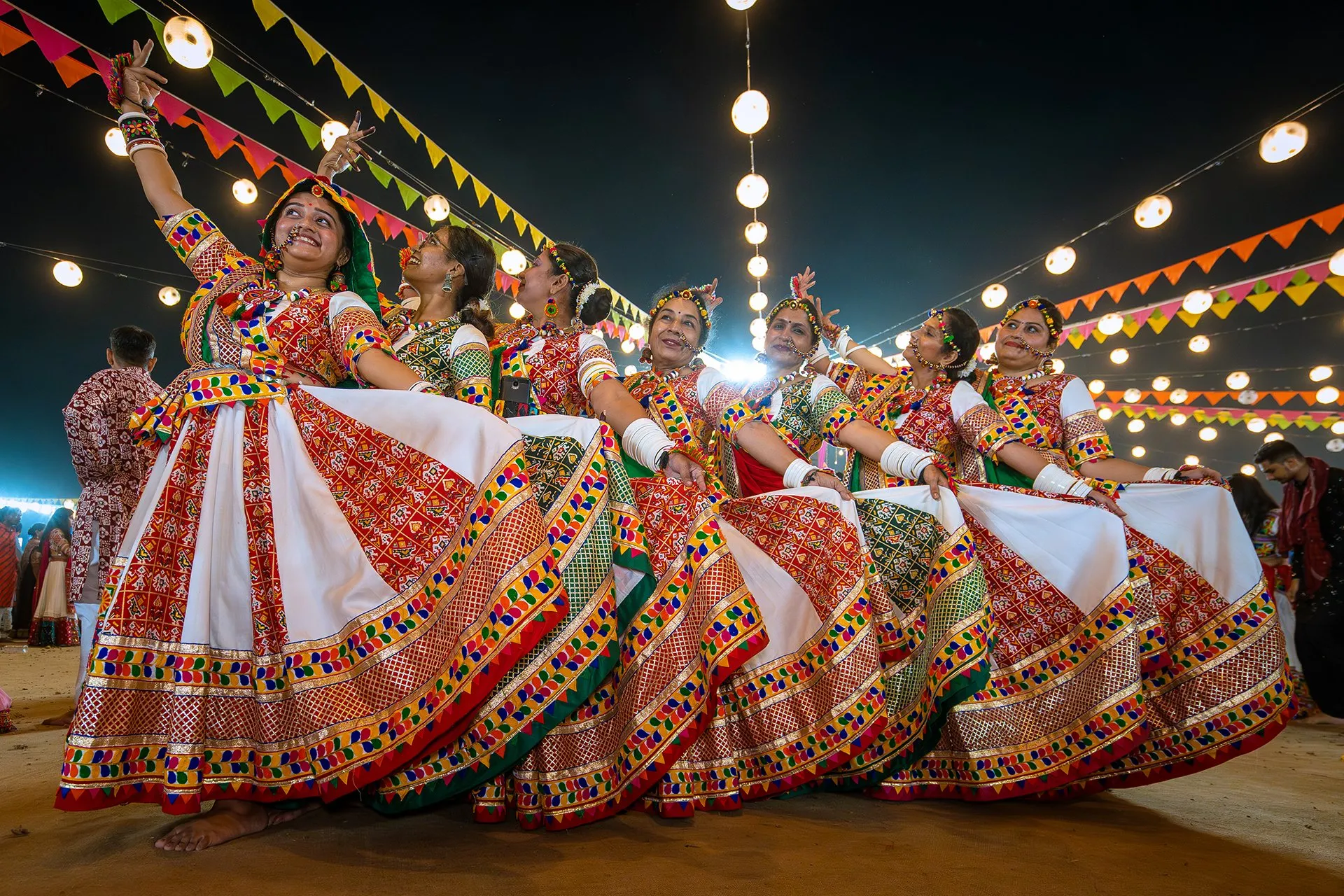
Navratri is the Hindu festival of nine nights devoted to the goddess in her forms as Durga and the nine Navadurgas. The most widely kept is Sharad Navratri in the month of Ashvina, in September or October, which ends with Dussehra on the tenth day. It marks the goddess's nine-night battle with the buffalo demon Mahishasura and her victory. Devotees fast, gather for night worship, dance the garba in Gujarat, and in Bengal celebrate the last days as Durga Puja.
- Punjabi name
- ਨਵਰਾਤਰੀ
- Name
- Nine nights, from the Sanskrit nava, nine, and ratri, night
- Main observance
- Sharad Navratri, in Ashvina (September to October); Chaitra Navratri in spring is also widely kept
- Marks
- Durga's nine-night battle with Mahishasura, victory on the tenth day, Vijayadashami
- The nine forms
- Shailputri, Brahmacharini, Chandraghanta, Kushmanda, Skandamata, Katyayani, Kalaratri, Mahagauri, Siddhidatri
- Famous forms
- Garba and dandiya in Gujarat; Durga Puja in Bengal; Golu doll displays in the south
All 8 facts
- Fasting foods
- Kuttu (buckwheat), singhara (water chestnut), sabudana, fruit, milk, rock salt (sendha namak)
- Close
- Ends at Dussehra, twenty days before Diwali
Navratri means nine nights, and for nine nights each autumn much of India is given over to the goddess. Temples stay open late, neighbourhoods dance in circles around a lamp, households fast and pray, and through it all runs a single story, of the goddess who fought a demon no god could defeat, through nine nights of battle, and won on the tenth day. Navratri is the longest of the season's festivals, and it is the frame inside which Dussehra and Durga Puja stand.
What is Navratri?
Navratri is a nine-night festival of the goddess, kept in her victory form as Durga and in the sequence of her nine forms, the Navadurgas. The year holds several Navratris, but the two kept widely are Chaitra Navratri in spring and Sharad Navratri in the autumn month of Ashvina, September to October, which is by far the greater. Sharad Navratri begins on the first day of the bright half of Ashvina and ends on the ninth night; the tenth day is Dussehra, the victory day, also called Vijayadashami.
Durga's nine-night battle
The festival retells the Devi Mahatmyam's account of the buffalo demon Mahishasura, who had won the boon that no man or god could kill him and drove the gods from heaven. From their combined powers the goddess Durga was formed, armed by each god with his own weapon. She fought Mahishasura and his armies through nine nights, taking form after form as the battle changed, and on the tenth day destroyed him as he shifted out of his buffalo shape. Navratri's nine nights are those nights of battle, and its tenth day is her victory, which is why the period is also a meditation on the goddess as power, shakti, in every form she takes.
The nine forms of the goddess
Each night honours one of the Navadurga forms, each with its own colour, offering and meaning. They run in order: Shailputri, the daughter of the mountains; Brahmacharini, the ascetic; Chandraghanta, with the half-moon on her brow; Kushmanda, the creator of the universe's warmth; Skandamata, mother of the war god Skanda; Katyayani, the fierce warrior born to destroy demons; Kalaratri, the dark night that swallows time itself; Mahagauri, the radiant and forgiving; and Siddhidatri, the giver of siddhis, perfections, who closes the nine. Many devotees dress in the colour assigned to each day, so the festival visibly changes colour as it turns.
How is Navratri celebrated?
In Gujarat the nights belong to garba, the circle dance performed around a perforated earthen lamp, the garba deep, honouring the goddess as the womb of life, and to dandiya raas, danced with paired sticks; Ahmedabad and Vadodara host grounds of thousands of dancers. In Bengal the last days become Durga Puja, with great clay images of the goddess installed in pandals, worshipped with drums and conch shells, and immersed on the tenth day. In the south, homes arrange Golu, stepped displays of dolls and figures, and observe Ayudha Puja for tools and instruments. Across the north, Ramlila plays run through the same nine nights, joining Ram's story to the goddess's.
Fasting during Navratri
Many devotees keep a vrat, a fast, through the nine days, some for the whole period and some keeping the first and last days, or Ashtami, the eighth. The fast is usually a grain-free diet rather than total abstinence: buckwheat (kuttu) and water-chestnut (singhara) flours, sago (sabudana), potatoes, fruit, milk and curd, cooked with rock salt, sendha namak, instead of common salt, and without onion and garlic. The eighth and ninth days often carry kanya puja, when young girls are worshipped as forms of the goddess, their feet washed and a meal served to them.
Navratri in Punjab
Punjab keeps Navratri in the northern manner: Devi temples draw long queues from the first morning, with famous shrines of the region such as the goddess temples of the Shivalik hills filling through the nine days, households keep the vrat and kanya puja, and towns stage the Ramlila on public grounds each night toward Dussehra. Punjab's garba grounds have also grown with its cities, and student and housing-society celebrations in Ludhiana, Mohali and Jalandhar now fill grounds with dancers on the Gujarat pattern, a sign of how the nine nights travel. The festival ends, as everywhere in the north, with the burning of Ravana's effigies and the turn toward Diwali.
When is Navratri?
Sharad Navratri runs from the first to the ninth day of the bright half of Ashvina, with Vijayadashami on the tenth, placing it in September or October; in 2026 it runs from 11 to 19 October, with Dussehra on 20 October. Chaitra Navratri falls in March or April and ends on Ram Navami, the birthday of Ram.
ਨਵਰਾਤਰੀ ਦਾ ਅਰਥ ਹੈ ਨੌਂ ਰਾਤਾਂ, ਅਤੇ ਹਰ ਪਤਝੜ ਨੌਂ ਰਾਤਾਂ ਲਈ ਭਾਰਤ ਦਾ ਵੱਡਾ ਹਿੱਸਾ ਦੇਵੀ ਨੂੰ ਸਮਰਪਿਤ ਹੁੰਦਾ ਹੈ ਮੰਦਰ ਦੇਰ ਤੱਕ ਖੁੱਲ੍ਹੇ ਰਹਿੰਦੇ ਹਨ, ਮੁਹੱਲੇ ਦੀਵੇ ਦੇ ਆਲੇ ਦੁਆਲੇ ਘੇਰਿਆਂ ਵਿੱਚ ਨੱਚਦੇ ਹਨ, ਘਰ ਵਰਤ ਰੱਖਦੇ ਅਤੇ ਅਰਦਾਸ ਕਰਦੇ ਹਨ, ਅਤੇ ਇਸ ਸਭ ਵਿੱਚ ਇੱਕੋ ਕਥਾ ਚਲਦੀ ਹੈ, ਉਸ ਦੇਵੀ ਦੀ ਜਿਸ ਨੇ ਇੱਕ ਦੈਂਤ ਨਾਲ ਲੜਾਈ ਕੀਤੀ ਜਿਸ ਨੂੰ ਕੋਈ ਦੇਵਤਾ ਹਰਾ ਨਹੀਂ ਸਕਿਆ, ਨੌਂ ਰਾਤਾਂ ਦੀ ਲੜਾਈ, ਅਤੇ ਦਸਵੇਂ ਦਿਨ ਜਿੱਤੀ ਨਵਰਾਤਰੀ ਮੌਸਮ ਦੇ ਤਿਉਹਾਰਾਂ ਵਿੱਚੋਂ ਸਭ ਤੋਂ ਲੰਮਾ ਹੈ, ਅਤੇ ਇਹ ਉਹ ਢਾਂਚਾ ਹੈ ਜਿਸ ਦੇ ਅੰਦਰ ਦੁਸਹਿਰਾ ਅਤੇ ਦੁਰਗਾ ਪੂਜਾ ਖੜ੍ਹਦੇ ਹਨ
ਨਵਰਾਤਰੀ ਕੀ ਹੈ?
ਨਵਰਾਤਰੀ ਦੇਵੀ ਦਾ ਨੌਂ ਰਾਤਾਂ ਦਾ ਤਿਉਹਾਰ ਹੈ, ਜੋ ਉਸ ਦੇ ਜਿੱਤ ਵਾਲੇ ਰੂਪ ਦੁਰਗਾ ਵਿੱਚ ਅਤੇ ਉਸ ਦੇ ਨੌਂ ਰੂਪਾਂ ਦੇ ਕ੍ਰਮ, ਨਵਦੁਰਗਾਵਾਂ, ਵਿੱਚ ਮਨਾਇਆ ਜਾਂਦਾ ਹੈ ਸਾਲ ਵਿੱਚ ਕਈ ਨਵਰਾਤਰੀਆਂ ਹੁੰਦੀਆਂ ਹਨ, ਪਰ ਦੋ ਵਿਆਪਕ ਤੌਰ ਉੱਤੇ ਮਨਾਈਆਂ ਜਾਂਦੀਆਂ ਹਨ, ਬਸੰਤ ਵਿੱਚ ਚੇਤਰ ਨਵਰਾਤਰੀ ਅਤੇ ਪਤਝੜ ਦੇ ਮਹੀਨੇ ਅੱਸੂ ਵਿੱਚ ਸ਼ਰਦ ਨਵਰਾਤਰੀ, ਸਤੰਬਰ ਤੋਂ ਅਕਤੂਬਰ, ਜੋ ਬਹੁਤ ਵੱਡੀ ਹੈ ਸ਼ਰਦ ਨਵਰਾਤਰੀ ਅੱਸੂ ਦੇ ਚਾਨਣ ਪੱਖ ਦੇ ਪਹਿਲੇ ਦਿਨ ਸ਼ੁਰੂ ਹੁੰਦੀ ਹੈ ਅਤੇ ਨੌਵੀਂ ਰਾਤ ਨੂੰ ਮੁੱਕਦੀ ਹੈ; ਦਸਵਾਂ ਦਿਨ ਦੁਸਹਿਰਾ ਹੈ, ਜਿੱਤ ਦਾ ਦਿਨ, ਜਿਸ ਨੂੰ ਵਿਜੇਦਸ਼ਮੀ ਵੀ ਕਿਹਾ ਜਾਂਦਾ ਹੈ
ਦੁਰਗਾ ਦੀ ਨੌਂ ਰਾਤਾਂ ਦੀ ਲੜਾਈ
ਇਹ ਤਿਉਹਾਰ ਦੇਵੀ ਮਾਹਾਤਮਯਮ ਦੀ ਮੱਝ ਦੈਂਤ ਮਹਿਸ਼ਾਸੁਰ ਦੀ ਕਥਾ ਨੂੰ ਦੁਹਰਾਉਂਦਾ ਹੈ, ਜਿਸ ਨੇ ਵਰਦਾਨ ਜਿੱਤਿਆ ਸੀ ਕਿ ਕੋਈ ਮਨੁੱਖ ਜਾਂ ਦੇਵਤਾ ਉਸ ਨੂੰ ਮਾਰ ਨਹੀਂ ਸਕਦਾ ਅਤੇ ਦੇਵਤਿਆਂ ਨੂੰ ਸਵਰਗ ਤੋਂ ਕੱਢ ਦਿੱਤਾ ਸੀ ਉਨ੍ਹਾਂ ਦੀਆਂ ਮਿਲੀਆਂ ਸ਼ਕਤੀਆਂ ਤੋਂ ਦੇਵੀ ਦੁਰਗਾ ਬਣਾਈ ਗਈ, ਹਰ ਦੇਵਤੇ ਨੇ ਉਸ ਨੂੰ ਆਪਣਾ ਹਥਿਆਰ ਦਿੱਤਾ ਉਹ ਨੌਂ ਰਾਤਾਂ ਮਹਿਸ਼ਾਸੁਰ ਅਤੇ ਉਸ ਦੀਆਂ ਫੌਜਾਂ ਨਾਲ ਲੜੀ, ਲੜਾਈ ਬਦਲਣ ਨਾਲ ਰੂਪ ਦਰ ਰੂਪ ਧਾਰਦੀ ਰਹੀ, ਅਤੇ ਦਸਵੇਂ ਦਿਨ ਉਸ ਨੂੰ ਨਸ਼ਟ ਕਰ ਦਿੱਤਾ ਜਦੋਂ ਉਹ ਆਪਣੇ ਮੱਝ ਵਾਲੇ ਰੂਪ ਵਿੱਚੋਂ ਬਦਲ ਰਿਹਾ ਸੀ ਨਵਰਾਤਰੀ ਦੀਆਂ ਨੌਂ ਰਾਤਾਂ ਲੜਾਈ ਦੀਆਂ ਉਹ ਰਾਤਾਂ ਹਨ, ਅਤੇ ਇਸ ਦਾ ਦਸਵਾਂ ਦਿਨ ਉਸ ਦੀ ਜਿੱਤ ਹੈ, ਇਸੇ ਲਈ ਇਹ ਸਮਾਂ ਦੇਵੀ ਉੱਤੇ ਸ਼ਕਤੀ ਵਜੋਂ ਧਿਆਨ ਵੀ ਹੈ, ਹਰ ਉਸ ਰੂਪ ਵਿੱਚ ਜੋ ਉਹ ਧਾਰਦੀ ਹੈ
ਦੇਵੀ ਦੇ ਨੌਂ ਰੂਪ
ਹਰ ਰਾਤ ਨਵਦੁਰਗਾ ਰੂਪਾਂ ਵਿੱਚੋਂ ਇੱਕ ਦਾ ਸਨਮਾਨ ਕਰਦੀ ਹੈ, ਹਰ ਇੱਕ ਦਾ ਆਪਣਾ ਰੰਗ, ਭੇਟ ਅਤੇ ਅਰਥ ਹੈ ਉਹ ਕ੍ਰਮ ਵਿੱਚ ਹਨ: ਸ਼ੈਲਪੁੱਤਰੀ, ਪਰਬਤਾਂ ਦੀ ਧੀ; ਬ੍ਰਹਮਚਾਰਿਣੀ, ਤਪੱਸਵੀ; ਚੰਦ੍ਰਘੰਟਾ, ਜਿਸ ਦੇ ਮੱਥੇ ਉੱਤੇ ਅੱਧਾ ਚੰਦ ਹੈ; ਕੂਸ਼ਮਾਂਡਾ, ਬ੍ਰਹਿਮੰਡ ਦੀ ਗਰਮੀ ਦੀ ਰਚਨਹਾਰ; ਸਕੰਦਮਾਤਾ, ਜੰਗ ਦੇ ਦੇਵਤੇ ਸਕੰਦ ਦੀ ਮਾਂ; ਕਾਤਿਆਇਨੀ, ਦੈਂਤਾਂ ਨੂੰ ਨਸ਼ਟ ਕਰਨ ਲਈ ਜਨਮੀ ਭਿਆਨਕ ਯੋਧਾ; ਕਾਲਰਾਤਰੀ, ਹਨੇਰੀ ਰਾਤ ਜੋ ਸਮੇਂ ਨੂੰ ਵੀ ਨਿਗਲ ਜਾਂਦੀ ਹੈ; ਮਹਾਗੌਰੀ, ਚਮਕਦਾਰ ਅਤੇ ਮਾਫ ਕਰਨ ਵਾਲੀ; ਅਤੇ ਸਿੱਧਿਦਾਤਰੀ, ਸਿੱਧੀਆਂ ਦੀ ਦਾਤੀ, ਜੋ ਨੌਂ ਨੂੰ ਪੂਰਾ ਕਰਦੀ ਹੈ ਕਈ ਸ਼ਰਧਾਲੂ ਹਰ ਦਿਨ ਦੇ ਨਿਰਧਾਰਿਤ ਰੰਗ ਵਿੱਚ ਪਹਿਰਾਵਾ ਪਾਉਂਦੇ ਹਨ, ਇਸ ਲਈ ਤਿਉਹਾਰ ਮੁੜਨ ਨਾਲ ਨਾਲ ਦਿਖਣ ਵਿੱਚ ਰੰਗ ਬਦਲਦਾ ਹੈ
ਨਵਰਾਤਰੀ ਕਿਵੇਂ ਮਨਾਈ ਜਾਂਦੀ ਹੈ?
ਗੁਜਰਾਤ ਵਿੱਚ ਰਾਤਾਂ ਗਰਬੇ ਦੀਆਂ ਹਨ, ਉਹ ਘੇਰਾ ਨਾਚ ਜੋ ਇੱਕ ਛੇਕਾਂ ਵਾਲੇ ਮਿੱਟੀ ਦੇ ਦੀਵੇ, ਗਰਬਾ ਦੀਪ, ਦੇ ਆਲੇ ਦੁਆਲੇ ਕੀਤਾ ਜਾਂਦਾ ਹੈ, ਦੇਵੀ ਨੂੰ ਜੀਵਨ ਦੀ ਕੁੱਖ ਵਜੋਂ ਸਨਮਾਨਿਤ ਕਰਦਾ ਹੈ, ਅਤੇ ਡਾਂਡੀਆ ਰਾਸ ਦੀਆਂ, ਜੋ ਡਾਂਗਾਂ ਦੀਆਂ ਜੋੜੀਆਂ ਨਾਲ ਨੱਚਿਆ ਜਾਂਦਾ ਹੈ; ਅਹਿਮਦਾਬਾਦ ਅਤੇ ਵਡੋਦਰਾ ਹਜ਼ਾਰਾਂ ਨਚਾਰਾਂ ਦੇ ਮੈਦਾਨ ਭਰਦੇ ਹਨ ਬੰਗਾਲ ਵਿੱਚ ਆਖਰੀ ਦਿਨ ਦੁਰਗਾ ਪੂਜਾ ਬਣ ਜਾਂਦੇ ਹਨ, ਉੱਥੇ ਦੇਵੀ ਦੀਆਂ ਵੱਡੀਆਂ ਮਿੱਟੀ ਦੀਆਂ ਮੂਰਤੀਆਂ ਪੰਡਾਲਾਂ ਵਿੱਚ ਸਥਾਪਿਤ ਹੁੰਦੀਆਂ ਹਨ, ਢੋਲਾਂ ਅਤੇ ਸ਼ੰਖਾਂ ਨਾਲ ਪੂਜੀਆਂ ਜਾਂਦੀਆਂ ਹਨ, ਅਤੇ ਦਸਵੇਂ ਦਿਨ ਵਿਸਰਜਿਤ ਕੀਤੀਆਂ ਜਾਂਦੀਆਂ ਹਨ ਦੱਖਣ ਵਿੱਚ ਘਰ ਗੋਲੂ ਸਜਾਉਂਦੇ ਹਨ, ਗੁੱਡੀਆਂ ਅਤੇ ਮੂਰਤੀਆਂ ਦੇ ਪੌੜੀਦਾਰ ਪ੍ਰਦਰਸ਼ਨ, ਅਤੇ ਔਜ਼ਾਰਾਂ ਲਈ ਆਯੁਧ ਪੂਜਾ ਕਰਦੇ ਹਨ ਸਾਰੇ ਉੱਤਰ ਵਿੱਚ ਰਾਮਲੀਲਾ ਨਾਟਕ ਉਨ੍ਹਾਂ ਹੀ ਨੌਂ ਰਾਤਾਂ ਭਰ ਚਲਦੇ ਹਨ, ਰਾਮ ਦੀ ਕਥਾ ਨੂੰ ਦੇਵੀ ਦੀ ਕਥਾ ਨਾਲ ਜੋੜਦੇ ਹਨ
ਨਵਰਾਤਰੀ ਦੌਰਾਨ ਵਰਤ
ਕਈ ਸ਼ਰਧਾਲੂ ਨੌਂ ਦਿਨਾਂ ਭਰ ਵਰਤ ਰੱਖਦੇ ਹਨ, ਕੁਝ ਸਾਰੇ ਸਮੇਂ ਲਈ ਅਤੇ ਕੁਝ ਪਹਿਲਾ ਅਤੇ ਆਖਰੀ ਦਿਨ, ਜਾਂ ਅਸ਼ਟਮੀ, ਅੱਠਵਾਂ ਦਿਨ, ਰੱਖਦੇ ਹਨ ਇਹ ਵਰਤ ਆਮ ਤੌਰ ਉੱਤੇ ਪੂਰੀ ਤਰ੍ਹਾਂ ਖਾਣਾ ਛੱਡਣ ਦੀ ਥਾਂ ਅਨਾਜ ਰਹਿਤ ਖੁਰਾਕ ਹੈ: ਕੁੱਟੂ ਅਤੇ ਸਿੰਘਾਰੇ ਦੇ ਆਟੇ, ਸਾਬੂਦਾਣਾ, ਆਲੂ, ਫਲ, ਦੁੱਧ ਅਤੇ ਦਹੀਂ, ਆਮ ਲੂਣ ਦੀ ਥਾਂ ਸੇਂਧਾ ਲੂਣ ਨਾਲ ਪਕਾਏ ਗਏ, ਅਤੇ ਪਿਆਜ਼ ਤੇ ਲਸਣ ਤੋਂ ਬਿਨਾਂ ਅੱਠਵੇਂ ਅਤੇ ਨੌਵੇਂ ਦਿਨ ਅਕਸਰ ਕੰਨਿਆ ਪੂਜਾ ਹੁੰਦੀ ਹੈ, ਜਦੋਂ ਛੋਟੀਆਂ ਕੁੜੀਆਂ ਨੂੰ ਦੇਵੀ ਦੇ ਰੂਪ ਵਜੋਂ ਪੂਜਿਆ ਜਾਂਦਾ ਹੈ, ਉਨ੍ਹਾਂ ਦੇ ਪੈਰ ਧੋਤੇ ਜਾਂਦੇ ਹਨ ਅਤੇ ਉਨ੍ਹਾਂ ਨੂੰ ਖਾਣਾ ਖਵਾਇਆ ਜਾਂਦਾ ਹੈ
ਪੰਜਾਬ ਵਿੱਚ ਨਵਰਾਤਰੀ
ਪੰਜਾਬ ਨਵਰਾਤਰੀ ਉੱਤਰੀ ਅੰਦਾਜ਼ ਵਿੱਚ ਮਨਾਉਂਦਾ ਹੈ: ਦੇਵੀ ਮੰਦਰ ਪਹਿਲੀ ਸਵੇਰ ਤੋਂ ਲੰਮੀਆਂ ਕਤਾਰਾਂ ਖਿੱਚਦੇ ਹਨ, ਖੇਤਰ ਦੇ ਮਸ਼ਹੂਰ ਸ਼ਿਵਾਲਿਕ ਪਹਾੜੀਆਂ ਦੇ ਦੇਵੀ ਮੰਦਰ ਨੌਂ ਦਿਨਾਂ ਭਰ ਭਰਦੇ ਹਨ, ਘਰ ਵਰਤ ਅਤੇ ਕੰਨਿਆ ਪੂਜਾ ਰੱਖਦੇ ਹਨ, ਅਤੇ ਕਸਬੇ ਹਰ ਰਾਤ ਜਨਤਕ ਮੈਦਾਨਾਂ ਉੱਤੇ ਦੁਸਹਿਰੇ ਵੱਲ ਰਾਮਲੀਲਾ ਕਰਦੇ ਹਨ ਪੰਜਾਬ ਦੇ ਗਰਬਾ ਮੈਦਾਨ ਵੀ ਇਸ ਦੇ ਸ਼ਹਿਰਾਂ ਨਾਲ ਵਧੇ ਹਨ, ਅਤੇ ਲੁਧਿਆਣਾ, ਮੋਹਾਲੀ ਅਤੇ ਜਲੰਧਰ ਵਿੱਚ ਵਿਦਿਆਰਥੀ ਅਤੇ ਹਾਊਸਿੰਗ ਸੋਸਾਇਟੀ ਦੇ ਜਸ਼ਨ ਹੁਣ ਗੁਜਰਾਤੀ ਨਮੂਨੇ ਉੱਤੇ ਨਚਾਰਾਂ ਨਾਲ ਮੈਦਾਨ ਭਰਦੇ ਹਨ, ਇਸ ਗੱਲ ਦੀ ਨਿਸ਼ਾਨੀ ਕਿ ਨੌਂ ਰਾਤਾਂ ਕਿਵੇਂ ਸਫਰ ਕਰਦੀਆਂ ਹਨ ਇਹ ਤਿਉਹਾਰ, ਉੱਤਰ ਵਿੱਚ ਹਰ ਥਾਂ ਵਾਂਗ, ਰਾਵਣ ਦੇ ਪੁਤਲਿਆਂ ਦੇ ਸੜਨ ਅਤੇ ਦੀਵਾਲੀ ਵੱਲ ਮੁੜਨ ਨਾਲ ਮੁੱਕਦਾ ਹੈ
ਨਵਰਾਤਰੀ ਕਦੋਂ ਹੁੰਦੀ ਹੈ?
ਸ਼ਰਦ ਨਵਰਾਤਰੀ ਅੱਸੂ ਦੇ ਚਾਨਣ ਪੱਖ ਦੇ ਪਹਿਲੇ ਦਿਨ ਤੋਂ ਨੌਵੇਂ ਦਿਨ ਤੱਕ ਚਲਦੀ ਹੈ, ਦਸਵੇਂ ਦਿਨ ਵਿਜੇਦਸ਼ਮੀ ਨਾਲ, ਜਿਸ ਕਰਕੇ ਇਹ ਸਤੰਬਰ ਜਾਂ ਅਕਤੂਬਰ ਵਿੱਚ ਆਉਂਦੀ ਹੈ; 2026 ਵਿੱਚ ਇਹ 11 ਤੋਂ 19 ਅਕਤੂਬਰ ਤੱਕ ਹੈ, ਦੁਸਹਿਰਾ 20 ਅਕਤੂਬਰ ਨੂੰ ਹੈ ਚੇਤਰ ਨਵਰਾਤਰੀ ਮਾਰਚ ਜਾਂ ਅਪ੍ਰੈਲ ਵਿੱਚ ਆਉਂਦੀ ਹੈ ਅਤੇ ਰਾਮ ਨੌਮੀ, ਰਾਮ ਦੇ ਜਨਮ ਦਿਨ, ਉੱਤੇ ਮੁੱਕਦੀ ਹੈ