
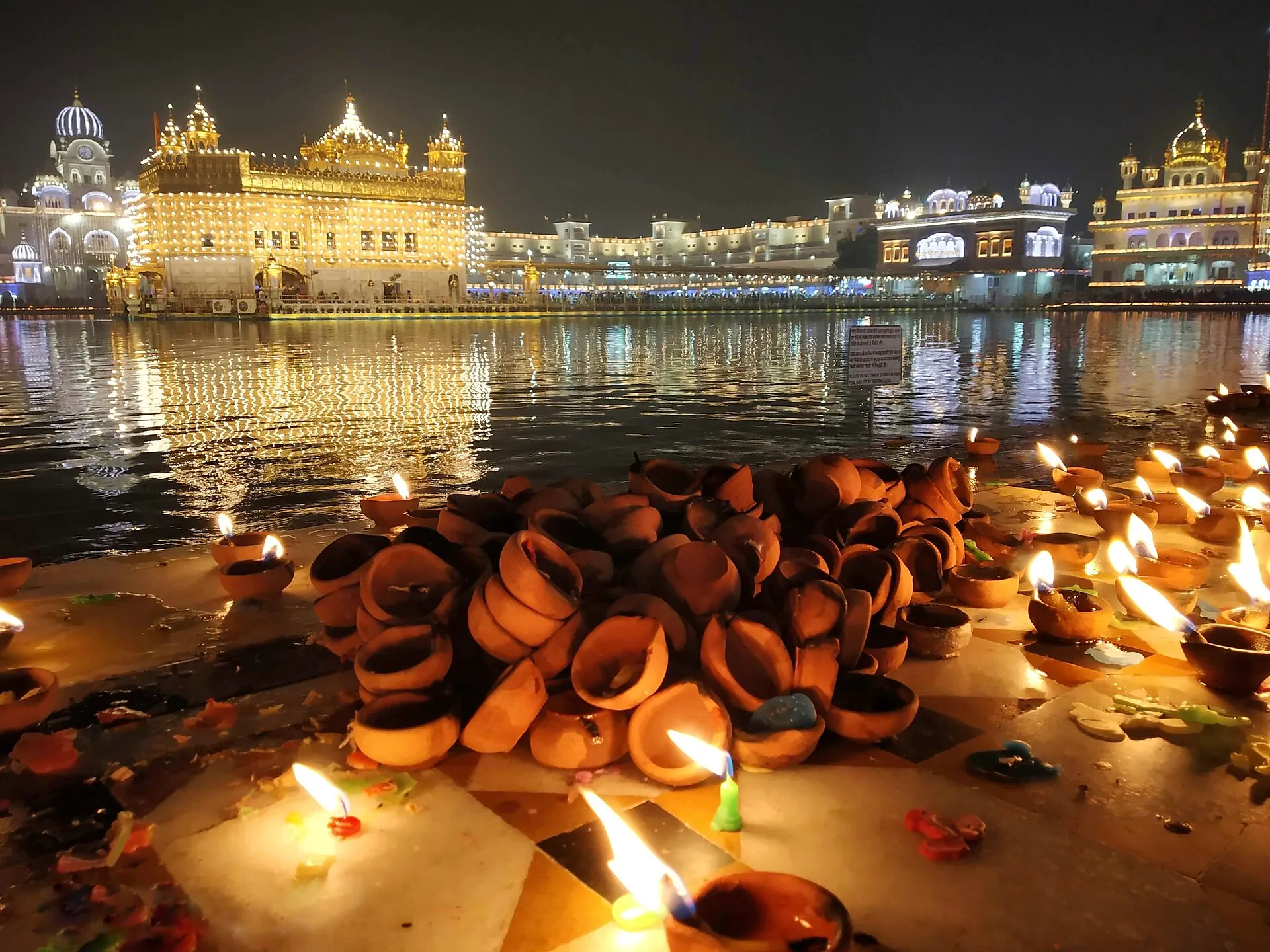
Diwali, also called Deepavali, is the great Hindu festival of lights, celebrated over five days in the autumn months of Ashvina and Kartika, usually in October or November. Families light rows of earthen lamps, worship Lakshmi, the goddess of wealth, and mark the victory of light over darkness. In northern India it celebrates the homecoming of Ram to Ayodhya after his defeat of Ravana, while in Punjab its most famous sight is the Golden Temple at Amritsar glowing with lamps.
- Punjabi name
- ਦੀਵਾਲੀ
- Also called
- Deepavali, from the Sanskrit dipavali, a row of lights
- Duration
- Five days
- Main day
- Lakshmi Puja, on the new moon (amavasya) of Kartika
- Season
- The months of Ashvina and Kartika: usually October to November
- Chief deities
- Lakshmi and Ganesh; Kali in Bengal
All 8 facts
- Marks
- The return of Ram to Ayodhya; Krishna's defeat of the demon Narakasura
- Also observed by
- Jains, who mark Mahavira's liberation; Sikhs, as Bandi Chhor Divas; some Buddhists
Diwali is the most widely loved of Hindu festivals, the festival of lights that turns homes, temples and whole streets golden for five nights each autumn. Its name comes from the Sanskrit dipavali, a row of lights, and a row of small earthen lamps is still its heart: lit on the darkest night of the season, the new moon, to welcome prosperity and to proclaim that light overcomes darkness and good overcomes evil.
What is Diwali?
Diwali is a five-day festival that runs from the thirteenth day of the dark half of the month of Ashvina to the second day of the bright half of Kartika, which places it in October or November in most years. Hindus are its main celebrants, but Jains, Sikhs and some Buddhists keep the same days for reasons of their own, so Diwali belongs to Punjab and to India as a whole, not to one community alone. Its third day, the new moon day, is the peak: Lakshmi Puja, when families worship the goddess of wealth and the remover of obstacles, Ganesh.
The stories behind Diwali
In northern India, Diwali celebrates the night Ram returned to his city of Ayodhya with Sita and Lakshmana after fourteen years of exile and his victory over Ravana, the demon king of Lanka. The people of Ayodhya, the story says, lit rows of lamps to light his way home through the dark, and households have repeated the gesture ever since. The tale is told in the Ramayana, and the festival follows twenty days after Dussehra, which marks the victory itself. Other regions keep other stories: in the south, the second day remembers Krishna destroying the demon Narakasura; in Bengal, the lamps honour Kali; and many families treat the main night as the birthday of Lakshmi, or the day of her marriage to Vishnu.
The five days of Diwali
Each day of Diwali has its own name and work. The first, Dhanteras, is for cleaning the house and buying something new, traditionally gold, with worship of Lakshmi and Kubera, the treasurer of the gods. The second, Naraka Chaturdashi or Choti Diwali, remembers Krishna's defeat of Narakasura and carries prayers for ancestors. The third is Lakshmi Puja, the main day: lamps, candles and fireworks, visits to temples, and doors and windows left open so the goddess can find her way in. The fourth, Govardhan Puja or Annakut, remembers Krishna lifting Mount Govardhan to shelter the cowherds from Indra's storm; it is also the new year of the Vikrama calendar, when merchants close their old account books and open new ones. The fifth day, Bhai Dooj, belongs to brothers and sisters, and resembles Raksha Bandhan: sisters pray for their brothers, who promise them protection.
How is Diwali celebrated?
Preparation begins weeks ahead: houses are cleaned, repaired and whitewashed, courtyards are patterned with rangoli of coloured rice, sand or petals, and bazaars fill with lamps, sweets and new clothes. On the night itself, diyas are set in rows on parapets and windowsills and floated on rivers and ponds. Families exchange gifts and sweets, feed the poor, wear new clothes and visit one another. Fireworks are traditional, though towns now restrict them to limit noise and smoke, and Punjab's governments appeal each year for a green, pollution-free Diwali. In many homes, friendly card games are played for luck, in memory, it is said, of the dice games of the gods.
Diwali in Punjab
Punjab celebrates Diwali with particular splendour at Amritsar, where the Golden Temple is illuminated and its sarovar ringed with lamps for the deepmala, drawing tens of thousands of devotees. The Sikh festival of Bandi Chhor Divas falls on the same day, marking Guru Hargobind Ji's release from Gwalior fort and his return to Amritsar, so the city shines for two festivals at once. Hindu families across Ludhiana, Jalandhar, Patiala and every Punjabi town keep Lakshmi Puja at home and in temples, and the bazaars stay open late for weeks before. Jain families in Punjab mark the night as the anniversary of Mahavira's moksha, his final liberation.
When is Diwali?
Diwali falls on the new moon day of the Hindu month of Kartika, with its five days straddling the end of Ashvina and the start of Kartika. Because the Hindu calendar is lunisolar, the Gregorian date moves: it comes in late October or in November, and the Punjab government declares a public holiday for the main day.
ਦੀਵਾਲੀ ਹਿੰਦੂ ਤਿਉਹਾਰਾਂ ਵਿੱਚੋਂ ਸਭ ਤੋਂ ਵੱਧ ਪਿਆਰਾ ਤਿਉਹਾਰ ਹੈ, ਚਾਨਣ ਦਾ ਤਿਉਹਾਰ ਜੋ ਹਰ ਪਤਝੜ ਪੰਜ ਰਾਤਾਂ ਲਈ ਘਰਾਂ, ਮੰਦਰਾਂ ਅਤੇ ਸਾਰੀਆਂ ਗਲੀਆਂ ਨੂੰ ਸੁਨਹਿਰੀ ਬਣਾ ਦਿੰਦਾ ਹੈ ਇਸ ਦਾ ਨਾਮ ਸੰਸਕ੍ਰਿਤ ਸ਼ਬਦ ਦੀਪਾਵਲੀ ਤੋਂ ਆਇਆ ਹੈ, ਜਿਸ ਦਾ ਅਰਥ ਹੈ ਦੀਵਿਆਂ ਦੀ ਕਤਾਰ, ਅਤੇ ਛੋਟੇ ਮਿੱਟੀ ਦੇ ਦੀਵਿਆਂ ਦੀ ਕਤਾਰ ਹੀ ਅੱਜ ਵੀ ਇਸ ਦਾ ਦਿਲ ਹੈ: ਮੌਸਮ ਦੀ ਸਭ ਤੋਂ ਹਨੇਰੀ ਰਾਤ, ਅਮਾਵਸ ਨੂੰ ਜਗਾਏ ਗਏ, ਖੁਸ਼ਹਾਲੀ ਦਾ ਸਵਾਗਤ ਕਰਨ ਲਈ ਅਤੇ ਇਹ ਐਲਾਨ ਕਰਨ ਲਈ ਕਿ ਚਾਨਣ ਹਨੇਰੇ ਉੱਤੇ ਅਤੇ ਨੇਕੀ ਬਦੀ ਉੱਤੇ ਜਿੱਤ ਪ੍ਰਾਪਤ ਕਰਦੀ ਹੈ
ਦੀਵਾਲੀ ਕੀ ਹੈ?
ਦੀਵਾਲੀ ਪੰਜ ਦਿਨਾਂ ਦਾ ਤਿਉਹਾਰ ਹੈ ਜੋ ਅੱਸੂ ਮਹੀਨੇ ਦੇ ਹਨੇਰੇ ਪੱਖ ਦੇ ਤੇਰ੍ਹਵੇਂ ਦਿਨ ਤੋਂ ਕੱਤਕ ਮਹੀਨੇ ਦੇ ਚਾਨਣ ਪੱਖ ਦੇ ਦੂਜੇ ਦਿਨ ਤੱਕ ਚਲਦਾ ਹੈ, ਜਿਸ ਕਰਕੇ ਇਹ ਜ਼ਿਆਦਾਤਰ ਸਾਲਾਂ ਵਿੱਚ ਅਕਤੂਬਰ ਜਾਂ ਨਵੰਬਰ ਵਿੱਚ ਆਉਂਦਾ ਹੈ ਹਿੰਦੂ ਇਸ ਦੇ ਮੁੱਖ ਮਨਾਉਣ ਵਾਲੇ ਹਨ, ਪਰ ਜੈਨ, ਸਿੱਖ ਅਤੇ ਕੁਝ ਬੋਧੀ ਵੀ ਇਹ ਦਿਨ ਆਪਣੇ ਆਪਣੇ ਕਾਰਨਾਂ ਕਰਕੇ ਮਨਾਉਂਦੇ ਹਨ, ਇਸ ਲਈ ਦੀਵਾਲੀ ਸਿਰਫ ਇੱਕ ਭਾਈਚਾਰੇ ਦੀ ਨਹੀਂ, ਸਗੋਂ ਸਾਰੇ ਪੰਜਾਬ ਅਤੇ ਭਾਰਤ ਦੀ ਹੈ ਇਸ ਦਾ ਤੀਜਾ ਦਿਨ, ਅਮਾਵਸ ਵਾਲਾ ਦਿਨ, ਸਿਖਰ ਹੈ: ਲਕਸ਼ਮੀ ਪੂਜਾ, ਜਦੋਂ ਪਰਿਵਾਰ ਧਨ ਦੀ ਦੇਵੀ ਅਤੇ ਵਿਘਨ ਹਰਨ ਵਾਲੇ ਗਣੇਸ਼ ਦੀ ਪੂਜਾ ਕਰਦੇ ਹਨ
ਦੀਵਾਲੀ ਪਿੱਛੇ ਦੀਆਂ ਕਥਾਵਾਂ
ਉੱਤਰੀ ਭਾਰਤ ਵਿੱਚ ਦੀਵਾਲੀ ਉਸ ਰਾਤ ਨੂੰ ਮਨਾਈ ਜਾਂਦੀ ਹੈ ਜਦੋਂ ਰਾਮ ਚੌਦਾਂ ਸਾਲ ਦੇ ਬਨਵਾਸ ਅਤੇ ਲੰਕਾ ਦੇ ਦੈਂਤ ਰਾਜੇ ਰਾਵਣ ਉੱਤੇ ਜਿੱਤ ਤੋਂ ਬਾਅਦ ਸੀਤਾ ਅਤੇ ਲਕਸ਼ਮਣ ਨਾਲ ਆਪਣੇ ਸ਼ਹਿਰ ਅਯੁੱਧਿਆ ਪਰਤੇ ਸਨ ਕਥਾ ਕਹਿੰਦੀ ਹੈ ਕਿ ਅਯੁੱਧਿਆ ਦੇ ਲੋਕਾਂ ਨੇ ਹਨੇਰੇ ਵਿੱਚ ਉਨ੍ਹਾਂ ਦਾ ਰਾਹ ਰੌਸ਼ਨ ਕਰਨ ਲਈ ਦੀਵਿਆਂ ਦੀਆਂ ਕਤਾਰਾਂ ਜਗਾਈਆਂ, ਅਤੇ ਘਰ ਉਦੋਂ ਤੋਂ ਇਹ ਰੀਤ ਦੁਹਰਾਉਂਦੇ ਆ ਰਹੇ ਹਨ ਇਹ ਕਥਾ ਰਾਮਾਇਣ ਵਿੱਚ ਦੱਸੀ ਗਈ ਹੈ, ਅਤੇ ਇਹ ਤਿਉਹਾਰ ਦੁਸਹਿਰੇ ਤੋਂ ਵੀਹ ਦਿਨ ਬਾਅਦ ਆਉਂਦਾ ਹੈ, ਜੋ ਉਸ ਜਿੱਤ ਦਾ ਦਿਨ ਹੈ ਹੋਰ ਖੇਤਰ ਹੋਰ ਕਥਾਵਾਂ ਰੱਖਦੇ ਹਨ: ਦੱਖਣ ਵਿੱਚ ਦੂਜਾ ਦਿਨ ਕ੍ਰਿਸ਼ਨ ਵੱਲੋਂ ਦੈਂਤ ਨਰਕਾਸੁਰ ਦੇ ਸੰਹਾਰ ਦੀ ਯਾਦ ਹੈ; ਬੰਗਾਲ ਵਿੱਚ ਦੀਵੇ ਕਾਲੀ ਦੇ ਸਨਮਾਨ ਵਿੱਚ ਜਗਦੇ ਹਨ; ਅਤੇ ਕਈ ਪਰਿਵਾਰ ਮੁੱਖ ਰਾਤ ਨੂੰ ਲਕਸ਼ਮੀ ਦਾ ਜਨਮ ਦਿਨ, ਜਾਂ ਵਿਸ਼ਨੂੰ ਨਾਲ ਉਸ ਦੇ ਵਿਆਹ ਦਾ ਦਿਨ ਮੰਨਦੇ ਹਨ
ਦੀਵਾਲੀ ਦੇ ਪੰਜ ਦਿਨ
ਦੀਵਾਲੀ ਦੇ ਹਰ ਦਿਨ ਦਾ ਆਪਣਾ ਨਾਮ ਅਤੇ ਕੰਮ ਹੈ ਪਹਿਲਾ ਦਿਨ, ਧਨਤੇਰਸ, ਘਰ ਦੀ ਸਫਾਈ ਅਤੇ ਕੋਈ ਨਵੀਂ ਚੀਜ਼, ਰਵਾਇਤੀ ਤੌਰ ਉੱਤੇ ਸੋਨਾ, ਖਰੀਦਣ ਲਈ ਹੈ, ਜਿਸ ਵਿੱਚ ਲਕਸ਼ਮੀ ਅਤੇ ਦੇਵਤਿਆਂ ਦੇ ਖਜ਼ਾਨਚੀ ਕੁਬੇਰ ਦੀ ਪੂਜਾ ਹੁੰਦੀ ਹੈ ਦੂਜਾ ਦਿਨ, ਨਰਕ ਚਤੁਰਦਸ਼ੀ ਜਾਂ ਛੋਟੀ ਦੀਵਾਲੀ, ਕ੍ਰਿਸ਼ਨ ਵੱਲੋਂ ਨਰਕਾਸੁਰ ਦੇ ਸੰਹਾਰ ਦੀ ਯਾਦ ਹੈ ਅਤੇ ਪੁਰਖਿਆਂ ਲਈ ਅਰਦਾਸਾਂ ਰੱਖਦਾ ਹੈ ਤੀਜਾ ਦਿਨ ਲਕਸ਼ਮੀ ਪੂਜਾ ਹੈ, ਮੁੱਖ ਦਿਨ: ਦੀਵੇ, ਮੋਮਬੱਤੀਆਂ ਅਤੇ ਆਤਸ਼ਬਾਜ਼ੀ, ਮੰਦਰਾਂ ਦੀ ਯਾਤਰਾ, ਅਤੇ ਦਰਵਾਜ਼ੇ ਤੇ ਖਿੜਕੀਆਂ ਖੁੱਲ੍ਹੀਆਂ ਰੱਖੀਆਂ ਜਾਂਦੀਆਂ ਹਨ ਤਾਂ ਜੋ ਦੇਵੀ ਅੰਦਰ ਆ ਸਕੇ ਚੌਥਾ ਦਿਨ, ਗੋਵਰਧਨ ਪੂਜਾ ਜਾਂ ਅੰਨਕੂਟ, ਕ੍ਰਿਸ਼ਨ ਵੱਲੋਂ ਇੰਦਰ ਦੇ ਤੂਫਾਨ ਤੋਂ ਗੋਪਾਲਕਾਂ ਨੂੰ ਬਚਾਉਣ ਲਈ ਗੋਵਰਧਨ ਪਰਬਤ ਚੁੱਕਣ ਦੀ ਯਾਦ ਹੈ; ਇਹ ਵਿਕਰਮ ਕੈਲੰਡਰ ਦਾ ਨਵਾਂ ਸਾਲ ਵੀ ਹੈ, ਜਦੋਂ ਵਪਾਰੀ ਆਪਣੀਆਂ ਪੁਰਾਣੀਆਂ ਖਾਤਾ ਕਿਤਾਬਾਂ ਬੰਦ ਕਰਕੇ ਨਵੀਆਂ ਖੋਲ੍ਹਦੇ ਹਨ ਪੰਜਵਾਂ ਦਿਨ, ਭਾਈ ਦੂਜ, ਭਰਾਵਾਂ ਅਤੇ ਭੈਣਾਂ ਦਾ ਹੈ, ਅਤੇ ਰਕਸ਼ਾ ਬੰਧਨ ਵਰਗਾ ਹੈ: ਭੈਣਾਂ ਆਪਣੇ ਭਰਾਵਾਂ ਲਈ ਅਰਦਾਸ ਕਰਦੀਆਂ ਹਨ, ਜੋ ਉਨ੍ਹਾਂ ਦੀ ਰਾਖੀ ਦਾ ਪ੍ਰਣ ਕਰਦੇ ਹਨ
ਦੀਵਾਲੀ ਕਿਵੇਂ ਮਨਾਈ ਜਾਂਦੀ ਹੈ?
ਤਿਆਰੀ ਹਫਤਿਆਂ ਪਹਿਲਾਂ ਸ਼ੁਰੂ ਹੋ ਜਾਂਦੀ ਹੈ: ਘਰ ਸਾਫ ਕੀਤੇ ਜਾਂਦੇ ਹਨ, ਮੁਰੰਮਤ ਹੁੰਦੀ ਹੈ ਅਤੇ ਚਿੱਟਾ ਰੰਗ ਹੁੰਦਾ ਹੈ, ਵਿਹੜਿਆਂ ਵਿੱਚ ਰੰਗਦਾਰ ਚੌਲ, ਰੇਤ ਜਾਂ ਫੁੱਲਾਂ ਦੀਆਂ ਪੰਖੜੀਆਂ ਨਾਲ ਰੰਗੋਲੀ ਬਣਾਈ ਜਾਂਦੀ ਹੈ, ਅਤੇ ਬਾਜ਼ਾਰ ਦੀਵਿਆਂ, ਮਠਿਆਈਆਂ ਅਤੇ ਨਵੇਂ ਕੱਪੜਿਆਂ ਨਾਲ ਭਰ ਜਾਂਦੇ ਹਨ ਰਾਤ ਨੂੰ ਦੀਵੇ ਛੱਤਾਂ ਦੀਆਂ ਕੰਧਾਂ ਅਤੇ ਖਿੜਕੀਆਂ ਉੱਤੇ ਕਤਾਰਾਂ ਵਿੱਚ ਰੱਖੇ ਜਾਂਦੇ ਹਨ ਅਤੇ ਦਰਿਆਵਾਂ ਤੇ ਤਲਾਵਾਂ ਵਿੱਚ ਤੈਰਾਏ ਜਾਂਦੇ ਹਨ ਪਰਿਵਾਰ ਤੋਹਫੇ ਅਤੇ ਮਠਿਆਈਆਂ ਵਟਾਉਂਦੇ ਹਨ, ਗਰੀਬਾਂ ਨੂੰ ਖਾਣਾ ਖਵਾਉਂਦੇ ਹਨ, ਨਵੇਂ ਕੱਪੜੇ ਪਾਉਂਦੇ ਹਨ ਅਤੇ ਇੱਕ ਦੂਜੇ ਨੂੰ ਮਿਲਦੇ ਹਨ ਆਤਸ਼ਬਾਜ਼ੀ ਰਵਾਇਤੀ ਹੈ, ਪਰ ਹੁਣ ਸ਼ਹਿਰ ਸ਼ੋਰ ਅਤੇ ਧੂੰਏਂ ਨੂੰ ਘਟਾਉਣ ਲਈ ਇਸ ਉੱਤੇ ਪਾਬੰਦੀਆਂ ਲਾਉਂਦੇ ਹਨ, ਅਤੇ ਪੰਜਾਬ ਦੀਆਂ ਸਰਕਾਰਾਂ ਹਰ ਸਾਲ ਹਰੀ, ਪ੍ਰਦੂਸ਼ਣ ਮੁਕਤ ਦੀਵਾਲੀ ਦੀ ਅਪੀਲ ਕਰਦੀਆਂ ਹਨ ਕਈ ਘਰਾਂ ਵਿੱਚ ਕਿਸਮਤ ਲਈ ਤਾਸ਼ ਦੀਆਂ ਦੋਸਤਾਨਾ ਖੇਡਾਂ ਖੇਡੀਆਂ ਜਾਂਦੀਆਂ ਹਨ, ਜਿਸ ਬਾਰੇ ਕਿਹਾ ਜਾਂਦਾ ਹੈ ਕਿ ਇਹ ਦੇਵਤਿਆਂ ਦੀਆਂ ਪਾਸਾ ਖੇਡਾਂ ਦੀ ਯਾਦ ਹੈ
ਪੰਜਾਬ ਵਿੱਚ ਦੀਵਾਲੀ
ਪੰਜਾਬ ਦੀਵਾਲੀ ਖਾਸ ਸ਼ਾਨ ਨਾਲ ਅੰਮ੍ਰਿਤਸਰ ਵਿੱਚ ਮਨਾਉਂਦਾ ਹੈ, ਜਿੱਥੇ ਦਰਬਾਰ ਸਾਹਿਬ ਰੌਸ਼ਨ ਹੁੰਦਾ ਹੈ ਅਤੇ ਦੀਪਮਾਲਾ ਲਈ ਇਸ ਦੇ ਸਰੋਵਰ ਦੇ ਕਿਨਾਰੇ ਦੀਵੇ ਜਗਦੇ ਹਨ, ਜੋ ਹਜ਼ਾਰਾਂ ਸ਼ਰਧਾਲੂਆਂ ਨੂੰ ਖਿੱਚਦੇ ਹਨ ਸਿੱਖਾਂ ਦਾ ਤਿਉਹਾਰ ਬੰਦੀ ਛੋੜ ਦਿਵਸ ਵੀ ਉਸੇ ਦਿਨ ਆਉਂਦਾ ਹੈ, ਜੋ ਗੁਰੂ ਹਰਗੋਬਿੰਦ ਜੀ ਦੀ ਗਵਾਲੀਅਰ ਦੇ ਕਿਲ੍ਹੇ ਤੋਂ ਰਿਹਾਈ ਅਤੇ ਅੰਮ੍ਰਿਤਸਰ ਵਾਪਸੀ ਦੀ ਯਾਦ ਹੈ, ਇਸ ਲਈ ਸ਼ਹਿਰ ਇੱਕੋ ਸਮੇਂ ਦੋ ਤਿਉਹਾਰਾਂ ਲਈ ਚਮਕਦਾ ਹੈ ਲੁਧਿਆਣਾ, ਜਲੰਧਰ, ਪਟਿਆਲਾ ਅਤੇ ਹਰ ਪੰਜਾਬੀ ਕਸਬੇ ਵਿੱਚ ਹਿੰਦੂ ਪਰਿਵਾਰ ਘਰਾਂ ਅਤੇ ਮੰਦਰਾਂ ਵਿੱਚ ਲਕਸ਼ਮੀ ਪੂਜਾ ਕਰਦੇ ਹਨ, ਅਤੇ ਬਾਜ਼ਾਰ ਹਫਤਿਆਂ ਪਹਿਲਾਂ ਤੋਂ ਦੇਰ ਰਾਤ ਤੱਕ ਖੁੱਲ੍ਹੇ ਰਹਿੰਦੇ ਹਨ ਪੰਜਾਬ ਦੇ ਜੈਨ ਪਰਿਵਾਰ ਇਸ ਰਾਤ ਨੂੰ ਮਹਾਵੀਰ ਦੇ ਮੋਕਸ਼, ਉਨ੍ਹਾਂ ਦੀ ਅੰਤਿਮ ਮੁਕਤੀ, ਦੀ ਵਰ੍ਹੇਗੰਢ ਵਜੋਂ ਮਨਾਉਂਦੇ ਹਨ
ਦੀਵਾਲੀ ਕਦੋਂ ਹੁੰਦੀ ਹੈ?
ਦੀਵਾਲੀ ਹਿੰਦੂ ਮਹੀਨੇ ਕੱਤਕ ਦੀ ਅਮਾਵਸ ਨੂੰ ਆਉਂਦੀ ਹੈ, ਜਿਸ ਦੇ ਪੰਜ ਦਿਨ ਅੱਸੂ ਦੇ ਅੰਤ ਅਤੇ ਕੱਤਕ ਦੀ ਸ਼ੁਰੂਆਤ ਦੇ ਦੋਵੇਂ ਪਾਸੇ ਫੈਲਦੇ ਹਨ ਕਿਉਂਕਿ ਹਿੰਦੂ ਕੈਲੰਡਰ ਚੰਦਰਮਾ ਅਤੇ ਸੂਰਜ ਦੋਵਾਂ ਉੱਤੇ ਅਧਾਰਿਤ ਹੈ, ਅੰਗਰੇਜ਼ੀ ਤਰੀਕ ਬਦਲਦੀ ਰਹਿੰਦੀ ਹੈ: ਇਹ ਅਕਤੂਬਰ ਦੇ ਅੰਤ ਵਿੱਚ ਜਾਂ ਨਵੰਬਰ ਵਿੱਚ ਆਉਂਦੀ ਹੈ, ਅਤੇ ਪੰਜਾਬ ਸਰਕਾਰ ਮੁੱਖ ਦਿਨ ਲਈ ਸਰਕਾਰੀ ਛੁੱਟੀ ਐਲਾਨਦੀ ਹੈ