
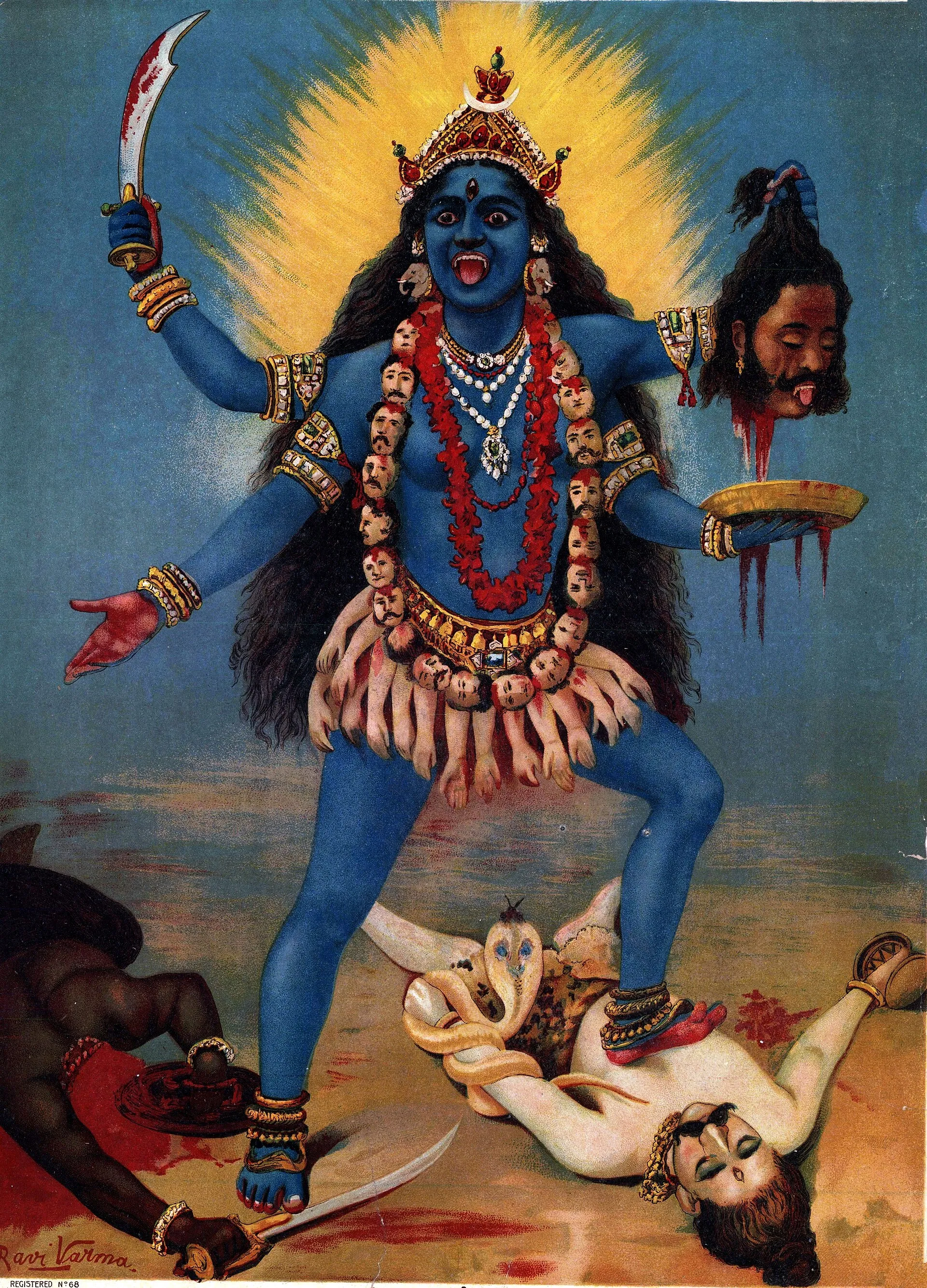
Kali is the fierce form of the Hindu goddess, dark as the night of time itself, who destroys demons, ego and illusion. Hindus believe she sprang from Durga's forehead in battle to slay the demon Raktabija, and that her destructive dance was calmed only when Shiva lay down in her path. Yet her devotees know her above all as a mother, Kali Ma, who cuts away fear and grants liberation; her great festival is Kali Puja, kept in Bengal on the night of Diwali.
- Punjabi name
- ਕਾਲੀ
- What she is
- Goddess of time (kala), death, destruction and liberation; the fierce form of the supreme goddess
- Other names
- Mahakali, Bhadrakali, Dakshina Kali, Chamunda; Kali Ma, the dark mother
- Consort
- Shiva, as Mahakala, great time
- Famous victory
- The slaying of Raktabija and of Chanda and Munda
- Depicted as
- Dark blue or black, tongue out, garland of heads, skirt of arms, sword and severed head in her hands, standing on Shiva
All 9 facts
- Position
- Foremost of the ten Mahavidyas, the great wisdom goddesses
- Main festival
- Kali Puja, on Diwali night in Bengal and Assam
- Famous temples
- Kalighat, Kolkata; Dakshineswar; Kamakhya; Dakshinkali, Nepal
Kali is the goddess who frightens people who do not know her, and comforts those who do. Her image is the most startling in Hinduism: a black or deep blue goddess, hair loose, tongue lolling out, wearing a garland of severed heads and a skirt of arms, a sword in one hand and a severed head in another, standing on the still body of Shiva. Read as the tradition reads it, nothing in that image is evil: it is a picture of time itself, which devours everything, and of the mother who frees her children by cutting away the ego that binds them.
Who is Kali?
Kali's name comes from kala, which means both time and black. She is a form of the supreme goddess, closely bound with Durga and Parvati, and the wife of Shiva in his form as Mahakala, great time. In the Shakta and Tantric traditions she is not a servant of the goddess but the ultimate reality itself. Among the ten Mahavidyas, the great wisdom goddesses of Tantra, she stands first. Her worship is strongest in Bengal, Assam and Nepal, and her devotees include the saint Ramakrishna, who served her image at Dakshineswar and taught that she was the living mother of the universe.
How Kali was born in battle
The Devi Mahatmya tells her birth. In Durga's war against the demons Shumbha and Nishumbha, the generals Chanda and Munda attacked the goddess; from her knitted brows, dark with anger, sprang Kali, gaunt and terrible, who destroyed them and earned the name Chamunda. Then came Raktabija, whose every drop of spilled blood grew into another demon exactly like him, so that the battlefield filled with his copies. Kali stretched out her tongue, drank his blood before it could fall and devoured the clones as Durga struck, until Raktabija bled dry and fell. After the victory her fury would not stop, and the gods feared she would destroy the world, until Shiva lay down in her path; stepping on her husband, Kali came to herself and put out her tongue in shame. That frozen moment, the goddess arrested above Shiva, is her most famous image.
Reading her image
The tradition reads meaning into every detail. The garland of heads is counted as fifty, one for each letter of the Sanskrit alphabet: she is the whole of sound and language, from which all names and forms are built, and she takes them back. The skirt of arms is action and its fruits, stilled. Her darkness is the formless night into which all forms dissolve, and her sword severs ignorance and attachment. Even her playground is a teaching: she is worshipped in cremation grounds, at midnight, because the devotee who faces death in her company has nothing left to fear.
Forms, festivals and temples
Kali takes gentler and fiercer forms. Dakshina Kali, the beloved household goddess of Bengal, stands with her right foot on Shiva and two hands raised in blessing. Bhadrakali, the auspicious Kali, is the great protector of Kerala; Smashana Kali haunts the cremation ground. Her festival, Kali Puja, falls on the new moon night of Diwali in Bengal, Assam and Odisha, when lamps are lit for her while the rest of India worships Lakshmi. Her temples include Kalighat in Kolkata, counted among the Shakti Peethas; Dakshineswar, where Ramakrishna served; and Kamakhya above Guwahati. In Nepal, the temple of Dakshinkali below Kathmandu draws crowds of devotees on Tuesdays and Saturdays.
Kali in Punjab
Bengal learned to sing to Kali through Ramprasad Sen, the 18th-century poet-saint whose Shyama Sangeet, songs to the Dark Mother, are still sung in homes and at Kali Puja. Ramprasad addressed her not as a distant power but as a wilful beloved child and a mother in the same breath, teasing her, scolding her, begging her attention, and his audacious intimacy set the tone of Bengal's devotion: the terrible goddess is met with a child's familiarity, because children are not afraid of their mother.
At Tarapith, in Bengal's Birbhum district, Kali is worshipped in her form as Tara, and the temple is among her most visited in the east. Its fame rests on the saint Bama Khepa, called Bamdev, a 19th-century devotee who lived at the Tarapith cremation ground, was held mad by the world and a beloved child of the goddess by her worshippers, and whose own shrine beside the temple now draws as many offerings as some temples do. The cremation ground beside the shrine is still in daily use, and pilgrims pass between the place of the dead and the temple of the mother without any sense that the two are separate.
Kali is worshipped in Punjab's Hindu temples alongside Durga, whose forms she shares, and Kali Puja is kept by the region's Bengali families and in Kali temples in the cities; Tuesdays and Saturdays, her days, draw steady crowds of women devotees in particular. Punjabi devotees also travel to Kalighat and Kamakhya, and in the diaspora her image stands in temples from London to Toronto, where she is honoured, as everywhere, not as a goddess of horror but as the mother who destroys what harms her children.
ਕਾਲੀ ਉਹ ਦੇਵੀ ਹੈ ਜੋ ਉਨ੍ਹਾਂ ਨੂੰ ਡਰਾਉਂਦੀ ਹੈ ਜੋ ਉਨ੍ਹਾਂ ਨੂੰ ਨਹੀਂ ਜਾਣਦੇ, ਅਤੇ ਉਨ੍ਹਾਂ ਨੂੰ ਤਸੱਲੀ ਦਿੰਦੀ ਹੈ ਜੋ ਜਾਣਦੇ ਹਨ ਉਨ੍ਹਾਂ ਦੀ ਤਸਵੀਰ ਹਿੰਦੂ ਧਰਮ ਵਿੱਚ ਸਭ ਤੋਂ ਹੈਰਾਨ ਕਰਨ ਵਾਲੀ ਹੈ: ਕਾਲੀ ਜਾਂ ਗੂੜ੍ਹੀ ਨੀਲੀ ਦੇਵੀ, ਵਾਲ ਖੁੱਲ੍ਹੇ, ਜੀਭ ਬਾਹਰ ਲਟਕਦੀ, ਵੱਢੇ ਸਿਰਾਂ ਦੀ ਮਾਲਾ ਅਤੇ ਬਾਹਾਂ ਦਾ ਘੱਗਰਾ ਪਹਿਨਿਆ ਹੋਇਆ, ਇੱਕ ਹੱਥ ਵਿੱਚ ਤਲਵਾਰ ਅਤੇ ਦੂਜੇ ਵਿੱਚ ਵੱਢਿਆ ਸਿਰ, ਸ਼ਿਵ ਦੇ ਸ਼ਾਂਤ ਸਰੀਰ ਉੱਤੇ ਖੜ੍ਹੀ ਜਿਵੇਂ ਪਰੰਪਰਾ ਇਸ ਨੂੰ ਪੜ੍ਹਦੀ ਹੈ, ਉਸ ਤਸਵੀਰ ਵਿੱਚ ਕੁਝ ਵੀ ਬੁਰਾ ਨਹੀਂ ਹੈ: ਇਹ ਸਮੇਂ ਦੀ ਆਪ ਤਸਵੀਰ ਹੈ, ਜੋ ਸਭ ਕੁਝ ਨਿਗਲ ਜਾਂਦਾ ਹੈ, ਅਤੇ ਉਸ ਮਾਂ ਦੀ ਜੋ ਹੰਕਾਰ ਨੂੰ ਕੱਟ ਕੇ ਆਪਣੇ ਬੱਚਿਆਂ ਨੂੰ ਮੁਕਤ ਕਰਦੀ ਹੈ ਜੋ ਉਨ੍ਹਾਂ ਨੂੰ ਬੰਨ੍ਹਦਾ ਹੈ
ਕਾਲੀ ਕੌਣ ਹਨ?
ਕਾਲੀ ਦਾ ਨਾਮ ਕਾਲ ਤੋਂ ਬਣਿਆ ਹੈ, ਜਿਸ ਦਾ ਅਰਥ ਸਮਾਂ ਅਤੇ ਕਾਲਾ ਦੋਵੇਂ ਹੈ ਉਹ ਪਰਮ ਦੇਵੀ ਦਾ ਇੱਕ ਰੂਪ ਹੈ, ਦੁਰਗਾ ਅਤੇ ਪਾਰਵਤੀ ਨਾਲ ਡੂੰਘੀ ਤਰ੍ਹਾਂ ਜੁੜੀ, ਅਤੇ ਮਹਾਕਾਲ, ਮਹਾਨ ਸਮੇਂ ਵਜੋਂ ਸ਼ਿਵ ਦੀ ਪਤਨੀ ਸ਼ਾਕਤ ਅਤੇ ਤੰਤਰ ਪਰੰਪਰਾਵਾਂ ਵਿੱਚ ਉਹ ਦੇਵੀ ਦੀ ਸੇਵਕਾ ਨਹੀਂ, ਸਗੋਂ ਆਪ ਪਰਮ ਸੱਚਾਈ ਹੈ ਦਸ ਮਹਾਵਿੱਦਿਆਵਾਂ, ਤੰਤਰ ਦੀਆਂ ਮਹਾਨ ਗਿਆਨ ਦੇਵੀਆਂ ਵਿੱਚੋਂ, ਉਹ ਪਹਿਲੇ ਸਥਾਨ ਉੱਤੇ ਹਨ ਉਨ੍ਹਾਂ ਦੀ ਪੂਜਾ ਬੰਗਾਲ, ਅਸਾਮ ਅਤੇ ਨੇਪਾਲ ਵਿੱਚ ਸਭ ਤੋਂ ਤਾਕਤਵਰ ਹੈ, ਅਤੇ ਉਨ੍ਹਾਂ ਦੇ ਭਗਤਾਂ ਵਿੱਚ ਸੰਤ ਰਾਮਕ੍ਰਿਸ਼ਨ ਸ਼ਾਮਲ ਹਨ, ਜਿਨ੍ਹਾਂ ਨੇ ਦਕਸ਼ਿਣੇਸ਼ਵਰ ਵਿੱਚ ਉਨ੍ਹਾਂ ਦੀ ਮੂਰਤੀ ਦੀ ਸੇਵਾ ਕੀਤੀ ਅਤੇ ਸਿਖਾਇਆ ਕਿ ਉਹ ਬ੍ਰਹਿਮੰਡ ਦੀ ਜੀਵਤ ਮਾਂ ਹਨ
ਕਾਲੀ ਲੜਾਈ ਵਿੱਚ ਕਿਵੇਂ ਪੈਦਾ ਹੋਈ
ਦੇਵੀ ਮਹਾਤਮਿਆ ਉਨ੍ਹਾਂ ਦਾ ਜਨਮ ਦੱਸਦਾ ਹੈ ਦੁਰਗਾ ਦੇ ਦੈਂਤਾਂ ਸ਼ੁੰਭ ਅਤੇ ਨਿਸ਼ੁੰਭ ਵਿਰੁੱਧ ਯੁੱਧ ਵਿੱਚ, ਸੈਨਾਪਤੀਆਂ ਚੰਡ ਅਤੇ ਮੁੰਡ ਨੇ ਦੇਵੀ ਉੱਤੇ ਹਮਲਾ ਕੀਤਾ; ਉਸ ਦੀਆਂ ਗੁੱਸੇ ਨਾਲ ਕਾਲੀਆਂ ਹੋਈਆਂ ਭ੍ਰੂਕੁਟੀਆਂ ਵਿੱਚੋਂ ਕਾਲੀ ਨਿਕਲੀ, ਪਤਲੀ ਅਤੇ ਭਿਆਨਕ, ਜਿਸ ਨੇ ਉਨ੍ਹਾਂ ਨੂੰ ਨਸ਼ਟ ਕੀਤਾ ਅਤੇ ਚਾਮੁੰਡਾ ਨਾਮ ਪਾਇਆ ਫਿਰ ਰਕਤਬੀਜ ਆਇਆ, ਜਿਸ ਦੇ ਡਿੱਗੇ ਖੂਨ ਦੀ ਹਰ ਬੂੰਦ ਉਸ ਵਰਗਾ ਇੱਕ ਹੋਰ ਦੈਂਤ ਬਣ ਜਾਂਦੀ ਸੀ, ਤਾਂ ਕਿ ਰਣਭੂਮੀ ਉਸ ਦੀਆਂ ਨਕਲਾਂ ਨਾਲ ਭਰ ਗਈ ਕਾਲੀ ਨੇ ਆਪਣੀ ਜੀਭ ਫੈਲਾਈ, ਉਸ ਦਾ ਖੂਨ ਡਿੱਗਣ ਤੋਂ ਪਹਿਲਾਂ ਪੀ ਲਿਆ ਅਤੇ ਨਕਲਾਂ ਨੂੰ ਨਿਗਲ ਲਿਆ ਜਦੋਂ ਦੁਰਗਾ ਵਾਰ ਕਰਦੀ ਰਹੀ, ਜਦ ਤੱਕ ਰਕਤਬੀਜ ਦਾ ਖੂਨ ਸੁੱਕ ਗਿਆ ਅਤੇ ਉਹ ਡਿੱਗ ਪਿਆ ਜਿੱਤ ਤੋਂ ਬਾਅਦ ਉਨ੍ਹਾਂ ਦਾ ਕਰੋਧ ਨਾ ਰੁਕਿਆ, ਅਤੇ ਦੇਵਤੇ ਡਰ ਗਏ ਕਿ ਉਹ ਸੰਸਾਰ ਨੂੰ ਨਸ਼ਟ ਕਰ ਦੇਣਗੀਆਂ, ਜਦ ਤੱਕ ਸ਼ਿਵ ਉਨ੍ਹਾਂ ਦੇ ਰਾਹ ਵਿੱਚ ਲੰਮੇ ਨਾ ਪੈ ਗਏ; ਆਪਣੇ ਪਤੀ ਉੱਤੇ ਪੈਰ ਰੱਖ ਕੇ ਕਾਲੀ ਸੁਰਤ ਵਿੱਚ ਆਈਆਂ ਅਤੇ ਸ਼ਰਮ ਨਾਲ ਜੀਭ ਬਾਹਰ ਕੱਢੀ ਉਹ ਜੰਮਿਆ ਹੋਇਆ ਪਲ, ਸ਼ਿਵ ਉੱਤੇ ਰੁਕੀ ਹੋਈ ਦੇਵੀ, ਉਨ੍ਹਾਂ ਦੀ ਸਭ ਤੋਂ ਮਸ਼ਹੂਰ ਤਸਵੀਰ ਹੈ
ਉਨ੍ਹਾਂ ਦੀ ਤਸਵੀਰ ਨੂੰ ਪੜ੍ਹਨਾ
ਪਰੰਪਰਾ ਹਰ ਵੇਰਵੇ ਵਿੱਚ ਅਰਥ ਪੜ੍ਹਦੀ ਹੈ ਸਿਰਾਂ ਦੀ ਮਾਲਾ ਪੰਜਾਹ ਗਿਣੀ ਜਾਂਦੀ ਹੈ, ਸੰਸਕ੍ਰਿਤ ਵਰਨਮਾਲਾ ਦੇ ਹਰ ਅੱਖਰ ਲਈ ਇੱਕ: ਉਹ ਸਾਰੀ ਆਵਾਜ਼ ਅਤੇ ਭਾਸ਼ਾ ਹੈ, ਜਿਸ ਤੋਂ ਸਾਰੇ ਨਾਮ ਅਤੇ ਰੂਪ ਬਣਦੇ ਹਨ, ਅਤੇ ਉਹ ਉਨ੍ਹਾਂ ਨੂੰ ਵਾਪਸ ਲੈ ਲੈਂਦੀ ਹੈ ਬਾਹਾਂ ਦਾ ਘੱਗਰਾ ਕਰਮ ਅਤੇ ਇਸ ਦੇ ਫਲ ਹਨ, ਜੋ ਸ਼ਾਂਤ ਹੋ ਗਏ ਹਨ ਉਨ੍ਹਾਂ ਦਾ ਹਨੇਰਾ ਉਹ ਬੇਰੂਪ ਰਾਤ ਹੈ ਜਿਸ ਵਿੱਚ ਸਾਰੇ ਰੂਪ ਖੁਰ ਜਾਂਦੇ ਹਨ, ਅਤੇ ਉਨ੍ਹਾਂ ਦੀ ਤਲਵਾਰ ਅਗਿਆਨਤਾ ਅਤੇ ਲਗਾਅ ਨੂੰ ਵੱਢਦੀ ਹੈ ਉਨ੍ਹਾਂ ਦਾ ਖੇਡ ਮੈਦਾਨ ਵੀ ਇੱਕ ਸਿੱਖਿਆ ਹੈ: ਉਨ੍ਹਾਂ ਨੂੰ ਸ਼ਮਸ਼ਾਨਾਂ ਵਿੱਚ, ਅੱਧੀ ਰਾਤ ਨੂੰ ਪੂਜਿਆ ਜਾਂਦਾ ਹੈ, ਕਿਉਂਕਿ ਜੋ ਸ਼ਰਧਾਲੂ ਉਨ੍ਹਾਂ ਦੀ ਸੰਗਤ ਵਿੱਚ ਮੌਤ ਦਾ ਸਾਹਮਣਾ ਕਰਦਾ ਹੈ ਉਸ ਲਈ ਡਰਨ ਵਾਲਾ ਕੁਝ ਨਹੀਂ ਬਚਦਾ
ਰੂਪ, ਤਿਉਹਾਰ ਅਤੇ ਮੰਦਰ
ਕਾਲੀ ਕੋਮਲ ਅਤੇ ਉਗਰ ਦੋਵੇਂ ਰੂਪ ਲੈਂਦੀਆਂ ਹਨ ਦਕਸ਼ਿਣਾ ਕਾਲੀ, ਬੰਗਾਲ ਦੀ ਪਿਆਰੀ ਘਰੇਲੂ ਦੇਵੀ, ਸ਼ਿਵ ਉੱਤੇ ਆਪਣਾ ਸੱਜਾ ਪੈਰ ਰੱਖ ਕੇ ਖੜ੍ਹੀ ਹੁੰਦੀ ਹੈ ਅਤੇ ਦੋ ਹੱਥ ਅਸੀਸ ਵਿੱਚ ਚੁੱਕੇ ਹੁੰਦੇ ਹਨ ਭਦਰਕਾਲੀ, ਸ਼ੁਭ ਕਾਲੀ, ਕੇਰਲਾ ਦੀ ਮਹਾਨ ਰੱਖਿਅਕ ਹੈ; ਸ਼ਮਸ਼ਾਨ ਕਾਲੀ ਸ਼ਮਸ਼ਾਨ ਵਿੱਚ ਵਿਚਰਦੀ ਹੈ ਉਨ੍ਹਾਂ ਦਾ ਤਿਉਹਾਰ, ਕਾਲੀ ਪੂਜਾ, ਬੰਗਾਲ, ਅਸਾਮ ਅਤੇ ਓਡੀਸ਼ਾ ਵਿੱਚ ਦੀਵਾਲੀ ਦੀ ਨਵੇਂ ਚੰਦ ਵਾਲੀ ਰਾਤ ਨੂੰ ਪੈਂਦਾ ਹੈ, ਜਦੋਂ ਉਨ੍ਹਾਂ ਲਈ ਦੀਵੇ ਜਗਾਏ ਜਾਂਦੇ ਹਨ ਜਦੋਂ ਬਾਕੀ ਭਾਰਤ ਲਕਸ਼ਮੀ ਨੂੰ ਪੂਜਦਾ ਹੈ ਉਨ੍ਹਾਂ ਦੇ ਮੰਦਰਾਂ ਵਿੱਚ ਕੋਲਕਾਤਾ ਦਾ ਕਾਲੀਘਾਟ ਸ਼ਾਮਲ ਹੈ, ਜੋ ਸ਼ਕਤੀ ਪੀਠਾਂ ਵਿੱਚ ਗਿਣਿਆ ਜਾਂਦਾ ਹੈ; ਦਕਸ਼ਿਣੇਸ਼ਵਰ, ਜਿੱਥੇ ਰਾਮਕ੍ਰਿਸ਼ਨ ਨੇ ਸੇਵਾ ਕੀਤੀ; ਅਤੇ ਗੁਵਾਹਾਟੀ ਦੇ ਉੱਪਰ ਕਾਮਾਖਿਆ ਨੇਪਾਲ ਵਿੱਚ, ਕਾਠਮੰਡੂ ਦੇ ਹੇਠਾਂ ਦਕਸ਼ਿਣਕਾਲੀ ਦਾ ਮੰਦਰ ਮੰਗਲਵਾਰ ਅਤੇ ਸ਼ਨੀਵਾਰ ਨੂੰ ਸ਼ਰਧਾਲੂਆਂ ਦੀ ਭੀੜ ਖਿੱਚਦਾ ਹੈ
ਪੰਜਾਬ ਵਿੱਚ ਕਾਲੀ
ਬੰਗਾਲ ਨੇ ਕਾਲੀ ਨੂੰ ਗਾ ਕੇ ਬੁਲਾਉਣਾ ਰਾਮਪ੍ਰਸਾਦ ਸੇਨ ਰਾਹੀਂ ਸਿੱਖਿਆ, 18ਵੀਂ ਸਦੀ ਦੇ ਕਵੀ-ਸੰਤ ਜਿਨ੍ਹਾਂ ਦੇ ਸ਼ਿਆਮਾ ਸੰਗੀਤ, ਕਾਲੀ ਮਾਂ ਲਈ ਗੀਤ, ਅੱਜ ਵੀ ਘਰਾਂ ਵਿੱਚ ਅਤੇ ਕਾਲੀ ਪੂਜਾ ਉੱਤੇ ਗਾਏ ਜਾਂਦੇ ਹਨ ਰਾਮਪ੍ਰਸਾਦ ਨੇ ਉਨ੍ਹਾਂ ਨੂੰ ਦੂਰ ਦੀ ਸ਼ਕਤੀ ਵਜੋਂ ਨਹੀਂ, ਸਗੋਂ ਇੱਕੋ ਸਾਹ ਵਿੱਚ ਇੱਕ ਜ਼ਿੱਦੀ ਪਿਆਰੇ ਬੱਚੇ ਅਤੇ ਇੱਕ ਮਾਂ ਵਜੋਂ ਸੰਬੋਧਿਤ ਕੀਤਾ, ਉਨ੍ਹਾਂ ਨੂੰ ਛੇੜਦਿਆਂ, ਝਿੜਕਦਿਆਂ, ਉਨ੍ਹਾਂ ਦਾ ਧਿਆਨ ਮੰਗਦਿਆਂ, ਅਤੇ ਉਨ੍ਹਾਂ ਦੀ ਦਲੇਰ ਨੇੜਤਾ ਨੇ ਬੰਗਾਲ ਦੀ ਭਗਤੀ ਦਾ ਸੁਰ ਤੈਅ ਕੀਤਾ: ਭਿਆਨਕ ਦੇਵੀ ਨੂੰ ਬੱਚੇ ਦੀ ਜਾਣ-ਪਛਾਣ ਨਾਲ ਮਿਲਿਆ ਜਾਂਦਾ ਹੈ, ਕਿਉਂਕਿ ਬੱਚੇ ਆਪਣੀ ਮਾਂ ਤੋਂ ਨਹੀਂ ਡਰਦੇ
ਬੰਗਾਲ ਦੇ ਬੀਰਭੂਮ ਜ਼ਿਲ੍ਹੇ ਦੇ ਤਾਰਾਪੀਠ ਵਿੱਚ, ਕਾਲੀ ਨੂੰ ਉਨ੍ਹਾਂ ਦੇ ਤਾਰਾ ਰੂਪ ਵਿੱਚ ਪੂਜਿਆ ਜਾਂਦਾ ਹੈ, ਅਤੇ ਮੰਦਰ ਪੂਰਬ ਵਿੱਚ ਉਨ੍ਹਾਂ ਦੇ ਸਭ ਤੋਂ ਵੱਧ ਵੇਖੇ ਜਾਣ ਵਾਲੇ ਮੰਦਰਾਂ ਵਿੱਚੋਂ ਇੱਕ ਹੈ ਇਸ ਦੀ ਮਸ਼ਹੂਰੀ ਸੰਤ ਬਾਮਾ ਖੇਪਾ ਉੱਤੇ ਟਿਕੀ ਹੈ, ਜਿਨ੍ਹਾਂ ਨੂੰ ਬਾਮਦੇਵ ਕਿਹਾ ਜਾਂਦਾ ਹੈ, 19ਵੀਂ ਸਦੀ ਦੇ ਇੱਕ ਸ਼ਰਧਾਲੂ ਜੋ ਤਾਰਾਪੀਠ ਸ਼ਮਸ਼ਾਨ ਵਿੱਚ ਰਹਿੰਦੇ ਸਨ, ਸੰਸਾਰ ਦੁਆਰਾ ਪਾਗਲ ਮੰਨੇ ਜਾਂਦੇ ਸਨ ਅਤੇ ਉਨ੍ਹਾਂ ਦੇ ਸ਼ਰਧਾਲੂਆਂ ਦੁਆਰਾ ਦੇਵੀ ਦੇ ਪਿਆਰੇ ਬੱਚੇ, ਅਤੇ ਜਿਨ੍ਹਾਂ ਦਾ ਮੰਦਰ ਦੇ ਕੋਲ ਆਪਣਾ ਸਥਾਨ ਹੁਣ ਕੁਝ ਮੰਦਰਾਂ ਜਿੰਨੀਆਂ ਭੇਟਾਂ ਖਿੱਚਦਾ ਹੈ ਸਥਾਨ ਦੇ ਕੋਲ ਸ਼ਮਸ਼ਾਨ ਅੱਜ ਵੀ ਰੋਜ਼ ਵਰਤਿਆ ਜਾਂਦਾ ਹੈ, ਅਤੇ ਯਾਤਰੀ ਮੁਰਦਿਆਂ ਦੀ ਥਾਂ ਅਤੇ ਮਾਂ ਦੇ ਮੰਦਰ ਵਿਚਕਾਰ ਬਿਨਾਂ ਇਸ ਭਾਵਨਾ ਦੇ ਲੰਘਦੇ ਹਨ ਕਿ ਦੋਵੇਂ ਵੱਖਰੇ ਹਨ
ਕਾਲੀ ਨੂੰ ਪੰਜਾਬ ਦੇ ਹਿੰਦੂ ਮੰਦਰਾਂ ਵਿੱਚ ਦੁਰਗਾ ਨਾਲ ਪੂਜਿਆ ਜਾਂਦਾ ਹੈ, ਜਿਨ੍ਹਾਂ ਦੇ ਰੂਪ ਉਹ ਸਾਂਝੇ ਕਰਦੀਆਂ ਹਨ, ਅਤੇ ਕਾਲੀ ਪੂਜਾ ਖੇਤਰ ਦੇ ਬੰਗਾਲੀ ਪਰਿਵਾਰਾਂ ਦੁਆਰਾ ਅਤੇ ਸ਼ਹਿਰਾਂ ਦੇ ਕਾਲੀ ਮੰਦਰਾਂ ਵਿੱਚ ਕੀਤੀ ਜਾਂਦੀ ਹੈ; ਮੰਗਲਵਾਰ ਅਤੇ ਸ਼ਨੀਵਾਰ, ਉਨ੍ਹਾਂ ਦੇ ਦਿਨ, ਖਾਸ ਤੌਰ ਉੱਤੇ ਔਰਤ ਸ਼ਰਧਾਲੂਆਂ ਦੀ ਸਥਿਰ ਭੀੜ ਖਿੱਚਦੇ ਹਨ ਪੰਜਾਬੀ ਸ਼ਰਧਾਲੂ ਕਾਲੀਘਾਟ ਅਤੇ ਕਾਮਾਖਿਆ ਦੀ ਯਾਤਰਾ ਵੀ ਕਰਦੇ ਹਨ, ਅਤੇ ਪਰਦੇਸ ਵਿੱਚ ਉਨ੍ਹਾਂ ਦੀ ਤਸਵੀਰ ਲੰਡਨ ਤੋਂ ਟੋਰਾਂਟੋ ਤੱਕ ਮੰਦਰਾਂ ਵਿੱਚ ਖੜ੍ਹੀ ਹੈ, ਜਿੱਥੇ ਉਨ੍ਹਾਂ ਨੂੰ, ਹਰ ਥਾਂ ਵਾਂਗ, ਡਰ ਦੀ ਦੇਵੀ ਵਜੋਂ ਨਹੀਂ, ਸਗੋਂ ਉਸ ਮਾਂ ਵਜੋਂ ਸਤਿਕਾਰਿਆ ਜਾਂਦਾ ਹੈ ਜੋ ਆਪਣੇ ਬੱਚਿਆਂ ਨੂੰ ਨੁਕਸਾਨ ਪਹੁੰਚਾਉਣ ਵਾਲੀ ਹਰ ਚੀਜ਼ ਨੂੰ ਨਸ਼ਟ ਕਰਦੀ ਹੈ