
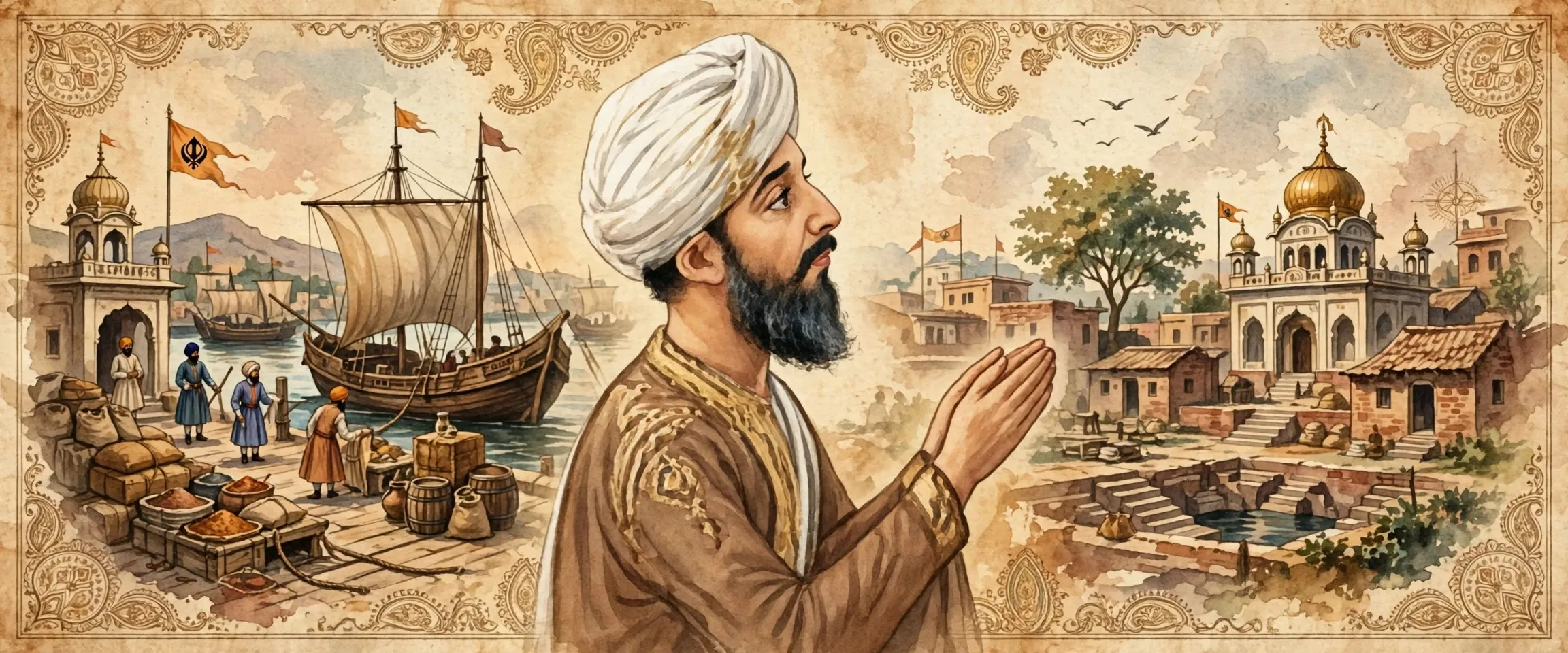
Baba Makhan Shah Lubana (1619-1674) was a wealthy Lubana trader and devout Sikh who found the ninth Guru, Guru Tegh Bahadur Ji, at Bakala in 1664. Saved at sea, he had vowed 500 gold mohars to the Guru, and only the true Guru knew of the vow. His rooftop cry, Guru Ladho Re, ended the confusion after Guru Har Krishan Ji.
- Punjabi name
- ਬਾਬਾ ਮੱਖਣ ਸ਼ਾਹ ਲੁਬਾਣਾ
- Born
- 7 July 1619 (23 Ashad 1676 Bikrami)
- Birthplace
- Tanda (scholars differ: Muzaffarabad district, Jammu and Kashmir; Jhelum; or Kathiawad, Gujarat)
- Died
- 1674, Raja Harpal village, Sialkot (now in Pakistan)
- Parents
- Bhai Dasa and Vijay Devi
- Spouse
- Bibi Sital Devi (Suljai)
All 10 facts
- Clan
- Pelia gotra of the Lubana tribe
- Occupation
- Merchant trader by land and sea
- Known for
- Finding Guru Tegh Bahadur Ji at Baba Bakala
- Mother tongue
- Labanki
Baba Makhan Shah Lubana (1619-1674) was a wealthy Lubana trader and devout Sikh who found the ninth Guru, Guru Tegh Bahadur Ji, at Bakala in 1664. Saved at sea, he had vowed 500 gold mohars to the Guru, and only the true Guru knew of the vow. His rooftop cry, Guru Ladho Re, ended the confusion after Guru Har Krishan Ji.
A trader of the Lubana clan
Makhan Shah Ji was born on 7 July 1619, the 23rd of Ashad 1676 Bikrami, to Bhai Dasa, a devout Sikh of Guru Hargobind Ji, and Vijay Devi. He belonged to the Pelia gotra of the Lubana tribe, a community of traders, and his mother tongue was Labanki. He learned Sanskrit, Persian and Arabic, and he learned the trade of his father, carrying goods by land and by sea.
Where he was born is not settled. The Sikh Encyclopedia places his home village of Tanda in present day Muzaffarabad district of Jammu and Kashmir. Other accounts give Tanda in Jhelum district, now in Pakistan, and several scholars, among them Macauliffe, hold that he was a native of Kathiawad in Gujarat, where many Labanas still live. What the sources agree on is the man himself: a rich trader of the Pelia clan, married to Bibi Sital Devi, known as Suljai, the daughter of Naik Puroshotam Das. Sources differ on the names of his children, and Lal Chand is the name most often given.
His trade reached far beyond Punjab. He dealt in spices, Bengali silk and Kashmiri shawls, carrying them by camel, ox and horse across India and by ship across the sea, with Surat as his main port and trade reaching as far as the Mediterranean and Portugal. Yet he was a Sikh of the Guru's house from the time of the sixth Guru: the Bhatt Vahis record his caravan travelling with Guru Hargobind Ji's party to Kashmir, and Guru Har Rai Ji stayed at his home in Kashmir in 1660.
The storm at sea and the vow of 500 mohars
One voyage nearly ended his life. His ship, laden with valuable goods, was caught in a furious storm at sea. Some accounts say the vessel ran aground on a sandbank near an island and lay stuck for days; others tell of waves breaking over the deck and lightning splitting the sail. In his helplessness Makhan Shah Ji prayed to the Guru and vowed that if his ship and his men were saved, he would offer 500 gold mohars to the Guru. The storm eased, the ship reached port safely, and he set out at once to keep his vow.
ਬਾਬਾ ਮੱਖਣ ਸ਼ਾਹ ਲੁਬਾਣਾ (1619-1674) ਅਮੀਰ ਲੁਬਾਣਾ ਵਪਾਰੀ ਅਤੇ ਗੁਰੂ ਦੇ ਸੱਚੇ ਸਿੱਖ ਸਨ, ਜਿਨ੍ਹਾਂ ਨੇ 1664 ਵਿੱਚ ਬਕਾਲਾ ਵਿਖੇ ਨੌਵੇਂ ਗੁਰੂ, ਗੁਰੂ ਤੇਗ਼ ਬਹਾਦਰ ਜੀ ਨੂੰ ਲੱਭਿਆ। ਸਮੁੰਦਰ ਵਿੱਚ ਬਚ ਜਾਣ ਤੋਂ ਬਾਅਦ ਉਨ੍ਹਾਂ ਨੇ ਗੁਰੂ ਨੂੰ 500 ਸੋਨੇ ਦੀਆਂ ਮੋਹਰਾਂ ਦੇਣ ਦੀ ਮੰਨਤ ਮੰਨੀ ਸੀ, ਅਤੇ ਸੱਚੇ ਗੁਰੂ ਤੋਂ ਬਿਨਾਂ ਕੋਈ ਵੀ ਉਸ ਮੰਨਤ ਬਾਰੇ ਨਹੀਂ ਜਾਣਦਾ ਸੀ। ਉਨ੍ਹਾਂ ਦੀ ਛੱਤ ਤੋਂ ਲਾਈ ਗੁਰੂ ਲਾਧੋ ਰੇ ਦੀ ਅਵਾਜ਼ ਨੇ ਗੁਰੂ ਹਰਿਕ੍ਰਿਸ਼ਨ ਜੀ ਦੇ ਜੋਤੀ ਜੋਤ ਸਮਾਉਣ ਤੋਂ ਬਾਅਦ ਫੈਲੀ ਉਲਝਣ ਨੂੰ ਖ਼ਤਮ ਕਰ ਦਿੱਤਾ।
ਲੁਬਾਣਾ ਕਬੀਲੇ ਦਾ ਵਪਾਰੀ
ਮੱਖਣ ਸ਼ਾਹ ਜੀ ਦਾ ਜਨਮ 7 ਜੁਲਾਈ 1619 ਨੂੰ, 23 ਹਾੜ 1676 ਬਿਕ੍ਰਮੀ ਨੂੰ, ਭਾਈ ਦਾਸਾ ਅਤੇ ਵਿਜੈ ਦੇਵੀ ਦੇ ਘਰ ਹੋਇਆ। ਭਾਈ ਦਾਸਾ ਗੁਰੂ ਹਰਿਗੋਬਿੰਦ ਜੀ ਦੇ ਸੱਚੇ ਸਿੱਖ ਸਨ। ਉਹ ਲੁਬਾਣਾ ਕਬੀਲੇ ਦੇ ਪੇਲੀਆ ਗੋਤ ਨਾਲ ਸਬੰਧ ਰੱਖਦੇ ਸਨ, ਅਤੇ ਉਨ੍ਹਾਂ ਦੀ ਮਾਂ ਬੋਲੀ ਲੁਬਾਣਕੀ ਸੀ। ਉਨ੍ਹਾਂ ਨੇ ਸੰਸਕ੍ਰਿਤ, ਫ਼ਾਰਸੀ ਅਤੇ ਅਰਬੀ ਸਿੱਖੀ, ਅਤੇ ਆਪਣੇ ਪਿਤਾ ਤੋਂ ਵਪਾਰ ਦਾ ਕੰਮ ਸਿੱਖਿਆ, ਜੋ ਜ਼ਮੀਨ ਅਤੇ ਸਮੁੰਦਰ ਦੋਵਾਂ ਰਾਹੀਂ ਮਾਲ ਲਿਜਾਂਦਾ ਸੀ।
ਉਨ੍ਹਾਂ ਦੇ ਜਨਮ ਦਾ ਥਾਂ ਪੱਕਾ ਨਹੀਂ ਹੈ। ਸਿੱਖ ਐਨਸਾਈਕਲੋਪੀਡੀਆ ਅਨੁਸਾਰ ਉਨ੍ਹਾਂ ਦਾ ਪਿੰਡ ਟਾਂਡਾ ਅੱਜ ਦੇ ਜੰਮੂ ਅਤੇ ਕਸ਼ਮੀਰ ਦੇ ਮੁਜ਼ੱਫ਼ਰਾਬਾਦ ਜ਼ਿਲ੍ਹੇ ਵਿੱਚ ਸੀ। ਕੁਝ ਹੋਰ ਲਿਖਤਾਂ ਵਿੱਚ ਟਾਂਡਾ ਝੇਲਮ ਜ਼ਿਲ੍ਹੇ ਵਿੱਚ ਦੱਸਿਆ ਗਿਆ ਹੈ, ਜੋ ਹੁਣ ਪਾਕਿਸਤਾਨ ਵਿੱਚ ਹੈ, ਅਤੇ ਮੈਕਾਲਿਫ਼ ਸਮੇਤ ਕਈ ਵਿਦਵਾਨ ਮੰਨਦੇ ਹਨ ਕਿ ਉਹ ਗੁਜਰਾਤ ਦੇ ਕਾਠੀਆਵਾੜ ਦੇ ਰਹਿਣ ਵਾਲੇ ਸਨ, ਜਿੱਥੇ ਅੱਜ ਵੀ ਬਹੁਤ ਸਾਰੇ ਲੁਬਾਣੇ ਰਹਿੰਦੇ ਹਨ। ਸਾਰੇ ਸਰੋਤ ਇਸ ਗੱਲ ਉੱਤੇ ਇੱਕ ਹਨ ਕਿ ਉਹ ਪੇਲੀਆ ਗੋਤ ਦੇ ਅਮੀਰ ਵਪਾਰੀ ਸਨ ਅਤੇ ਉਨ੍ਹਾਂ ਦਾ ਵਿਆਹ ਨਾਇਕ ਪੁਰਸ਼ੋਤਮ ਦਾਸ ਦੀ ਧੀ ਬੀਬੀ ਸੀਤਲ ਦੇਵੀ, ਜਿਸ ਨੂੰ ਸੁਲਜਈ ਵੀ ਕਿਹਾ ਜਾਂਦਾ ਹੈ, ਨਾਲ ਹੋਇਆ ਸੀ। ਉਨ੍ਹਾਂ ਦੇ ਬੱਚਿਆਂ ਦੇ ਨਾਵਾਂ ਬਾਰੇ ਸਰੋਤਾਂ ਵਿੱਚ ਫ਼ਰਕ ਹੈ, ਅਤੇ ਲਾਲ ਚੰਦ ਦਾ ਨਾਂ ਸਭ ਤੋਂ ਵੱਧ ਸੁਣਿਆ ਜਾਂਦਾ ਹੈ।
ਉਨ੍ਹਾਂ ਦਾ ਵਪਾਰ ਪੰਜਾਬ ਤੋਂ ਬਹੁਤ ਦੂਰ ਤੱਕ ਫੈਲਿਆ ਹੋਇਆ ਸੀ। ਉਹ ਮਸਾਲੇ, ਬੰਗਾਲੀ ਰੇਸ਼ਮ ਅਤੇ ਕਸ਼ਮੀਰੀ ਸ਼ਾਲਾਂ ਦਾ ਵਪਾਰ ਕਰਦੇ ਸਨ, ਅਤੇ ਮਾਲ ਊਠਾਂ, ਬਲਦਾਂ ਅਤੇ ਘੋੜਿਆਂ ਰਾਹੀਂ ਅਤੇ ਜਹਾਜ਼ਾਂ ਰਾਹੀਂ ਲਿਜਾਂਦੇ ਸਨ। ਸੂਰਤ ਉਨ੍ਹਾਂ ਦੀ ਮੁੱਖ ਬੰਦਰਗਾਹ ਸੀ, ਅਤੇ ਉਨ੍ਹਾਂ ਦਾ ਵਪਾਰ ਭੂਮੱਧ ਸਾਗਰ ਅਤੇ ਪੁਰਤਗਾਲ ਤੱਕ ਜਾਂਦਾ ਸੀ। ਫਿਰ ਵੀ ਉਹ ਛੇਵੇਂ ਗੁਰੂ ਦੇ ਸਮੇਂ ਤੋਂ ਗੁਰੂ ਘਰ ਦੇ ਸਿੱਖ ਸਨ: ਭੱਟ ਵਹੀਆਂ ਵਿੱਚ ਲਿਖਿਆ ਹੈ ਕਿ ਉਨ੍ਹਾਂ ਦਾ ਕਾਫ਼ਲਾ ਗੁਰੂ ਹਰਿਗੋਬਿੰਦ ਜੀ ਨਾਲ ਕਸ਼ਮੀਰ ਗਿਆ ਸੀ, ਅਤੇ ਗੁਰੂ ਹਰਿਰਾਇ ਜੀ 1660 ਵਿੱਚ ਕਸ਼ਮੀਰ ਵਿੱਚ ਉਨ੍ਹਾਂ ਦੇ ਘਰ ਠਹਿਰੇ ਸਨ।
ਸਮੁੰਦਰੀ ਤੂਫ਼ਾਨ ਅਤੇ 500 ਮੋਹਰਾਂ ਦੀ ਮੰਨਤ
ਇੱਕ ਵਾਰ ਸਮੁੰਦਰੀ ਸਫ਼ਰ ਉਨ੍ਹਾਂ ਦੀ ਜਾਨ ਉੱਤੇ ਬਣ ਆਇਆ। ਕੀਮਤੀ ਮਾਲ ਨਾਲ ਲੱਦਿਆ ਉਨ੍ਹਾਂ ਦਾ ਜਹਾਜ਼ ਸਮੁੰਦਰ ਵਿੱਚ ਭਿਆਨਕ ਤੂਫ਼ਾਨ ਵਿੱਚ ਫਸ ਗਿਆ। ਕੁਝ ਲਿਖਤਾਂ ਵਿੱਚ ਕਿਹਾ ਗਿਆ ਹੈ ਕਿ ਜਹਾਜ਼ ਕਿਸੇ ਟਾਪੂ ਕੋਲ ਰੇਤ ਉੱਤੇ ਫਸ ਗਿਆ ਸੀ ਅਤੇ ਕਈ ਦਿਨ ਤੱਕ ਅਟਕਿਆ ਰਿਹਾ, ਜਦੋਂ ਕਿ ਹੋਰ ਲਿਖਤਾਂ ਵਿੱਚ ਲਹਿਰਾਂ ਦੇ ਡੈੱਕ ਉੱਤੇ ਟੁੱਟਣ ਅਤੇ ਬਿਜਲੀ ਦੇ ਮਸਤੂਲ ਉੱਤੇ ਡਿੱਗਣ ਦਾ ਜ਼ਿਕਰ ਹੈ। ਬੇਵੱਸ ਹੋ ਕੇ ਮੱਖਣ ਸ਼ਾਹ ਜੀ ਨੇ ਗੁਰੂ ਨੂੰ ਅਰਦਾਸ ਕੀਤੀ ਕਿ ਜੇ ਉਨ੍ਹਾਂ ਦਾ ਜਹਾਜ਼ ਅਤੇ ਉਨ੍ਹਾਂ ਦੇ ਬੰਦੇ ਬਚ ਗਏ ਤਾਂ ਉਹ ਗੁਰੂ ਨੂੰ 500 ਸੋਨੇ ਦੀਆਂ ਮੋਹਰਾਂ ਭੇਟ ਕਰਨਗੇ। ਤੂਫ਼ਾਨ ਥੰਮ੍ਹ ਗਿਆ, ਜਹਾਜ਼ ਸੁਰੱਖਿਅਤ ਬੰਦਰਗਾਹ ਪਹੁੰਚ ਗਿਆ, ਅਤੇ ਉਹ ਆਪਣੀ ਮੰਨਤ ਪੂਰੀ ਕਰਨ ਲਈ ਤੁਰੰਤ ਨਿਕਲ ਪਏ।
But the Guru he meant to honour was gone. Guru Har Krishan Ji, the eighth Guru, had died of smallpox in Delhi in March 1664, and when his Sikhs asked who would lead them, he had said only two words: Baba Bakale, the Guru is in Bakala. Makhan Shah Ji took his 500 mohars and travelled to the village of Bakala to find the successor.
Baba Bakala: twenty-two claimants and one true Guru
He arrived at Bakala on the day of Divali, 9 October 1664, according to the Sikh Encyclopedia, and found the village in confusion. Twenty-two Sodhis, distant relations of the Guru's family, had each set up a seat and claimed to be the ninth Guru, and their masands collected offerings from the faithful and quarrelled with one another. Some accounts date the discovery to the spring or summer of 1664, but all agree on what Makhan Shah Ji did next.
He decided to test them with his vow. He visited each claimant in turn, bowed, and offered two gold mohars. Every one of them accepted the two coins gladly and blessed him, and not one of them asked for the rest of the 500. Then a young boy in the village told him of one more holy man, a solitary named Tegh Bahadur, the son of Guru Hargobind Ji, who lived absorbed in meditation and made no claim at all.
Makhan Shah Ji went to the house at once and found Guru Tegh Bahadur Ji sitting in a secluded room, rapt in reflection. He bowed and placed the same two mohars before him. The Guru opened his eyes, smiled, and said that his offering was far short of the 500 he had promised. Makhan Shah Ji paid the rest on the spot, and the Guru, who had wished to go on meditating in solitude, asked him to tell no one. Makhan Shah Ji took the warning as a challenge: he put ash on his face, climbed to the rooftop, and shouted for all Bakala to hear, Guru Ladho Re, I have found the Guru. The words, in his own Labanki tongue, are still remembered by Sikhs today.
Dhir Mal, Shihan and the Guru's lesson in forgiveness
The announcement scattered the claimants, but one would not go. Dhir Mal, the Guru's nephew, held the Adi Granth, the original recension of the holy book, and would not give up his claim. His masand Shihan attacked the Guru's house, fired at the Guru and wounded him, and his men plundered the Guru's belongings. Makhan Shah Ji, who had come to Bakala with his own armed men, marched on Dhir Mal's house, stormed it and recovered everything that had been taken.
The Guru would have none of it. He ordered every item returned to Dhir Mal, including the Granth Sahib, and counselled Makhan Shah Ji and the other Sikhs that forgiveness is the austerity most meritorious, forgiveness is the best of charities, and in forgiveness lies liberation. Makhan Shah Ji obeyed, and Dhir Mal left Bakala for Kartarpur. The lesson stayed with him: the man who had punished the impostors had himself to learn that the Guru's way was forgiveness, not revenge.
With the Guru to Amritsar, Kiratpur and Anandpur
Makhan Shah Ji stayed with the Guru and travelled in his train. On 22 November 1664, Maghar Puranmashi, they went to Amritsar so the Guru could bathe in the holy pool, and the custodians of the Harimandar barred their entry. Makhan Shah Ji asked leave to force the doors open, but the Guru forbade him, and they spent the night as guests in the village of Walla before the priests apologised the next day. Some accounts say the Guru was welcomed into the Harimandar without trouble; the Sikh Encyclopedia records that the doors were shut to him.
From Amritsar the Guru travelled on through Punjab to Kiratpur, where Makhan Shah Ji took his leave in March 1665. Before they parted, Makhan Shah Ji had a share in the founding of Anandpur Sahib: when Rani Jalal Devi of Bilaspur offered land for the Guru's new city, the Guru refused it as a gift and bought the site at Makhowal instead, and Makhan Shah Ji contributed to the payment. The village first called Nanki Chak grew into Anandpur Sahib, the city of bliss.
Why do Sikhs remember Baba Makhan Shah Ji?
The Gurus had asked him to preach Sikhism as well as trade, and he carried the faith to the north-west of Punjab and abroad. He spent his later years travelling between Delhi, Kashmir and Sialkot, and he died in 1674 at Raja Harpal village in Sialkot, now in Pakistan. Some later accounts give other dates, but 1674 is the date the main sources give.
He is remembered as the discoverer of the ninth Nanak, the man whose kept vow revealed the Guru when twenty-two claimants could not. At Baba Bakala today, Gurdwara Sri Bhora Sahib stands over the meditation cell where he found Guru Tegh Bahadur Ji, and Gurdwara Sri Manji Sahib marks where the sangat gathered after the discovery; the village itself came to be called Baba Bakala. For Sikhs, his story is a lesson in keeping a promise, in testing a claim by its fruits, and in the forgiveness that the Guru taught him the day he found him.
ਪਰ ਜਿਸ ਗੁਰੂ ਨੂੰ ਉਹ ਸਨਮਾਨ ਦੇਣਾ ਚਾਹੁੰਦੇ ਸਨ, ਉਹ ਜਾ ਚੁੱਕੇ ਸਨ। ਅੱਠਵੇਂ ਗੁਰੂ, ਗੁਰੂ ਹਰਿਕ੍ਰਿਸ਼ਨ ਜੀ, ਮਾਰਚ 1664 ਵਿੱਚ ਦਿੱਲੀ ਵਿੱਚ ਚੇਚਕ ਨਾਲ ਜੋਤੀ ਜੋਤ ਸਮਾ ਗਏ ਸਨ, ਅਤੇ ਜਦੋਂ ਸਿੱਖਾਂ ਨੇ ਪੁੱਛਿਆ ਕਿ ਅੱਗੇ ਕੌਣ ਅਗਵਾਈ ਕਰੇਗਾ ਤਾਂ ਉਨ੍ਹਾਂ ਨੇ ਸਿਰਫ਼ ਦੋ ਸ਼ਬਦ ਕਹੇ ਸਨ: ਬਾਬਾ ਬਕਾਲੇ, ਭਾਵ ਗੁਰੂ ਬਕਾਲਾ ਵਿੱਚ ਹੈ। ਮੱਖਣ ਸ਼ਾਹ ਜੀ ਆਪਣੀਆਂ 500 ਮੋਹਰਾਂ ਲੈ ਕੇ ਅਗਲੇ ਗੁਰੂ ਨੂੰ ਲੱਭਣ ਲਈ ਬਕਾਲਾ ਪਿੰਡ ਵੱਲ ਚੱਲ ਪਏ।
ਬਾਬਾ ਬਕਾਲਾ: ਬਾਈ ਦਾਅਵੇਦਾਰ ਅਤੇ ਇੱਕ ਸੱਚਾ ਗੁਰੂ
ਸਿੱਖ ਐਨਸਾਈਕਲੋਪੀਡੀਆ ਅਨੁਸਾਰ ਉਹ ਦੀਵਾਲੀ ਵਾਲੇ ਦਿਨ, 9 ਅਕਤੂਬਰ 1664 ਨੂੰ ਬਕਾਲਾ ਪਹੁੰਚੇ ਅਤੇ ਪਿੰਡ ਵਿੱਚ ਉਲਝਣ ਪਾਈ। ਗੁਰੂ ਪਰਿਵਾਰ ਦੇ ਦੂਰ ਦੇ ਰਿਸ਼ਤੇਦਾਰਾਂ ਵਿੱਚੋਂ ਬਾਈ ਸੋਢੀਆਂ ਨੇ ਆਪਣਾ ਆਪਣਾ ਡੇਰਾ ਲਾ ਕੇ ਨੌਵੇਂ ਗੁਰੂ ਹੋਣ ਦਾ ਦਾਅਵਾ ਕਰ ਦਿੱਤਾ ਸੀ, ਅਤੇ ਉਨ੍ਹਾਂ ਦੇ ਮਸੰਦ ਸ਼ਰਧਾਲੂਆਂ ਤੋਂ ਚੜ੍ਹਾਵਾ ਲੈਂਦੇ ਸਨ ਅਤੇ ਆਪਸ ਵਿੱਚ ਲੜਦੇ ਸਨ। ਕੁਝ ਲਿਖਤਾਂ ਵਿੱਚ ਇਸ ਲੱਭਤ ਨੂੰ 1664 ਦੀ ਬਸੰਤ ਜਾਂ ਗਰਮੀ ਵਿੱਚ ਦੱਸਿਆ ਗਿਆ ਹੈ, ਪਰ ਸਾਰੀਆਂ ਇਸ ਗੱਲ ਉੱਤੇ ਇੱਕ ਹਨ ਕਿ ਮੱਖਣ ਸ਼ਾਹ ਜੀ ਨੇ ਫਿਰ ਕੀ ਕੀਤਾ।
ਉਨ੍ਹਾਂ ਨੇ ਆਪਣੀ ਮੰਨਤ ਨਾਲ ਉਨ੍ਹਾਂ ਦੀ ਪਰਖ ਕਰਨ ਦਾ ਫ਼ੈਸਲਾ ਕੀਤਾ। ਉਹ ਵਾਰੀ ਵਾਰੀ ਹਰ ਦਾਅਵੇਦਾਰ ਕੋਲ ਗਏ, ਮੱਥਾ ਟੇਕਿਆ ਅਤੇ ਦੋ ਸੋਨੇ ਦੀਆਂ ਮੋਹਰਾਂ ਭੇਟ ਕੀਤੀਆਂ। ਹਰ ਇੱਕ ਨੇ ਦੋ ਮੋਹਰਾਂ ਖੁਸ਼ੀ ਨਾਲ ਲੈ ਲਈਆਂ ਅਤੇ ਉਨ੍ਹਾਂ ਨੂੰ ਅਸੀਸਾਂ ਦਿੱਤੀਆਂ, ਅਤੇ ਕਿਸੇ ਨੇ ਵੀ ਬਾਕੀ 500 ਮੋਹਰਾਂ ਬਾਰੇ ਨਹੀਂ ਪੁੱਛਿਆ। ਫਿਰ ਪਿੰਡ ਦੇ ਇੱਕ ਨੌਜਵਾਨ ਮੁੰਡੇ ਨੇ ਉਨ੍ਹਾਂ ਨੂੰ ਇੱਕ ਹੋਰ ਪਵਿੱਤਰ ਮਨੁੱਖ ਬਾਰੇ ਦੱਸਿਆ, ਜੋ ਇਕਾਂਤ ਵਿੱਚ ਧਿਆਨ ਵਿੱਚ ਬੈਠਾ ਸੀ ਅਤੇ ਕੋਈ ਦਾਅਵਾ ਨਹੀਂ ਕਰਦਾ ਸੀ। ਉਸ ਦਾ ਨਾਂ ਤੇਗ਼ ਬਹਾਦਰ ਸੀ, ਅਤੇ ਉਹ ਗੁਰੂ ਹਰਿਗੋਬਿੰਦ ਜੀ ਦੇ ਬੇਟੇ ਸਨ।
ਮੱਖਣ ਸ਼ਾਹ ਜੀ ਤੁਰੰਤ ਉਸ ਘਰ ਗਏ ਅਤੇ ਗੁਰੂ ਤੇਗ਼ ਬਹਾਦਰ ਜੀ ਨੂੰ ਇੱਕ ਇਕਾਂਤ ਕਮਰੇ ਵਿੱਚ ਧਿਆਨ ਵਿੱਚ ਬੈਠੇ ਪਾਇਆ। ਉਨ੍ਹਾਂ ਨੇ ਮੱਥਾ ਟੇਕਿਆ ਅਤੇ ਉਹੀ ਦੋ ਮੋਹਰਾਂ ਉਨ੍ਹਾਂ ਦੇ ਸਾਹਮਣੇ ਰੱਖ ਦਿੱਤੀਆਂ। ਗੁਰੂ ਜੀ ਨੇ ਅੱਖਾਂ ਖੋਲ੍ਹੀਆਂ, ਮੁਸਕਰਾਏ ਅਤੇ ਕਿਹਾ ਕਿ ਉਨ੍ਹਾਂ ਦੀ ਭੇਟ ਉਨ੍ਹਾਂ 500 ਮੋਹਰਾਂ ਤੋਂ ਬਹੁਤ ਘੱਟ ਹੈ, ਜਿਨ੍ਹਾਂ ਦਾ ਉਨ੍ਹਾਂ ਨੇ ਵਾਅਦਾ ਕੀਤਾ ਸੀ। ਮੱਖਣ ਸ਼ਾਹ ਜੀ ਨੇ ਉਸੇ ਵੇਲੇ ਬਾਕੀ ਮੋਹਰਾਂ ਦੇ ਦਿੱਤੀਆਂ, ਅਤੇ ਗੁਰੂ ਜੀ, ਜੋ ਇਕਾਂਤ ਵਿੱਚ ਧਿਆਨ ਵਿੱਚ ਰਹਿਣਾ ਚਾਹੁੰਦੇ ਸਨ, ਨੇ ਉਨ੍ਹਾਂ ਨੂੰ ਕਿਸੇ ਨੂੰ ਨਾ ਦੱਸਣ ਲਈ ਕਿਹਾ। ਮੱਖਣ ਸ਼ਾਹ ਜੀ ਨੇ ਇਸ ਚੇਤਾਵਨੀ ਨੂੰ ਚੁਣੌਤੀ ਵਜੋਂ ਲਿਆ: ਉਨ੍ਹਾਂ ਨੇ ਮੂੰਹ ਉੱਤੇ ਸੁਆਹ ਮਲੀ, ਛੱਤ ਉੱਤੇ ਚੜ੍ਹੇ ਅਤੇ ਸਾਰੇ ਬਕਾਲੇ ਨੂੰ ਸੁਣਾ ਕੇ ਚੀਕੇ, ਗੁਰੂ ਲਾਧੋ ਰੇ, ਮੈਂ ਗੁਰੂ ਨੂੰ ਲੱਭ ਲਿਆ ਹੈ। ਇਹ ਸ਼ਬਦ, ਉਨ੍ਹਾਂ ਦੀ ਆਪਣੀ ਲੁਬਾਣਕੀ ਬੋਲੀ ਵਿੱਚ, ਅੱਜ ਵੀ ਸਿੱਖਾਂ ਨੂੰ ਯਾਦ ਹਨ।
ਧੀਰ ਮੱਲ, ਸ਼ੀਹਾਂ ਅਤੇ ਗੁਰੂ ਜੀ ਦਾ ਖਿਮਾ ਦਾ ਸਬਕ
ਇਸ ਐਲਾਨ ਨਾਲ ਦਾਅਵੇਦਾਰ ਖਿੰਡ ਗਏ, ਪਰ ਇੱਕ ਨਹੀਂ ਗਿਆ। ਗੁਰੂ ਜੀ ਦੇ ਭਤੀਜੇ ਧੀਰ ਮੱਲ ਕੋਲ ਆਦਿ ਗ੍ਰੰਥ ਦੀ ਮੂਲ ਬੀੜ ਸੀ, ਅਤੇ ਉਹ ਆਪਣਾ ਦਾਅਵਾ ਨਹੀਂ ਛੱਡਣਾ ਚਾਹੁੰਦਾ ਸੀ। ਉਸ ਦੇ ਮਸੰਦ ਸ਼ੀਹਾਂ ਨੇ ਗੁਰੂ ਜੀ ਦੇ ਘਰ ਉੱਤੇ ਹਮਲਾ ਕੀਤਾ, ਗੁਰੂ ਜੀ ਉੱਤੇ ਗੋਲੀ ਚਲਾਈ ਅਤੇ ਉਨ੍ਹਾਂ ਨੂੰ ਜ਼ਖ਼ਮੀ ਕਰ ਦਿੱਤਾ, ਅਤੇ ਉਸ ਦੇ ਬੰਦਿਆਂ ਨੇ ਗੁਰੂ ਜੀ ਦਾ ਸਮਾਨ ਲੁੱਟ ਲਿਆ। ਮੱਖਣ ਸ਼ਾਹ ਜੀ, ਜੋ ਆਪਣੇ ਹਥਿਆਰਬੰਦ ਬੰਦਿਆਂ ਨਾਲ ਬਕਾਲਾ ਆਏ ਸਨ, ਧੀਰ ਮੱਲ ਦੇ ਘਰ ਗਏ, ਉਸ ਨੂੰ ਘੇਰਿਆ ਅਤੇ ਲੁੱਟਿਆ ਹੋਇਆ ਸਮਾਨ ਵਾਪਸ ਲੈ ਆਏ।
ਗੁਰੂ ਜੀ ਨੇ ਇਹ ਸਭ ਮਨਜ਼ੂਰ ਨਹੀਂ ਕੀਤਾ। ਉਨ੍ਹਾਂ ਨੇ ਹਰ ਚੀਜ਼ ਧੀਰ ਮੱਲ ਨੂੰ ਵਾਪਸ ਕਰਨ ਦਾ ਹੁਕਮ ਦਿੱਤਾ, ਗ੍ਰੰਥ ਸਾਹਿਬ ਸਮੇਤ, ਅਤੇ ਮੱਖਣ ਸ਼ਾਹ ਜੀ ਅਤੇ ਹੋਰ ਸਿੱਖਾਂ ਨੂੰ ਸਮਝਾਇਆ ਕਿ ਖਿਮਾ ਸਭ ਤੋਂ ਵੱਡਾ ਤਪ ਹੈ, ਖਿਮਾ ਸਭ ਤੋਂ ਵੱਡਾ ਦਾਨ ਹੈ, ਅਤੇ ਖਿਮਾ ਵਿੱਚ ਹੀ ਮੁਕਤੀ ਹੈ। ਮੱਖਣ ਸ਼ਾਹ ਜੀ ਨੇ ਹੁਕਮ ਮੰਨਿਆ, ਅਤੇ ਧੀਰ ਮੱਲ ਬਕਾਲਾ ਛੱਡ ਕੇ ਕਰਤਾਰਪੁਰ ਚਲਾ ਗਿਆ। ਇਹ ਸਬਕ ਉਨ੍ਹਾਂ ਦੇ ਨਾਲ ਰਿਹਾ: ਜਿਸ ਮਨੁੱਖ ਨੇ ਧੋਖੇਬਾਜ਼ਾਂ ਨੂੰ ਸਜ਼ਾ ਦਿੱਤੀ ਸੀ, ਉਸ ਨੂੰ ਆਪ ਹੀ ਸਿੱਖਣਾ ਪਿਆ ਕਿ ਗੁਰੂ ਦਾ ਰਸਤਾ ਬਦਲਾ ਨਹੀਂ, ਖਿਮਾ ਹੈ।
ਗੁਰੂ ਜੀ ਨਾਲ ਅੰਮ੍ਰਿਤਸਰ, ਕੀਰਤਪੁਰ ਅਤੇ ਅਨੰਦਪੁਰ
ਮੱਖਣ ਸ਼ਾਹ ਜੀ ਗੁਰੂ ਜੀ ਦੇ ਨਾਲ ਰਹੇ ਅਤੇ ਉਨ੍ਹਾਂ ਦੇ ਕਾਫ਼ਲੇ ਨਾਲ ਚੱਲੇ। 22 ਨਵੰਬਰ 1664 ਨੂੰ, ਮੱਘਰ ਦੀ ਪੂਰਨਮਾਸ਼ੀ ਨੂੰ, ਉਹ ਅੰਮ੍ਰਿਤਸਰ ਗਏ ਤਾਂ ਕਿ ਗੁਰੂ ਜੀ ਪਵਿੱਤਰ ਸਰੋਵਰ ਵਿੱਚ ਇਸ਼ਨਾਨ ਕਰ ਸਕਣ, ਅਤੇ ਹਰਿਮੰਦਰ ਦੇ ਸੇਵਾਦਾਰਾਂ ਨੇ ਉਨ੍ਹਾਂ ਦੇ ਅੰਦਰ ਜਾਣ ਉੱਤੇ ਰੋਕ ਲਾ ਦਿੱਤੀ। ਮੱਖਣ ਸ਼ਾਹ ਜੀ ਨੇ ਦਰਵਾਜ਼ੇ ਜ਼ਬਰਦਸਤੀ ਖੋਲ੍ਹਣ ਦੀ ਇਜਾਜ਼ਤ ਮੰਗੀ, ਪਰ ਗੁਰੂ ਜੀ ਨੇ ਮਨ੍ਹਾ ਕਰ ਦਿੱਤਾ, ਅਤੇ ਉਹ ਉਸ ਰਾਤ ਵਾਲਾ ਪਿੰਡ ਵਿੱਚ ਮਹਿਮਾਨ ਬਣ ਕੇ ਰਹੇ, ਜਦੋਂ ਕਿ ਅਗਲੇ ਦਿਨ ਸੇਵਾਦਾਰਾਂ ਨੇ ਮੁਆਫ਼ੀ ਮੰਗੀ। ਕੁਝ ਲਿਖਤਾਂ ਵਿੱਚ ਕਿਹਾ ਗਿਆ ਹੈ ਕਿ ਗੁਰੂ ਜੀ ਨੂੰ ਬਿਨਾਂ ਕਿਸੇ ਰੋਕ ਦੇ ਹਰਿਮੰਦਰ ਵਿੱਚ ਲਿਜਾਇਆ ਗਿਆ ਸੀ; ਸਿੱਖ ਐਨਸਾਈਕਲੋਪੀਡੀਆ ਵਿੱਚ ਦਰਵਾਜ਼ੇ ਬੰਦ ਹੋਣ ਦਾ ਜ਼ਿਕਰ ਹੈ।
ਅੰਮ੍ਰਿਤਸਰ ਤੋਂ ਗੁਰੂ ਜੀ ਪੰਜਾਬ ਵਿੱਚੋਂ ਦੀ ਹੁੰਦੇ ਹੋਏ ਕੀਰਤਪੁਰ ਗਏ, ਜਿੱਥੇ ਮੱਖਣ ਸ਼ਾਹ ਜੀ ਨੇ ਮਾਰਚ 1665 ਵਿੱਚ ਉਨ੍ਹਾਂ ਤੋਂ ਵਿਦਾ ਲਈ। ਵਿਛੜਨ ਤੋਂ ਪਹਿਲਾਂ ਮੱਖਣ ਸ਼ਾਹ ਜੀ ਦਾ ਅਨੰਦਪੁਰ ਸਾਹਿਬ ਦੀ ਨੀਂਹ ਵਿੱਚ ਵੀ ਹਿੱਸਾ ਸੀ: ਜਦੋਂ ਬਿਲਾਸਪੁਰ ਦੀ ਰਾਣੀ ਜਲਾਲ ਦੇਵੀ ਨੇ ਗੁਰੂ ਜੀ ਦੇ ਨਵੇਂ ਸ਼ਹਿਰ ਲਈ ਜ਼ਮੀਨ ਦਿੱਤੀ ਤਾਂ ਗੁਰੂ ਜੀ ਨੇ ਇਸ ਨੂੰ ਤੋਹਫ਼ੇ ਵਜੋਂ ਲੈਣ ਤੋਂ ਇਨਕਾਰ ਕਰ ਦਿੱਤਾ ਅਤੇ ਮਖੌਵਲ ਵਾਲੀ ਥਾਂ ਖਰੀਦ ਲਈ, ਅਤੇ ਮੱਖਣ ਸ਼ਾਹ ਜੀ ਨੇ ਉਸ ਦੀ ਕੀਮਤ ਵਿੱਚ ਹਿੱਸਾ ਪਾਇਆ। ਪਹਿਲਾਂ ਨਾਨਕੀ ਚੱਕ ਕਹਾਉਣ ਵਾਲਾ ਪਿੰਡ ਵਧ ਕੇ ਅਨੰਦਪੁਰ ਸਾਹਿਬ ਬਣ ਗਿਆ, ਖੁਸ਼ੀਆਂ ਦਾ ਸ਼ਹਿਰ।
ਬਾਬਾ ਮੱਖਣ ਸ਼ਾਹ ਜੀ ਨੂੰ ਸਿੱਖ ਕਿਉਂ ਯਾਦ ਕਰਦੇ ਹਨ?
ਗੁਰੂਆਂ ਨੇ ਉਨ੍ਹਾਂ ਨੂੰ ਵਪਾਰ ਦੇ ਨਾਲ ਨਾਲ ਸਿੱਖੀ ਦਾ ਪ੍ਰਚਾਰ ਕਰਨ ਲਈ ਵੀ ਕਿਹਾ ਸੀ, ਅਤੇ ਉਨ੍ਹਾਂ ਨੇ ਪੰਜਾਬ ਦੇ ਉੱਤਰ ਪੱਛਮ ਅਤੇ ਵਿਦੇਸ਼ ਵਿੱਚ ਧਰਮ ਦਾ ਪ੍ਰਚਾਰ ਕੀਤਾ। ਉਨ੍ਹਾਂ ਨੇ ਆਪਣੇ ਅੰਤਲੇ ਸਾਲ ਦਿੱਲੀ, ਕਸ਼ਮੀਰ ਅਤੇ ਸਿਆਲਕੋਟ ਵਿੱਚ ਘੁੰਮਦਿਆਂ ਬਿਤਾਏ, ਅਤੇ 1674 ਵਿੱਚ ਸਿਆਲਕੋਟ ਦੇ ਰਾਜਾ ਹਰਪਾਲ ਪਿੰਡ ਵਿੱਚ ਉਨ੍ਹਾਂ ਦਾ ਦੇਹਾਂਤ ਹੋ ਗਿਆ, ਜੋ ਹੁਣ ਪਾਕਿਸਤਾਨ ਵਿੱਚ ਹੈ। ਕੁਝ ਬਾਅਦ ਦੀਆਂ ਲਿਖਤਾਂ ਵਿੱਚ ਹੋਰ ਤਾਰੀਖਾਂ ਦਿੱਤੀਆਂ ਗਈਆਂ ਹਨ, ਪਰ 1674 ਉਹ ਤਾਰੀਖ ਹੈ, ਜੋ ਮੁੱਖ ਸਰੋਤ ਦਿੰਦੇ ਹਨ।
ਉਨ੍ਹਾਂ ਨੂੰ ਨੌਵੇਂ ਨਾਨਕ ਦੇ ਖੋਜੀ ਵਜੋਂ ਯਾਦ ਕੀਤਾ ਜਾਂਦਾ ਹੈ, ਉਹ ਮਨੁੱਖ ਜਿਸ ਦੀ ਨਿਭਾਈ ਹੋਈ ਮੰਨਤ ਨੇ ਗੁਰੂ ਨੂੰ ਉਦੋਂ ਪ੍ਰਗਟ ਕੀਤਾ ਜਦੋਂ ਬਾਈ ਦਾਅਵੇਦਾਰ ਅਜਿਹਾ ਨਹੀਂ ਕਰ ਸਕੇ। ਅੱਜ ਬਾਬਾ ਬਕਾਲਾ ਵਿੱਚ ਗੁਰਦੁਆਰਾ ਸ੍ਰੀ ਭੋਰਾ ਸਾਹਿਬ ਉਸ ਧਿਆਨ ਵਾਲੀ ਕੋਠੜੀ ਉੱਤੇ ਖੜ੍ਹਾ ਹੈ, ਜਿੱਥੇ ਉਨ੍ਹਾਂ ਨੇ ਗੁਰੂ ਤੇਗ਼ ਬਹਾਦਰ ਜੀ ਨੂੰ ਲੱਭਿਆ ਸੀ, ਅਤੇ ਗੁਰਦੁਆਰਾ ਸ੍ਰੀ ਮੰਜੀ ਸਾਹਿਬ ਉਸ ਥਾਂ ਉੱਤੇ ਹੈ, ਜਿੱਥੇ ਲੱਭਤ ਤੋਂ ਬਾਅਦ ਸੰਗਤ ਇਕੱਠੀ ਹੋਈ ਸੀ; ਪਿੰਡ ਦਾ ਨਾਂ ਹੀ ਬਾਬਾ ਬਕਾਲਾ ਪੈ ਗਿਆ। ਸਿੱਖਾਂ ਲਈ ਉਨ੍ਹਾਂ ਦੀ ਕਹਾਣੀ ਵਾਅਦਾ ਨਿਭਾਉਣ, ਦਾਅਵੇ ਨੂੰ ਉਸ ਦੇ ਫਲ ਤੋਂ ਪਰਖਣ ਅਤੇ ਉਸ ਖਿਮਾ ਦਾ ਸਬਕ ਹੈ, ਜੋ ਗੁਰੂ ਜੀ ਨੇ ਉਨ੍ਹਾਂ ਨੂੰ ਉਸੇ ਦਿਨ ਸਿਖਾਈ ਸੀ, ਜਿਸ ਦਿਨ ਉਨ੍ਹਾਂ ਨੇ ਉਨ੍ਹਾਂ ਨੂੰ ਲੱਭਿਆ ਸੀ।
More religion entries to explore
Sources (5)
Jugti is free and independent. Reader support keeps the Kosh growing.
Support