
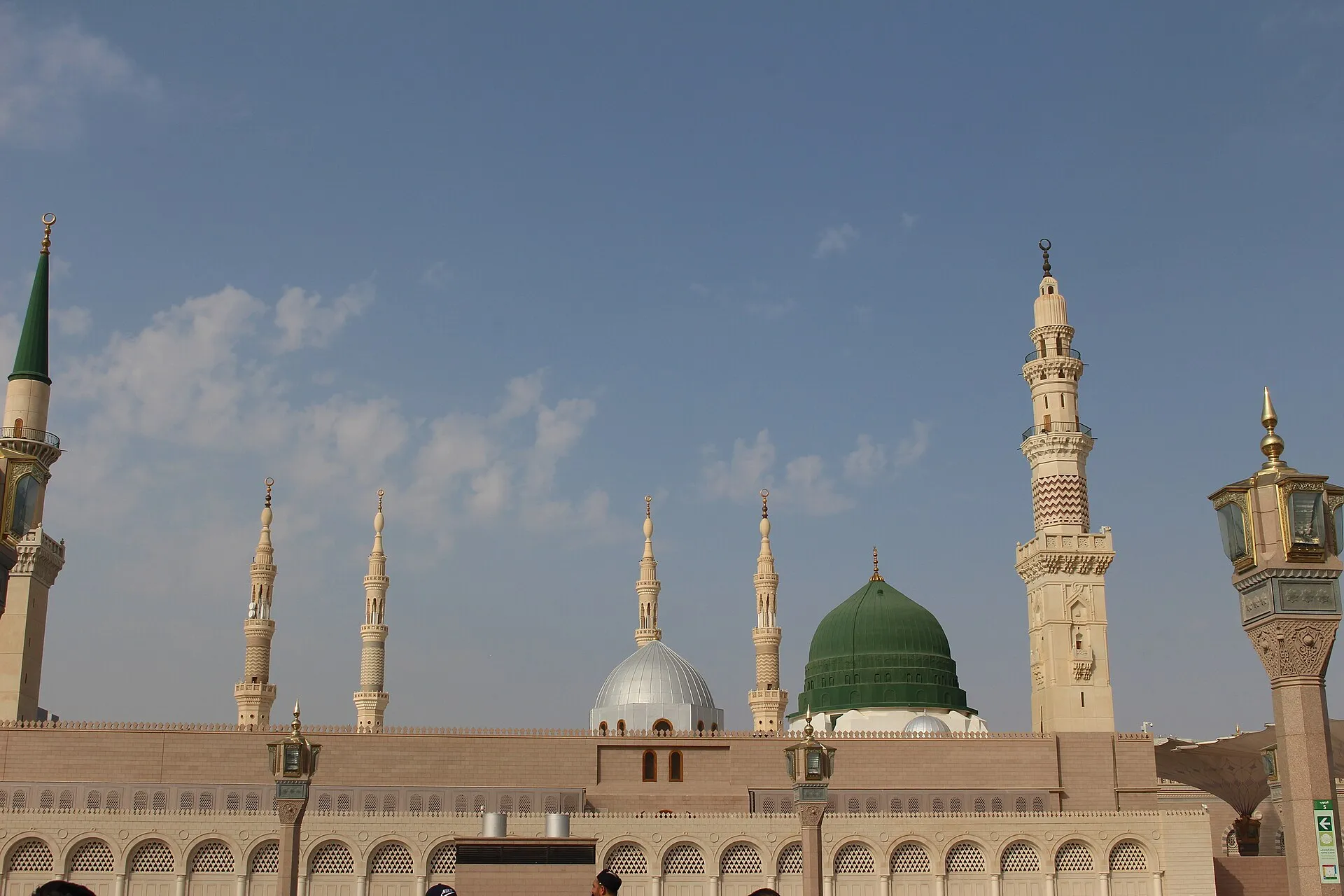
Muhammad (c. 570 to 632 CE) was a religious and political leader from Mecca in Arabia, whom Muslims believe to be the last and final prophet of God. Islamic tradition holds that he received the first revelation of the Quran at about the age of forty, preached in Mecca, and in 622 CE migrated to Medina, the Hijra that begins the Islamic calendar. He died at Medina in 632, having united most of Arabia, and his tomb lies under the Green Dome of the Prophet's Mosque.
- Punjabi name
- ਪੈਗੰਬਰ ਮੁਹੰਮਦ
- Born
- c. 570 CE, Mecca, Arabia
- Family
- Of the Banu Hashim clan of the Quraysh tribe; married Khadijah
- First revelation
- c. 610 CE at cave Hira near Mecca, according to Islamic tradition
- The Hijra
- 622 CE: the migration from Mecca to Medina; year one of the Islamic calendar
- In Medina
- Drew up the Constitution of Medina; led the new community for ten years
- Died
- 8 June 632 CE, Medina; buried where the Green Dome of the Prophet's Mosque now stands
Muhammad ibn Abdullah, born at Mecca in about 570 CE, is the central figure of Islam: Muslims believe him to be the final prophet, the last of a line running through Abraham, Moses and Jesus, and the man to whom the Quran was revealed. This page tells his life as the historical record and Islamic tradition together present it, keeping the two voices distinct: what tradition relates is attributed to tradition, and the dates and places historians accept are stated plainly.
Early life in Mecca
Muhammad was born into the Banu Hashim clan of the Quraysh, the tribe that governed Mecca, a trading city and pilgrimage centre built around the shrine of the Kaaba. His father Abdullah died around the time of his birth, and his mother Amina died when he was about six; he was raised first by his grandfather Abd al-Muttalib and then by his uncle Abu Talib, the Hashimite chief. He worked in trade, travelling with caravans, and tradition remembers his honesty with the nickname al-Amin, the trustworthy. In about 595 he married Khadijah, the merchant who had employed him; their children included Fatimah, through whom his line continued.
The first revelation
Muhammad often withdrew to pray in a cave called Hira, in the hills outside Mecca. Islamic tradition relates that in about 610 CE, when he was around forty, the angel Gabriel appeared to him there and commanded him to read, or recite, and that the first words of what became the Quran were revealed. Shaken, he was reassured by Khadijah, who became the first Muslim. Muslims believe the revelations continued for the remaining twenty three years of his life and were gathered after his death into the Quran.
Preaching, persecution and the Hijra
From about 613 he preached publicly: one God, a coming judgement, and care for the poor and the orphan. The Quraysh establishment, whose city lived by the Kaaba's pilgrimage, turned hostile, and in 615 some of his followers took shelter in Christian Abyssinia, present day Ethiopia. In 619, remembered as the Year of Sorrow, both Khadijah and Abu Talib died. Tradition also relates his night journey, the Isra and Mi'raj, in about 621. Delegations from Yathrib, a city torn by feuds, invited him to come as an arbitrator, and in 622 Muhammad and his followers migrated there: the Hijra, the migration after which the city became known as Medina, the City of the Prophet, and from which the Islamic calendar counts its years.
The Medina years and the Constitution
At Medina, Muhammad drew up the agreement known as the Constitution of Medina, some forty seven clauses binding the emigrants from Mecca, the Medinan tribes and the city's Jewish tribes into one community, or ummah, with shared duties of defence and defined rights for each group. Most historians accept the document as authentic, and it is often described as one of the earliest written constitutions. The decade that followed held war and diplomacy in turn: the battles of Badr in 624, Uhud in 625 and the Trench in 627 against Mecca, the truce of Hudaybiyyah in 628, and letters that the sira tradition preserves, inviting surrounding rulers to accept Islam. In 630 Mecca opened its gates to him with little fighting, and in 632 he returned to Mecca for the Farewell Pilgrimage.
Death and legacy
Muhammad died on 8 June 632 at Medina, aged about sixty two, and was buried in the chamber of his wife Aisha's house, on the site where the Prophet's Mosque now stands; the Green Dome in this page's photograph covers his tomb. Muslims revere him as the Seal of the Prophets and follow his example, the sunnah, recorded in the hadith and in the sira biographies of his life; out of reverence they add the words peace be upon him after his name, and they do not depict him in images, which is why this page carries a photograph of his mosque and not of him. His birth is honoured at Milad-un-Nabi, and the five pillars of practice he taught still frame Muslim life, in Punjab as everywhere.
How we know about his life
The sources for Muhammad's life are the Quran itself, which Muslims believe was revealed through him; the hadith, vast collections of reports of his words and actions gathered over the following centuries; and the sira, the early biographies, of which the earliest is Ibn Ishaq's, written about a century and a half after his death and surviving in the recension of Ibn Hisham. Modern historians work from the same materials, reading them critically, and the outline given on this page, the Meccan years, the Hijra, the Medina decade and the death in 632, is the one those sources jointly support.
Why are there no pictures of the Prophet Muhammad?
Out of reverence, Muslims do not make or display images of the Prophet, a practice rooted in Islam's rejection of idolatry and its wish to keep devotion directed to God alone. A few historic court manuscripts did paint him, usually with his face veiled or left blank, but the mainstream practice across the Muslim world, and the rule this Kosh follows, is no depiction at all: his memory is carried in words, in the calligraphy of his name, and in places such as his mosque at Medina.
ਮੁਹੰਮਦ ਇਬਨ ਅਬਦੁੱਲਾ, ਜੋ ਲਗਭਗ ਸੰਨ 570 ਈਸਵੀ ਵਿੱਚ ਮੱਕਾ ਵਿਖੇ ਪੈਦਾ ਹੋਏ, ਇਸਲਾਮ ਦੀ ਕੇਂਦਰੀ ਹਸਤੀ ਹਨ ਮੁਸਲਮਾਨ ਉਨ੍ਹਾਂ ਨੂੰ ਅੰਤਿਮ ਪੈਗੰਬਰ ਮੰਨਦੇ ਹਨ, ਇਬਰਾਹੀਮ, ਮੂਸਾ ਅਤੇ ਈਸਾ ਤੋਂ ਚਲੀ ਆਉਂਦੀ ਲੜੀ ਦੇ ਆਖਰੀ, ਅਤੇ ਉਹ ਮਨੁੱਖ ਜਿਨ੍ਹਾਂ ਉੱਤੇ ਕੁਰਾਨ ਉਤਰਿਆ ਇਹ ਪੰਨਾ ਉਨ੍ਹਾਂ ਦਾ ਜੀਵਨ ਇਤਿਹਾਸਕ ਰਿਕਾਰਡ ਅਤੇ ਇਸਲਾਮੀ ਪਰੰਪਰਾ ਦੋਵਾਂ ਰਾਹੀਂ ਪੇਸ਼ ਕਰਦਾ ਹੈ, ਅਤੇ ਦੋਵਾਂ ਆਵਾਜ਼ਾਂ ਨੂੰ ਵੱਖ ਰੱਖਦਾ ਹੈ ਜੋ ਪਰੰਪਰਾ ਦੱਸਦੀ ਹੈ ਉਹ ਪਰੰਪਰਾ ਦੇ ਨਾਂ ਨਾਲ ਲਿਖਿਆ ਹੈ, ਅਤੇ ਜਿਨ੍ਹਾਂ ਤਰੀਕਾਂ ਅਤੇ ਥਾਵਾਂ ਨੂੰ ਇਤਿਹਾਸਕਾਰ ਮੰਨਦੇ ਹਨ ਉਹ ਸਾਫ਼ ਤੌਰ ਉੱਤੇ ਦੱਸੀਆਂ ਹਨ
ਮੱਕਾ ਵਿੱਚ ਮੁੱਢਲਾ ਜੀਵਨ
ਮੁਹੰਮਦ ਕੁਰੈਸ਼ ਕਬੀਲੇ ਦੇ ਬਨੂ ਹਾਸ਼ਿਮ ਖ਼ਾਨਦਾਨ ਵਿੱਚ ਪੈਦਾ ਹੋਏ ਕੁਰੈਸ਼ ਮੱਕਾ ਉੱਤੇ ਰਾਜ ਕਰਦੇ ਸਨ, ਜੋ ਕਾਅਬਾ ਦੇ ਮੰਦਰ ਦੁਆਲੇ ਬਣਿਆ ਇੱਕ ਵਪਾਰਕ ਸ਼ਹਿਰ ਅਤੇ ਤੀਰਥ ਕੇਂਦਰ ਸੀ ਉਨ੍ਹਾਂ ਦੇ ਪਿਤਾ ਅਬਦੁੱਲਾ ਉਨ੍ਹਾਂ ਦੇ ਜਨਮ ਦੇ ਆਸ ਪਾਸ ਹੀ ਗੁਜ਼ਰ ਗਏ, ਅਤੇ ਮਾਤਾ ਆਮਿਨਾ ਉਦੋਂ ਗੁਜ਼ਰ ਗਈਆਂ ਜਦੋਂ ਉਹ ਲਗਭਗ ਛੇ ਸਾਲ ਦੇ ਸਨ ਉਨ੍ਹਾਂ ਨੂੰ ਪਹਿਲਾਂ ਦਾਦਾ ਅਬਦ ਅਲ-ਮੁੱਤਲਿਬ ਨੇ ਅਤੇ ਫਿਰ ਚਾਚਾ ਅਬੂ ਤਾਲਿਬ ਨੇ ਪਾਲਿਆ, ਜੋ ਹਾਸ਼ਿਮੀਆਂ ਦੇ ਸਰਦਾਰ ਸਨ ਉਨ੍ਹਾਂ ਨੇ ਵਪਾਰ ਵਿੱਚ ਕੰਮ ਕੀਤਾ ਅਤੇ ਕਾਫ਼ਲਿਆਂ ਨਾਲ ਸਫ਼ਰ ਕੀਤਾ, ਅਤੇ ਪਰੰਪਰਾ ਉਨ੍ਹਾਂ ਦੀ ਇਮਾਨਦਾਰੀ ਨੂੰ ਅਲ-ਅਮੀਨ, ਭਰੋਸੇਮੰਦ, ਦੇ ਨਾਂ ਨਾਲ ਯਾਦ ਕਰਦੀ ਹੈ ਲਗਭਗ ਸੰਨ 595 ਵਿੱਚ ਉਨ੍ਹਾਂ ਦਾ ਵਿਆਹ ਖ਼ਦੀਜਾ ਨਾਲ ਹੋਇਆ, ਜਿਸ ਵਪਾਰਨ ਨੇ ਉਨ੍ਹਾਂ ਨੂੰ ਕੰਮ ਉੱਤੇ ਰੱਖਿਆ ਸੀ ਉਨ੍ਹਾਂ ਦੇ ਬੱਚਿਆਂ ਵਿੱਚ ਫ਼ਾਤਿਮਾ ਸ਼ਾਮਲ ਸਨ, ਜਿਨ੍ਹਾਂ ਰਾਹੀਂ ਉਨ੍ਹਾਂ ਦੀ ਨਸਲ ਅੱਗੇ ਚਲੀ
ਪਹਿਲੀ ਵਹੀ
ਮੁਹੰਮਦ ਅਕਸਰ ਮੱਕਾ ਦੇ ਬਾਹਰ ਪਹਾੜੀਆਂ ਵਿੱਚ ਹਿਰਾ ਨਾਂ ਦੀ ਗੁਫ਼ਾ ਵਿੱਚ ਇਬਾਦਤ ਲਈ ਜਾਂਦੇ ਸਨ ਇਸਲਾਮੀ ਪਰੰਪਰਾ ਦੱਸਦੀ ਹੈ ਕਿ ਲਗਭਗ ਸੰਨ 610 ਈਸਵੀ ਵਿੱਚ, ਜਦੋਂ ਉਹ ਚਾਲੀ ਸਾਲ ਦੇ ਆਸ ਪਾਸ ਸਨ, ਫ਼ਰਿਸ਼ਤਾ ਜਿਬਰਾਈਲ ਉਨ੍ਹਾਂ ਕੋਲ ਆਇਆ ਅਤੇ ਪੜ੍ਹਨ ਦਾ ਹੁਕਮ ਦਿੱਤਾ, ਅਤੇ ਉਸੇ ਵੇਲੇ ਉਹ ਪਹਿਲੇ ਸ਼ਬਦ ਉਤਰੇ ਜੋ ਬਾਅਦ ਵਿੱਚ ਕੁਰਾਨ ਬਣੇ ਘਬਰਾਹਟ ਵਿੱਚ ਉਨ੍ਹਾਂ ਨੂੰ ਖ਼ਦੀਜਾ ਨੇ ਧੀਰਜ ਦਿੱਤਾ, ਜੋ ਪਹਿਲੀ ਮੁਸਲਮਾਨ ਬਣੀਆਂ ਮੁਸਲਮਾਨ ਮੰਨਦੇ ਹਨ ਕਿ ਵਹੀ ਉਨ੍ਹਾਂ ਦੇ ਜੀਵਨ ਦੇ ਬਾਕੀ ਤੇਈ ਸਾਲਾਂ ਤੱਕ ਜਾਰੀ ਰਹੀ ਅਤੇ ਉਨ੍ਹਾਂ ਦੇ ਚਲਾਣੇ ਤੋਂ ਬਾਅਦ ਕੁਰਾਨ ਵਿੱਚ ਇਕੱਠੀ ਕੀਤੀ ਗਈ
ਤਬਲੀਗ, ਵਿਰੋਧ ਅਤੇ ਹਿਜਰਤ
ਲਗਭਗ ਸੰਨ 613 ਤੋਂ ਉਨ੍ਹਾਂ ਨੇ ਜਨਤਕ ਤੌਰ ਉੱਤੇ ਤਬਲੀਗ ਸ਼ੁਰੂ ਕੀਤੀ ਇੱਕ ਖ਼ੁਦਾ, ਆਉਣ ਵਾਲਾ ਫ਼ੈਸਲੇ ਦਾ ਦਿਨ, ਅਤੇ ਗ਼ਰੀਬਾਂ ਅਤੇ ਯਤੀਮਾਂ ਦੀ ਸੰਭਾਲ ਕੁਰੈਸ਼ ਦੀ ਅਗਵਾਈ, ਜਿਸ ਦਾ ਸ਼ਹਿਰ ਕਾਅਬਾ ਦੀ ਤੀਰਥ ਯਾਤਰਾ ਉੱਤੇ ਜਿਉਂਦਾ ਸੀ, ਵਿਰੋਧੀ ਹੋ ਗਈ, ਅਤੇ ਸੰਨ 615 ਵਿੱਚ ਉਨ੍ਹਾਂ ਦੇ ਕੁਝ ਸਾਥੀ ਈਸਾਈ ਹਬਸ਼ਾ, ਅੱਜ ਦੇ ਇਥੋਪੀਆ, ਵਿੱਚ ਪਨਾਹ ਲੈਣ ਗਏ ਸੰਨ 619 ਵਿੱਚ, ਜਿਸ ਨੂੰ ਗ਼ਮ ਦਾ ਸਾਲ ਕਿਹਾ ਜਾਂਦਾ ਹੈ, ਖ਼ਦੀਜਾ ਅਤੇ ਅਬੂ ਤਾਲਿਬ ਦੋਵੇਂ ਗੁਜ਼ਰ ਗਏ ਪਰੰਪਰਾ ਲਗਭਗ ਸੰਨ 621 ਦੀ ਉਨ੍ਹਾਂ ਦੀ ਰਾਤ ਦੀ ਯਾਤਰਾ, ਇਸਰਾ ਅਤੇ ਮੇਅਰਾਜ, ਦਾ ਵੀ ਜ਼ਿਕਰ ਕਰਦੀ ਹੈ ਯਸਰਿਬ, ਜੋ ਝਗੜਿਆਂ ਵਿੱਚ ਫਸਿਆ ਸ਼ਹਿਰ ਸੀ, ਦੇ ਵਫ਼ਦਾਂ ਨੇ ਉਨ੍ਹਾਂ ਨੂੰ ਫ਼ੈਸਲਾ ਕਰਨ ਵਾਲੇ ਵਜੋਂ ਆਉਣ ਦਾ ਸੱਦਾ ਦਿੱਤਾ, ਅਤੇ ਸੰਨ 622 ਵਿੱਚ ਮੁਹੰਮਦ ਅਤੇ ਉਨ੍ਹਾਂ ਦੇ ਸਾਥੀ ਉੱਥੇ ਹਿਜਰਤ ਕਰ ਗਏ ਇਹੀ ਹਿਜਰਤ ਹੈ ਜਿਸ ਤੋਂ ਸ਼ਹਿਰ ਮਦੀਨਾ, ਪੈਗੰਬਰ ਦਾ ਸ਼ਹਿਰ, ਕਹਾਇਆ ਅਤੇ ਜਿਸ ਤੋਂ ਇਸਲਾਮੀ ਕੈਲੰਡਰ ਆਪਣੇ ਸਾਲ ਗਿਣਦਾ ਹੈ
ਮਦੀਨਾ ਦੇ ਸਾਲ ਅਤੇ ਮਦੀਨਾ ਦਾ ਆਈਨ
ਮਦੀਨਾ ਪਹੁੰਚ ਕੇ ਮੁਹੰਮਦ ਨੇ ਉਹ ਸਮਝੌਤਾ ਕੀਤਾ ਜੋ ਮਦੀਨਾ ਦੇ ਆਈਨ ਵਜੋਂ ਜਾਣਿਆ ਜਾਂਦਾ ਹੈ ਇਸ ਦੀਆਂ ਲਗਭਗ ਸੰਤਾਲੀ ਧਾਰਾਵਾਂ ਮੱਕਾ ਤੋਂ ਆਏ ਮੁਹਾਜਿਰਾਂ, ਮਦੀਨਾ ਦੇ ਕਬੀਲਿਆਂ ਅਤੇ ਸ਼ਹਿਰ ਦੇ ਯਹੂਦੀ ਕਬੀਲਿਆਂ ਨੂੰ ਇੱਕ ਸਮੁਦਾਇ, ਉੱਮਤ, ਵਿੱਚ ਬੰਨ੍ਹਦੀਆਂ ਸਨ, ਰੱਖਿਆ ਦੇ ਸਾਂਝੇ ਫ਼ਰਜ਼ ਅਤੇ ਹਰ ਸਮੂਹ ਦੇ ਤੈਅ ਹੱਕਾਂ ਸਮੇਤ ਬਹੁਤੇ ਇਤਿਹਾਸਕਾਰ ਇਸ ਦਸਤਾਵੇਜ਼ ਨੂੰ ਅਸਲੀ ਮੰਨਦੇ ਹਨ, ਅਤੇ ਇਸ ਨੂੰ ਸਭ ਤੋਂ ਪੁਰਾਣੇ ਲਿਖਤੀ ਆਈਨਾਂ ਵਿੱਚੋਂ ਇੱਕ ਦੱਸਿਆ ਜਾਂਦਾ ਹੈ ਇਸ ਤੋਂ ਬਾਅਦ ਦੇ ਦਸ ਸਾਲਾਂ ਵਿੱਚ ਜੰਗ ਅਤੇ ਸੁਲਹ ਦੋਵੇਂ ਆਏ ਮੱਕਾ ਵਿਰੁੱਧ ਸੰਨ 624 ਵਿੱਚ ਬਦਰ, 625 ਵਿੱਚ ਉਹਦ ਅਤੇ 627 ਵਿੱਚ ਖੰਡਕ ਦੀਆਂ ਲੜਾਈਆਂ, ਸੰਨ 628 ਵਿੱਚ ਹੁਦੈਬੀਆ ਦੀ ਸੰਧੀ, ਅਤੇ ਉਹ ਚਿੱਠੀਆਂ ਜੋ ਸੀਰਾ ਪਰੰਪਰਾ ਨੇ ਸਾਂਭੀਆਂ ਹਨ, ਜਿਨ੍ਹਾਂ ਰਾਹੀਂ ਆਸ ਪਾਸ ਦੇ ਹਾਕਮਾਂ ਨੂੰ ਇਸਲਾਮ ਕਬੂਲਣ ਦਾ ਸੱਦਾ ਦਿੱਤਾ ਗਿਆ ਸੰਨ 630 ਵਿੱਚ ਮੱਕਾ ਨੇ ਬਿਨਾਂ ਵੱਡੀ ਲੜਾਈ ਦੇ ਉਨ੍ਹਾਂ ਲਈ ਦਰਵਾਜ਼ੇ ਖੋਲ੍ਹ ਦਿੱਤੇ, ਅਤੇ ਸੰਨ 632 ਵਿੱਚ ਉਹ ਵਿਦਾਈ ਹੱਜ ਲਈ ਮੱਕਾ ਪਰਤੇ
ਚਲਾਣਾ ਅਤੇ ਵਿਰਾਸਤ
ਮੁਹੰਮਦ 8 ਜੂਨ 632 ਨੂੰ ਮਦੀਨਾ ਵਿੱਚ ਲਗਭਗ ਬਾਹਟ ਸਾਲ ਦੀ ਉਮਰ ਵਿੱਚ ਗੁਜ਼ਰ ਗਏ, ਅਤੇ ਉਨ੍ਹਾਂ ਨੂੰ ਆਪਣੀ ਪਤਨੀ ਆਇਸ਼ਾ ਦੇ ਕਮਰੇ ਵਿੱਚ ਦਫ਼ਨਾਇਆ ਗਿਆ, ਉਸੇ ਥਾਂ ਜਿੱਥੇ ਅੱਜ ਪੈਗੰਬਰ ਦੀ ਮਸਜਿਦ ਖੜ੍ਹੀ ਹੈ ਇਸ ਪੰਨੇ ਦੀ ਤਸਵੀਰ ਵਾਲਾ ਹਰਾ ਗੁੰਬਦ ਉਨ੍ਹਾਂ ਦੇ ਮੱਕਬਰੇ ਉੱਤੇ ਹੈ ਮੁਸਲਮਾਨ ਉਨ੍ਹਾਂ ਨੂੰ ਪੈਗੰਬਰਾਂ ਦੀ ਮੋਹਰ ਵਜੋਂ ਸਤਕਾਰਦੇ ਹਨ ਅਤੇ ਉਨ੍ਹਾਂ ਦੀ ਮਿਸਾਲ, ਸੁੰਨਤ, ਦੀ ਪੈਰਵੀ ਕਰਦੇ ਹਨ, ਜੋ ਹਦੀਸ ਅਤੇ ਸੀਰਾ ਜੀਵਨੀਆਂ ਵਿੱਚ ਦਰਜ ਹੈ ਸਤਕਾਰ ਵਜੋਂ ਉਹ ਉਨ੍ਹਾਂ ਦੇ ਨਾਂ ਨਾਲ ਸ਼ਾਂਤੀ ਹੋਵੇ ਦੇ ਸ਼ਬਦ ਜੋੜਦੇ ਹਨ, ਅਤੇ ਉਹ ਉਨ੍ਹਾਂ ਦੀ ਕੋਈ ਤਸਵੀਰ ਨਹੀਂ ਬਣਾਉਂਦੇ, ਇਸੇ ਲਈ ਇਸ ਪੰਨੇ ਉੱਤੇ ਉਨ੍ਹਾਂ ਦੀ ਨਹੀਂ, ਉਨ੍ਹਾਂ ਦੀ ਮਸਜਿਦ ਦੀ ਤਸਵੀਰ ਹੈ ਉਨ੍ਹਾਂ ਦਾ ਜਨਮ ਦਿਨ ਮੀਲਾਦ-ਉਨ-ਨਬੀ ਵਜੋਂ ਮਨਾਇਆ ਜਾਂਦਾ ਹੈ, ਅਤੇ ਉਨ੍ਹਾਂ ਦੇ ਸਿਖਾਏ ਪੰਜ ਥੰਮ੍ਹ ਅੱਜ ਵੀ ਪੰਜਾਬ ਸਮੇਤ ਹਰ ਥਾਂ ਮੁਸਲਿਮ ਜੀਵਨ ਦਾ ਢਾਂਚਾ ਹਨ
ਸਾਨੂੰ ਉਨ੍ਹਾਂ ਦੇ ਜੀਵਨ ਬਾਰੇ ਕਿਵੇਂ ਪਤਾ ਹੈ
ਮੁਹੰਮਦ ਦੇ ਜੀਵਨ ਦੇ ਸਰੋਤ ਖੁਦ ਕੁਰਾਨ ਹੈ, ਜਿਸ ਬਾਰੇ ਮੁਸਲਮਾਨ ਮੰਨਦੇ ਹਨ ਕਿ ਇਹ ਉਨ੍ਹਾਂ ਰਾਹੀਂ ਉਤਰਿਆ ਹਦੀਸ, ਉਨ੍ਹਾਂ ਦੇ ਬੋਲਾਂ ਅਤੇ ਕੰਮਾਂ ਦੀਆਂ ਰਿਪੋਰਟਾਂ ਦੇ ਵੱਡੇ ਸੰਗ੍ਰਹਿ ਜੋ ਅਗਲੀਆਂ ਸਦੀਆਂ ਵਿੱਚ ਇਕੱਠੇ ਹੋਏ ਅਤੇ ਸੀਰਾ, ਮੁੱਢਲੀਆਂ ਜੀਵਨੀਆਂ, ਜਿਨ੍ਹਾਂ ਵਿੱਚੋਂ ਸਭ ਤੋਂ ਪੁਰਾਣੀ ਇਬਨ ਇਸਹਾਕ ਦੀ ਹੈ, ਜੋ ਉਨ੍ਹਾਂ ਦੇ ਚਲਾਣੇ ਤੋਂ ਲਗਭਗ ਡੇਢ ਸਦੀ ਬਾਅਦ ਲਿਖੀ ਗਈ ਅਤੇ ਇਬਨ ਹਿਸ਼ਾਮ ਦੇ ਸੰਸਕਰਣ ਵਿੱਚ ਬਚੀ ਹੈ ਆਧੁਨਿਕ ਇਤਿਹਾਸਕਾਰ ਵੀ ਇਹੀ ਸਾਮਗਰੀ ਵਰਤਦੇ ਹਨ, ਇਸ ਨੂੰ ਆਲੋਚਨਾਤਮਕ ਨਜ਼ਰ ਨਾਲ ਪੜ੍ਹਦੇ ਹੋਏ, ਅਤੇ ਇਸ ਪੰਨੇ ਉੱਤੇ ਦਿੱਤੀ ਰੂਪ ਰੇਖਾ, ਮੱਕਾ ਦੇ ਸਾਲ, ਹਿਜਰਤ, ਮਦੀਨਾ ਦਾ ਦਹਾਕਾ ਅਤੇ ਸੰਨ 632 ਵਿੱਚ ਚਲਾਣਾ, ਉਹੀ ਹੈ ਜਿਸ ਦੀ ਇਹ ਸਰੋਤ ਸਾਂਝੇ ਤੌਰ ਉੱਤੇ ਪੁਸ਼ਟੀ ਕਰਦੇ ਹਨ
ਪੈਗੰਬਰ ਮੁਹੰਮਦ ਦੀਆਂ ਤਸਵੀਰਾਂ ਕਿਉਂ ਨਹੀਂ ਹਨ?
ਸਤਕਾਰ ਕਰਕੇ ਮੁਸਲਮਾਨ ਪੈਗੰਬਰ ਦੀ ਕੋਈ ਤਸਵੀਰ ਨਹੀਂ ਬਣਾਉਂਦੇ ਅਤੇ ਨਹੀਂ ਵਿਖਾਉਂਦੇ ਇਹ ਅਮਲ ਇਸਲਾਮ ਦੇ ਮੂਰਤੀ ਪੂਜਾ ਦੇ ਇਨਕਾਰ ਅਤੇ ਇਸ ਇੱਛਾ ਵਿੱਚ ਜੜ੍ਹ ਰੱਖਦਾ ਹੈ ਕਿ ਭਗਤੀ ਸਿਰਫ਼ ਖ਼ੁਦਾ ਵੱਲ ਹੀ ਰਹੇ ਕੁਝ ਪੁਰਾਣੀਆਂ ਦਰਬਾਰੀ ਹੱਥ ਲਿਖਤਾਂ ਨੇ ਉਨ੍ਹਾਂ ਨੂੰ ਚਿਤਰਿਆ ਵੀ ਸੀ, ਆਮ ਤੌਰ ਉੱਤੇ ਚਿਹਰਾ ਢਕ ਕੇ ਜਾਂ ਖਾਲੀ ਛੱਡ ਕੇ, ਪਰ ਮੁਸਲਿਮ ਦੁਨੀਆ ਭਰ ਦਾ ਮੁੱਖ ਅਮਲ, ਅਤੇ ਉਹ ਕਾਇਦਾ ਜਿਸ ਦੀ ਇਹ ਕੋਸ਼ ਪਾਲਣਾ ਕਰਦਾ ਹੈ, ਇਹ ਹੈ ਕਿ ਕੋਈ ਤਸਵੀਰ ਹੀ ਨਹੀਂ ਉਨ੍ਹਾਂ ਦੀ ਯਾਦ ਸ਼ਬਦਾਂ ਵਿੱਚ, ਉਨ੍ਹਾਂ ਦੇ ਨਾਂ ਦੀ ਖ਼ਤਾਤੀ ਵਿੱਚ, ਅਤੇ ਮਦੀਨਾ ਦੀ ਉਨ੍ਹਾਂ ਦੀ ਮਸਜਿਦ ਵਰਗੀਆਂ ਥਾਵਾਂ ਵਿੱਚ ਚਲਦੀ ਹੈ