
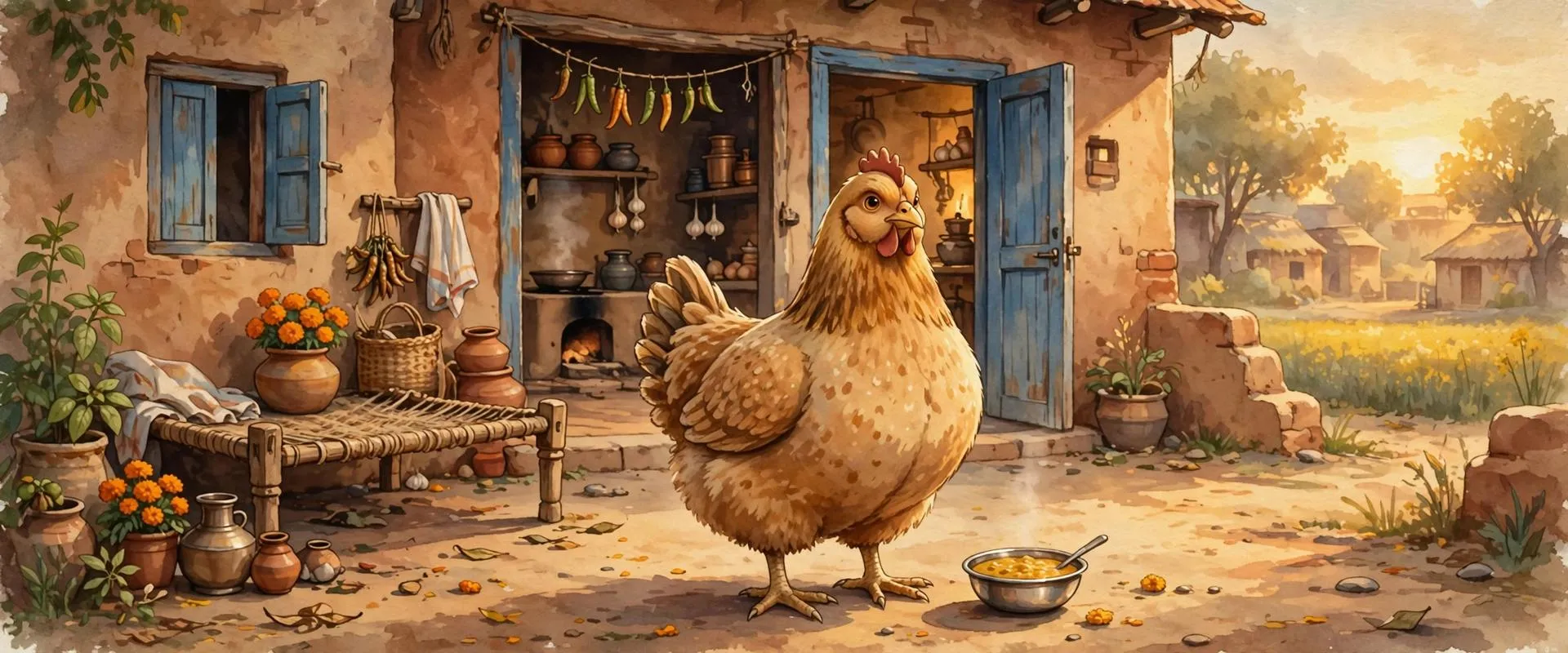
Ghar di murgi dal barabar (ਘਰ ਦੀ ਮੁਰਗੀ ਦਾਲ ਬਰਾਬਰ) is a Punjabi akhan that means what is at home is undervalued. It pictures the hen at home, a rich dish in any guest house, counted at home as no more than everyday dal, and it is said when a talented person is ignored by his own people while strangers praise him.
How it's used
- 1ਗੁਰਪ੍ਰੀਤ ਆਪਣੇ ਪਿੰਡ ਦਾ ਸਭ ਤੋਂ ਚੰਗਾ ਗਾਇਕ ਹੈ, ਪਰ ਪਿੰਡ ਵਾਲੇ ਬਾਹਰ ਦੇ ਗਾਇਕ ਨੂੰ ਬੁਲਾਉਂਦੇ ਹਨ, ਘਰ ਦੀ ਮੁਰਗੀ ਦਾਲ ਬਰਾਬਰ।Gurpreet is the best singer in his own village, but the villagers invite an outside singer: ghar di murgi dal barabar. Home talent ignored
- 2ਮਾਂ ਦੇ ਹੱਥ ਦਾ ਖਾਣਾ ਮਹਿਮਾਨਾਂ ਨੂੰ ਬਹੁਤ ਸਵਾਦ ਲੱਗਾ, ਘਰ ਵਾਲਿਆਂ ਲਈ ਤਾਂ ਉਹ ਰੋਜ਼ ਦੀ ਗੱਲ ਹੈ।The guests loved mother's cooking, but for the family it is just an everyday thing. Good things at home taken for granted
- 3ਉਸਤਾਦ ਜੀ ਨੇ ਕਿਹਾ, ਆਪਣੇ ਮੁੰਡੇ ਦੀ ਸਲਾਹ ਵੀ ਸੁਣ ਲਿਆ ਕਰੋ, ਘਰ ਦੀ ਮੁਰਗੀ ਹਮੇਸ਼ਾ ਦਾਲ ਨਹੀਂ ਹੁੰਦੀ।The teacher said, listen to your own son's advice too: the home hen is not always just dal. The saying turned around
Show 1 more example
- 4ਸ਼ਹਿਰ ਦਾ ਡਾਕਟਰ ਸਾਡੇ ਪਿੰਡ ਦੇ ਡਾਕਟਰ ਨਾਲੋਂ ਵੱਧ ਮੰਨਿਆ ਜਾਂਦਾ ਹੈ, ਭਾਵੇਂ ਦੋਵੇਂ ਇਕੋ ਜਿਹੇ ਪੜ੍ਹੇ ਹਨ।The city doctor is valued more than our village doctor, though both studied the same. The outsider praised over the local
ਘਰ ਦੀ ਮੁਰਗੀ ਦਾਲ ਬਰਾਬਰ ਇੱਕ ਪੰਜਾਬੀ ਅਖਾਣ ਹੈ। ਮੁਰਗੀ ਘਰ ਵਿੱਚ ਮਹਿਮਾਨਾਂ ਲਈ ਬਣਨ ਵਾਲੀ ਖਾਸ ਚੀਜ਼ ਹੈ, ਅਤੇ ਦਾਲ ਰੋਜ਼ ਦੀ ਸਧਾਰਨ ਖੁਰਾਕ ਹੈ। ਅਖਾਣ ਦਾ ਅਰਥ ਹੈ ਕਿ ਘਰ ਦੀ ਚੰਗੀ ਚੀਜ਼ ਜਾਂ ਘਰ ਦੇ ਹੁਨਰਮੰਦ ਬੰਦੇ ਦੀ ਕਦਰ ਘਰ ਵਿੱਚ ਨਹੀਂ ਹੁੰਦੀ, ਕਿਉਂਕਿ ਉਹ ਰੋਜ਼ ਸਾਹਮਣੇ ਹੁੰਦਾ ਹੈ। ਜਦੋਂ ਆਪਣਿਆਂ ਦੀ ਥਾਂ ਬਾਹਰ ਵਾਲਿਆਂ ਦੀ ਸਿਫ਼ਤ ਹੋਵੇ, ਤਾਂ ਇਹ ਅਖਾਣ ਕਿਹਾ ਜਾਂਦਾ ਹੈ।
What does ghar di murgi dal barabar mean in Punjabi? Ghar di murgi dal barabar (ਘਰ ਦੀ ਮੁਰਗੀ ਦਾਲ ਬਰਾਬਰ), literally the home hen is equal to dal, means that good things and talented people are taken for granted at home, where they are too familiar to be valued.
What does ghar di murgi dal barabar mean in Punjabi?
Word by word, ghar is home, murgi is a hen, dal is the lentil dish cooked every day, and barabar means equal to. A hen is a treat: in a village home, chicken is festival food, cooked for guests, not for an ordinary Tuesday. Dal is the opposite, the humble pot that is always on. So the picture says that at home the special has sunk to the level of the everyday. Rekhta Dictionary records the saying as a proverb and gives its English sense as: a man of talent is not appreciated in his own home, and no one is a hero to his own valet. Its glosses add the plainer point too: a thing that is easily available is given no value, and what is already ours is not valued.
When do people say ghar di murgi dal barabar?
People say it when familiarity has eaten the respect. The village carpenter whose own family calls an outside mistri for fine work, the mother whose cooking is praised only when guests eat it, the young singer booked in every town except his own: all of them hear this akhan, usually with a smile and a shrug. It is said about people more than about food, and it carries a warning for the listeners, not only sympathy for the one ignored: look again at what you already have before you run after the same thing in a stranger's house.
Is there a similar Punjabi saying?
Yes. Punjabi makes the same point in ghar da jogi jogra, bahar da jogi sidh: the holy man from home is a nobody, the holy man from outside is a saint. The two sayings are cousins. The jogi version is about respect for a person, while the murgi version is wider: it covers skills, cooking, advice and anything else whose worth fades because it is close at hand every day.
Related words
Sources (2)
- Rekhta Dictionary, ghar kii murgii daal baraabar: recorded as a proverb with the English meaning, a man of talent is not appreciated in his own home, no one is hero to his own valet; glosses add that an easily available thing is given no value and what is one's own is not valued; also read as ghar kii murgii saag barobar
- Kadva Corp, Punjabi Kahawata collection: captions the cousin saying ghar da jogi jogra, bahar da jogi sidh as a learned person is honoured, except in their own house
Jugti is free and independent. Reader support keeps the Kosh growing.
Support