
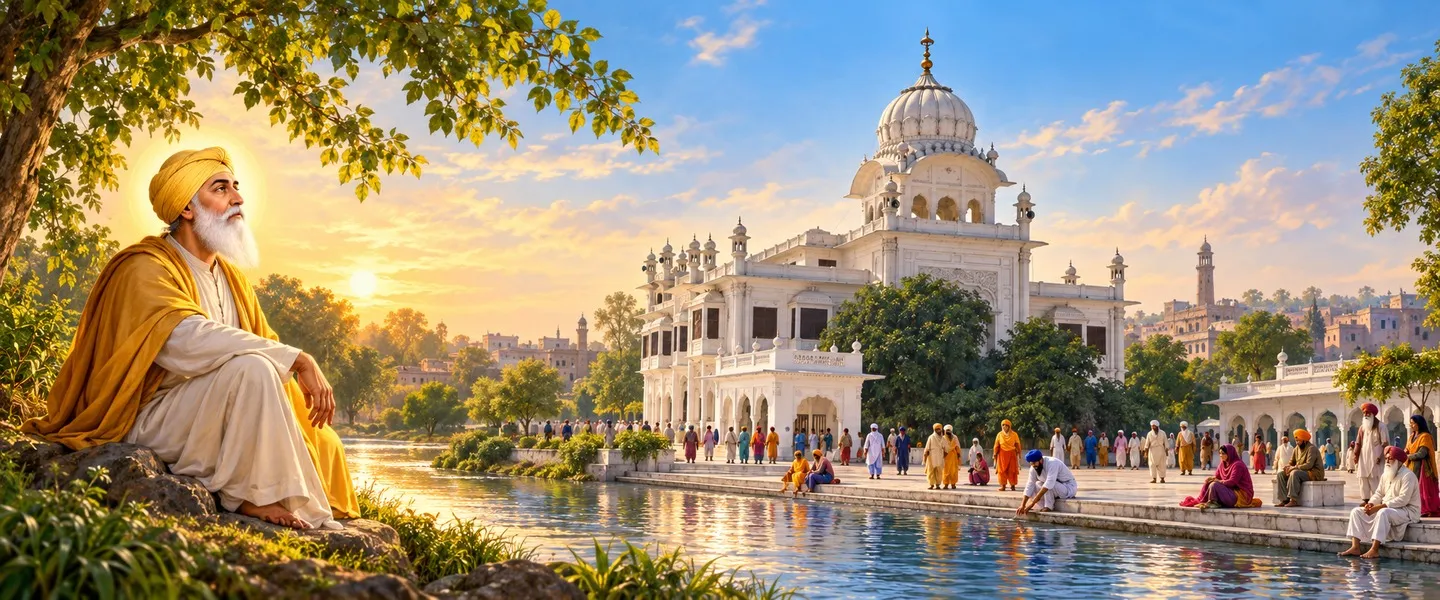
Sultanpur Lodhi is a historic town in Kapurthala district, Punjab, on the south bank of the Kali Bein rivulet, where Guru Nanak Dev Ji spent more than fourteen years. He worked here as a storekeeper, married and raised his family, and attained enlightenment in the Bein in 1499 before beginning his Udasi journeys. Its circuit of gurdwaras, led by Gurdwara Ber Sahib, makes it one of Sikhism's most visited pilgrim towns.
- Punjabi name
- ਸੁਲਤਾਨਪੁਰ ਲੋਧੀ
- Type
- Town and Sikh pilgrimage centre
- District
- Kapurthala
- Region
- Doaba, Punjab, India
- River
- Kali Bein
- Ancient name
- Sarwmanpur
All 8 facts
- Population
- 16,877 (2011 census)
- Known for
- Guru Nanak Dev Ji's fourteen years; Gurdwara Ber Sahib; enlightenment at the Kali Bein
Sultanpur Lodhi is a historic town in Kapurthala district of Punjab, on the south bank of the Kali Bein rivulet, where Guru Nanak Dev Ji lived for more than fourteen years, worked in a grain store, raised his family, and, by Sikh tradition, attained enlightenment in the waters of the Bein in 1499 before setting out on his great journeys, the Udasis.
Why is Sultanpur Lodhi sacred to Sikhs?
After Nankana Sahib, Guru Nanak Dev Ji's birthplace in Pakistan, Sultanpur Lodhi is the town most closely tied to the founder of Sikhism. Almost everything in his settled early life happened here: his arrival as a young man in 1483, his marriage, the birth of his two sons, his years of honest work in the Nawab's store, and the disappearance in the Kali Bein after which he spoke the words that announced his mission: there is no Hindu, there is no Muslim. The town's gurdwaras mark each of those moments, which is why pilgrims come here through the year and in their tens of thousands at Guru Nanak Gurpurab.
From Sarwmanpur to the Lodhi town
The site is far older than its present name. From the 1st to the 6th century it was known as Sarwmanpur, a noted centre of Hindu and Buddhist learning. Mahmud of Ghazni's forces burnt the city in about 1020 to 1030, and in the 12th century Sultan Khan re-established it as Sultanpur. The name it carries today was completed in 1443, when Bahlol Lodi, then governor of Punjab and later Sultan of Delhi, added Lodi to it.
On the old Delhi to Lahore trade route, Sultanpur Lodhi grew into a major commercial town of markets and shops, and the Ain-i-Akbari, the administrative record of the Mughal emperor Akbar, names it as a place of standing. Its madrasas drew students from far away: tradition holds that the Mughal princes Dara Shikoh and Aurangzeb both studied in one of its schools, and the town was called Perran Puri, the city of saints, for the holy men who lived here. The Hadera, a royal rest house from those centuries, still stands, though neglected.
The town's fortunes broke in the 18th century. Nader Shah sacked and burnt it in 1739 on his march to Delhi, and Ahmad Shah Abdali destroyed it again soon after. Sardar Jassa Singh Ahluwalia rebuilt it and took its historic shrines under his protection, but it never regained its old scale, in part because the Amritsar to Jalandhar Grand Trunk Road became the main route to Delhi and passed it by.
Guru Nanak Dev Ji's fourteen years
Guru Nanak Dev Ji's connection began through family. His elder sister Bebe Nanaki was married in 1475 to Jai Ram, an official of Sultanpur Lodhi, and in 1483 his father sent the young Nanak to live with them. Through Jai Ram he was employed as the modi, the keeper of the modi khana, the civil supplies store of Nawab Daulat Khan Lodi, weighing out grain and goods to the town.
In June 1488 he married Bibi Sulakhni here, and Sultanpur Lodhi became his family home: his sons Sri Chand, born in July 1494, and Lakhmi Das, born in February 1497, were both born in the town. Sikh tradition remembers the store years for two sakhis. At the scales, the Guru is said to have weighed out thirteen measures for the price of twelve, saying tera tera, I am yours, I am yours, giving generously to every customer. When rivals reported that he was cheating the store, he was briefly held in the cell now marked by Gurdwara Kothri Sahib; the accounts were checked, found correct, and the Nawab apologised and offered him promotion, which he declined.
What happened at the Kali Bein?
Each morning the Guru bathed in the Kali Bein and sat in meditation under a ber, or jujube, tree on its bank. In 1499, by the traditional dating, he entered the rivulet and did not come out. For three days he was given up for lost. When he reappeared, at the spot now marked by Gurdwara Sant Ghat Sahib about two kilometres upstream, the Janam Sakhis record his first words as: no one is Hindu, no one is Muslim. Sikhs understand the three days as his direct communion with the Divine, from which he brought the Mool Mantar and the message he would spend the rest of his life teaching. He gave up his post at the store and set out on the Udasis, the long journeys that carried his teaching across Asia.
The gurdwaras of Sultanpur Lodhi
Gurdwara Ber Sahib is the town's principal shrine, standing on the Bein bank beside the ber tree under which the Guru meditated. The present three-storey building, raised by Maharaja Jagatjit Singh of Kapurthala, was begun on 25 February 1937 and dedicated on 26 January 1941: a marble sanctum on a high plinth, entered through a portico on slender octagonal pillars.
Around it stands a complete circuit of the Guru's life here. Gurdwara Hatt Sahib marks the store itself and preserves the thirteen weights he used to measure out provisions. Gurdwara Sant Ghat Sahib marks where he emerged from the Bein. Gurdwara Guru Ka Bagh stands on his family home, where his sons were born and where a well of the time survives, its water once used for the langar Bebe Nanaki prepared. Gurdwara Sehra Sahib recalls a later visit, Guru Arjan Dev Ji's halt here during a wedding journey, and Gurdwara Bebe Nanaki honours the sister who first recognised her brother's light. The town guide, Gurdwaras in Sultanpur Lodhi, walks through each shrine.
The Kali Bein and its revival
The Kali Bein runs about 160 kilometres from Hoshiarpur district to its meeting with the Beas and Sutlej, and by the late 20th century it was dying: choked with water hyacinth and silt, and fouled by sewage and industrial waste from the towns on its banks. In July 2000 Sant Balbir Singh Seechewal stepped into the water with a handful of volunteers and began a kar sewa, a voluntary community clean-up, that became a movement. Volunteers cleared the full 160-kilometre course, raised and planted its banks, and built bathing ghats at Sultanpur Lodhi and six other places. The work restored flow and groundwater across Doaba, earned Sant Seechewal the Padma Shri in 2017 and a place on TIME magazine's Heroes of the Environment list, and he now sits in the Rajya Sabha. His nurseries at Seechewal and Sultanpur Lodhi still give away about a lakh of saplings free every year.
How do you visit Sultanpur Lodhi?
Sultanpur Lodhi is a sub-division and tehsil town of Kapurthala district, about 27 kilometres from Kapurthala city and 42 kilometres from Jalandhar, with its own railway station on the Ferozepur division of Northern Railway and regular buses from both cities. Most visitors walk the gurdwara circuit in a day, starting at Ber Sahib on the Bein and taking choola, a sip of the holy water, as pilgrims do. The town fills completely for Guru Nanak Gurpurab: for the 550th birth anniversary in November 2019, tens of thousands of devotees arrived every day, a tented city for 35,000 people was raised, a Rs 271-crore heritage town proposal was approved, and the Prime Minister paid obeisance at Ber Sahib before opening the Kartarpur Corridor. A Pind Babe Nanak Da museum is planned on more than 65 acres.
ਸੁਲਤਾਨਪੁਰ ਲੋਧੀ ਪੰਜਾਬ ਦੇ ਕਪੂਰਥਲਾ ਜ਼ਿਲ੍ਹੇ ਦਾ ਇਤਿਹਾਸਕ ਨਗਰ ਹੈ, ਕਾਲੀ ਬੇਈਂ ਦੇ ਦੱਖਣੀ ਕੰਢੇ ਉੱਤੇ, ਜਿੱਥੇ ਗੁਰੂ ਨਾਨਕ ਦੇਵ ਜੀ ਨੇ ਚੌਦਾਂ ਸਾਲ ਤੋਂ ਵੱਧ ਸਮਾਂ ਬਿਤਾਇਆ, ਮੋਦੀ ਖਾਨੇ ਵਿੱਚ ਕੰਮ ਕੀਤਾ, ਆਪਣਾ ਪਰਿਵਾਰ ਵਸਾਇਆ, ਅਤੇ ਸਿੱਖ ਪਰੰਪਰਾ ਅਨੁਸਾਰ 1499 ਵਿੱਚ ਬੇਈਂ ਦੇ ਪਾਣੀਆਂ ਵਿੱਚ ਪ੍ਰਕਾਸ਼ ਪਾਇਆ, ਫਿਰ ਆਪਣੀਆਂ ਮਹਾਨ ਯਾਤਰਾਵਾਂ, ਉਦਾਸੀਆਂ, ਲਈ ਨਿਕਲੇ।
ਸੁਲਤਾਨਪੁਰ ਲੋਧੀ ਸਿੱਖਾਂ ਲਈ ਪਵਿੱਤਰ ਕਿਉਂ ਹੈ?
ਨਨਕਾਣਾ ਸਾਹਿਬ, ਪਾਕਿਸਤਾਨ ਵਿੱਚ ਗੁਰੂ ਨਾਨਕ ਦੇਵ ਜੀ ਦਾ ਜਨਮ ਅਸਥਾਨ, ਤੋਂ ਬਾਅਦ ਸੁਲਤਾਨਪੁਰ ਲੋਧੀ ਉਹ ਨਗਰ ਹੈ ਜੋ ਸਿੱਖ ਧਰਮ ਦੇ ਬਾਨੀ ਨਾਲ ਸਭ ਤੋਂ ਨੇੜਿਓਂ ਜੁੜਿਆ ਹੈ। ਉਨ੍ਹਾਂ ਦੇ ਸ਼ੁਰੂਆਤੀ ਗ੍ਰਹਿਸਥ ਜੀਵਨ ਦੀ ਲਗਭਗ ਹਰ ਗੱਲ ਇੱਥੇ ਵਾਪਰੀ: 1483 ਵਿੱਚ ਨੌਜਵਾਨ ਵਜੋਂ ਉਨ੍ਹਾਂ ਦਾ ਆਉਣਾ, ਉਨ੍ਹਾਂ ਦਾ ਵਿਆਹ, ਉਨ੍ਹਾਂ ਦੇ ਦੋ ਪੁੱਤਰਾਂ ਦਾ ਜਨਮ, ਨਵਾਬ ਦੇ ਮੋਦੀ ਖਾਨੇ ਵਿੱਚ ਉਨ੍ਹਾਂ ਦੇ ਸਾਲਾਂ ਦਾ ਇਮਾਨਦਾਰ ਕੰਮ, ਅਤੇ ਕਾਲੀ ਬੇਈਂ ਵਿੱਚ ਉਨ੍ਹਾਂ ਦਾ ਅਲੋਪ ਹੋਣਾ, ਜਿਸ ਤੋਂ ਬਾਅਦ ਉਨ੍ਹਾਂ ਨੇ ਉਹ ਬਚਨ ਕਹੇ ਜਿਨ੍ਹਾਂ ਨੇ ਉਨ੍ਹਾਂ ਦੇ ਉਪਦੇਸ਼ ਦਾ ਐਲਾਨ ਕੀਤਾ: ਨਾ ਕੋਈ ਹਿੰਦੂ, ਨਾ ਕੋਈ ਮੁਸਲਮਾਨ। ਨਗਰ ਦੇ ਗੁਰਦੁਆਰੇ ਉਨ੍ਹਾਂ ਪਲਾਂ ਵਿੱਚੋਂ ਹਰ ਇੱਕ ਦੀ ਨਿਸ਼ਾਨਦੇਹੀ ਕਰਦੇ ਹਨ, ਇਸੇ ਲਈ ਸ਼ਰਧਾਲੂ ਸਾਲ ਭਰ ਇੱਥੇ ਆਉਂਦੇ ਹਨ ਅਤੇ ਗੁਰੂ ਨਾਨਕ ਗੁਰਪੁਰਬ ਉੱਤੇ ਹਜ਼ਾਰਾਂ ਦੀ ਗਿਣਤੀ ਵਿੱਚ।
ਸਰਵਮਾਨਪੁਰ ਤੋਂ ਲੋਧੀ ਨਗਰ ਤੱਕ
ਇਹ ਥਾਂ ਇਸ ਦੇ ਮੌਜੂਦਾ ਨਾਂ ਨਾਲੋਂ ਕਿਤੇ ਪੁਰਾਣੀ ਹੈ। ਪਹਿਲੀ ਤੋਂ ਛੇਵੀਂ ਸਦੀ ਤੱਕ ਇਹ ਸਰਵਮਾਨਪੁਰ ਵਜੋਂ ਜਾਣੀ ਜਾਂਦੀ ਸੀ, ਹਿੰਦੂ ਅਤੇ ਬੁੱਧ ਧਰਮ ਦੀ ਵਿਦਿਆ ਦਾ ਨਾਮਵਰ ਕੇਂਦਰ। ਮਹਿਮੂਦ ਗਜ਼ਨਵੀ ਦੀਆਂ ਫੌਜਾਂ ਨੇ ਲਗਭਗ 1020 ਤੋਂ 1030 ਵਿੱਚ ਨਗਰ ਨੂੰ ਸਾੜ ਦਿੱਤਾ, ਅਤੇ 12ਵੀਂ ਸਦੀ ਵਿੱਚ ਸੁਲਤਾਨ ਖਾਨ ਨੇ ਇਸ ਨੂੰ ਸੁਲਤਾਨਪੁਰ ਵਜੋਂ ਮੁੜ ਵਸਾਇਆ। ਅੱਜ ਵਾਲਾ ਨਾਂ 1443 ਵਿੱਚ ਪੂਰਾ ਹੋਇਆ, ਜਦੋਂ ਬਹਿਲੋਲ ਲੋਧੀ, ਉਸ ਸਮੇਂ ਪੰਜਾਬ ਦਾ ਸੂਬੇਦਾਰ ਅਤੇ ਬਾਅਦ ਵਿੱਚ ਦਿੱਲੀ ਦਾ ਸੁਲਤਾਨ, ਨੇ ਇਸ ਨਾਲ ਲੋਧੀ ਜੋੜਿਆ।
ਦਿੱਲੀ ਤੋਂ ਲਾਹੌਰ ਵਾਲੇ ਪੁਰਾਣੇ ਵਪਾਰਕ ਰਸਤੇ ਉੱਤੇ ਸੁਲਤਾਨਪੁਰ ਲੋਧੀ ਬਾਜ਼ਾਰਾਂ ਅਤੇ ਦੁਕਾਨਾਂ ਵਾਲਾ ਵੱਡਾ ਵਪਾਰਕ ਨਗਰ ਬਣ ਗਿਆ, ਅਤੇ ਆਈਨ-ਏ-ਅਕਬਰੀ, ਮੁਗਲ ਬਾਦਸ਼ਾਹ ਅਕਬਰ ਦਾ ਪ੍ਰਸ਼ਾਸਕੀ ਰਿਕਾਰਡ, ਇਸ ਨੂੰ ਮਹੱਤਵ ਵਾਲੀ ਥਾਂ ਵਜੋਂ ਦਰਜ ਕਰਦਾ ਹੈ। ਇਸ ਦੇ ਮਦਰੱਸੇ ਦੂਰ ਦੂਰ ਤੋਂ ਵਿਦਿਆਰਥੀ ਖਿੱਚਦੇ ਸਨ: ਪਰੰਪਰਾ ਹੈ ਕਿ ਮੁਗਲ ਸ਼ਹਿਜ਼ਾਦੇ ਦਾਰਾ ਸ਼ਿਕੋਹ ਅਤੇ ਔਰੰਗਜ਼ੇਬ ਦੋਵਾਂ ਨੇ ਇਸ ਦੇ ਇੱਕ ਸਕੂਲ ਵਿੱਚ ਪੜ੍ਹਾਈ ਕੀਤੀ, ਅਤੇ ਨਗਰ ਨੂੰ ਪੀਰਾਂ ਪੁਰੀ, ਸੰਤਾਂ ਦਾ ਨਗਰ, ਕਿਹਾ ਜਾਂਦਾ ਸੀ ਕਿਉਂਕਿ ਇੱਥੇ ਬਹੁਤ ਸਾਰੇ ਸੰਤ ਮਹਾਤਮਾ ਰਹਿੰਦੇ ਸਨ। ਉਨ੍ਹਾਂ ਸਦੀਆਂ ਦਾ ਸ਼ਾਹੀ ਆਰਾਮ ਗਾਹ ਹਡੇਰਾ ਅਜੇ ਵੀ ਖੜ੍ਹਾ ਹੈ, ਭਾਵੇਂ ਅਣਗੌਲਿਆ।
18ਵੀਂ ਸਦੀ ਵਿੱਚ ਨਗਰ ਦੀ ਕਿਸਮਤ ਟੁੱਟ ਗਈ। ਨਾਦਰ ਸ਼ਾਹ ਨੇ 1739 ਵਿੱਚ ਦਿੱਲੀ ਵੱਲ ਕੂਚ ਦੌਰਾਨ ਇਸ ਨੂੰ ਲੁੱਟਿਆ ਅਤੇ ਸਾੜਿਆ, ਅਤੇ ਅਹਿਮਦ ਸ਼ਾਹ ਅਬਦਾਲੀ ਨੇ ਛੇਤੀ ਹੀ ਬਾਅਦ ਇਸ ਨੂੰ ਫਿਰ ਤਬਾਹ ਕਰ ਦਿੱਤਾ। ਸਰਦਾਰ ਜੱਸਾ ਸਿੰਘ ਆਹਲੂਵਾਲੀਆ ਨੇ ਇਸ ਨੂੰ ਮੁੜ ਵਸਾਇਆ ਅਤੇ ਇਸ ਦੇ ਇਤਿਹਾਸਕ ਅਸਥਾਨਾਂ ਨੂੰ ਆਪਣੀ ਸਰਪ੍ਰਸਤੀ ਹੇਠ ਲਿਆ, ਪਰ ਇਹ ਆਪਣਾ ਪੁਰਾਣਾ ਪੈਮਾਨਾ ਕਦੇ ਨਾ ਪਾ ਸਕਿਆ, ਕੁਝ ਇਸ ਲਈ ਵੀ ਕਿ ਅੰਮ੍ਰਿਤਸਰ ਤੋਂ ਜਲੰਧਰ ਵਾਲੀ ਗਰੈਂਡ ਟਰੰਕ ਰੋਡ ਦਿੱਲੀ ਦਾ ਮੁੱਖ ਰਸਤਾ ਬਣ ਗਈ ਅਤੇ ਇਸ ਨੂੰ ਲੰਘ ਕੇ ਚਲੀ ਗਈ।
ਗੁਰੂ ਨਾਨਕ ਦੇਵ ਜੀ ਦੇ ਚੌਦਾਂ ਸਾਲ
ਗੁਰੂ ਨਾਨਕ ਦੇਵ ਜੀ ਦਾ ਸੰਬੰਧ ਪਰਿਵਾਰ ਰਾਹੀਂ ਬਣਿਆ। ਉਨ੍ਹਾਂ ਦੀ ਵੱਡੀ ਭੈਣ ਬੇਬੇ ਨਾਨਕੀ ਦਾ ਵਿਆਹ 1475 ਵਿੱਚ ਸੁਲਤਾਨਪੁਰ ਲੋਧੀ ਦੇ ਇੱਕ ਅਧਿਕਾਰੀ ਜੈ ਰਾਮ ਨਾਲ ਹੋਇਆ ਸੀ, ਅਤੇ 1483 ਵਿੱਚ ਉਨ੍ਹਾਂ ਦੇ ਪਿਤਾ ਨੇ ਨੌਜਵਾਨ ਨਾਨਕ ਨੂੰ ਉਨ੍ਹਾਂ ਕੋਲ ਰਹਿਣ ਲਈ ਭੇਜਿਆ। ਜੈ ਰਾਮ ਰਾਹੀਂ ਉਨ੍ਹਾਂ ਨੂੰ ਮੋਦੀ ਦੀ ਨੌਕਰੀ ਮਿਲੀ, ਨਵਾਬ ਦੌਲਤ ਖਾਨ ਲੋਧੀ ਦੇ ਮੋਦੀ ਖਾਨੇ, ਨਾਗਰਿਕ ਰਸਦ ਭੰਡਾਰ, ਦੇ ਰੱਖਿਅਕ ਵਜੋਂ, ਨਗਰ ਨੂੰ ਅਨਾਜ ਅਤੇ ਸਾਮਾਨ ਤੋਲ ਕੇ ਦਿੰਦੇ ਹੋਏ।
ਜੂਨ 1488 ਵਿੱਚ ਉਨ੍ਹਾਂ ਦਾ ਵਿਆਹ ਇੱਥੇ ਬੀਬੀ ਸੁਲਖਣੀ ਨਾਲ ਹੋਇਆ, ਅਤੇ ਸੁਲਤਾਨਪੁਰ ਲੋਧੀ ਉਨ੍ਹਾਂ ਦਾ ਪਰਿਵਾਰਕ ਘਰ ਬਣ ਗਿਆ: ਉਨ੍ਹਾਂ ਦੇ ਪੁੱਤਰ ਸ੍ਰੀ ਚੰਦ, ਜਨਮ ਜੁਲਾਈ 1494, ਅਤੇ ਲਖਮੀ ਦਾਸ, ਜਨਮ ਫਰਵਰੀ 1497, ਦੋਵੇਂ ਇਸੇ ਨਗਰ ਵਿੱਚ ਜਨਮੇ। ਸਿੱਖ ਪਰੰਪਰਾ ਮੋਦੀ ਖਾਨੇ ਦੇ ਸਾਲਾਂ ਨੂੰ ਦੋ ਸਾਖੀਆਂ ਨਾਲ ਯਾਦ ਕਰਦੀ ਹੈ। ਤੱਕੜੀ ਉੱਤੇ ਗੁਰੂ ਜੀ ਬਾਰਾਂ ਦੇ ਭਾਅ ਤੇਰਾਂ ਤੋਲ ਦਿੰਦੇ ਸਨ, ਤੇਰਾ ਤੇਰਾ, ਮੈਂ ਤੇਰਾ ਹਾਂ, ਮੈਂ ਤੇਰਾ ਹਾਂ, ਕਹਿੰਦੇ ਹੋਏ, ਹਰ ਗਾਹਕ ਨੂੰ ਖੁੱਲ੍ਹੇ ਦਿਲ ਨਾਲ ਦਿੰਦੇ ਹੋਏ। ਜਦੋਂ ਵਿਰੋਧੀਆਂ ਨੇ ਸ਼ਿਕਾਇਤ ਕੀਤੀ ਕਿ ਉਹ ਭੰਡਾਰ ਵਿੱਚ ਘਪਲਾ ਕਰ ਰਹੇ ਹਨ, ਤਾਂ ਉਨ੍ਹਾਂ ਨੂੰ ਥੋੜ੍ਹੇ ਸਮੇਂ ਲਈ ਉਸ ਕੋਠੜੀ ਵਿੱਚ ਰੱਖਿਆ ਗਿਆ ਜਿੱਥੇ ਹੁਣ ਗੁਰਦੁਆਰਾ ਕੋਠੜੀ ਸਾਹਿਬ ਹੈ। ਹਿਸਾਬ ਕਿਤਾਬ ਜਾਂਚਿਆ ਗਿਆ, ਸਹੀ ਨਿਕਲਿਆ, ਅਤੇ ਨਵਾਬ ਨੇ ਮੁਆਫ਼ੀ ਮੰਗੀ ਅਤੇ ਤਰੱਕੀ ਦੀ ਪੇਸ਼ਕਸ਼ ਕੀਤੀ, ਜੋ ਉਨ੍ਹਾਂ ਨੇ ਠੁਕਰਾ ਦਿੱਤੀ।
ਕਾਲੀ ਬੇਈਂ ਵਿੱਚ ਕੀ ਵਾਪਰਿਆ?
ਹਰ ਸਵੇਰ ਗੁਰੂ ਜੀ ਕਾਲੀ ਬੇਈਂ ਵਿੱਚ ਇਸ਼ਨਾਨ ਕਰਦੇ ਅਤੇ ਇਸ ਦੇ ਕੰਢੇ ਉੱਤੇ ਬੇਰੀ ਦੇ ਰੁੱਖ ਹੇਠ ਬਿਰਾਜ ਕੇ ਸਿਮਰਨ ਕਰਦੇ। 1499 ਵਿੱਚ, ਪਰੰਪਰਾਗਤ ਤਾਰੀਖ ਅਨੁਸਾਰ, ਉਹ ਬੇਈਂ ਵਿੱਚ ਗਏ ਅਤੇ ਬਾਹਰ ਨਾ ਆਏ। ਤਿੰਨ ਦਿਨ ਉਨ੍ਹਾਂ ਨੂੰ ਗੁਆਚਿਆ ਮੰਨਿਆ ਗਿਆ। ਜਦੋਂ ਉਹ ਮੁੜ ਪ੍ਰਗਟ ਹੋਏ, ਉਸ ਥਾਂ ਉੱਤੇ ਜਿੱਥੇ ਹੁਣ ਗੁਰਦੁਆਰਾ ਸੰਤ ਘਾਟ ਸਾਹਿਬ ਹੈ, ਲਗਭਗ ਦੋ ਕਿਲੋਮੀਟਰ ਉੱਪਰ ਵੱਲ, ਜਨਮ ਸਾਖੀਆਂ ਉਨ੍ਹਾਂ ਦੇ ਪਹਿਲੇ ਬਚਨ ਇਹ ਦਰਜ ਕਰਦੀਆਂ ਹਨ: ਨਾ ਕੋਈ ਹਿੰਦੂ, ਨਾ ਕੋਈ ਮੁਸਲਮਾਨ। ਸਿੱਖ ਉਨ੍ਹਾਂ ਤਿੰਨ ਦਿਨਾਂ ਨੂੰ ਅਕਾਲ ਪੁਰਖ ਨਾਲ ਉਨ੍ਹਾਂ ਦੀ ਸਿੱਧੀ ਸਾਂਝ ਸਮਝਦੇ ਹਨ, ਜਿੱਥੋਂ ਉਹ ਮੂਲ ਮੰਤਰ ਅਤੇ ਉਹ ਸੰਦੇਸ਼ ਲੈ ਕੇ ਆਏ ਜੋ ਉਨ੍ਹਾਂ ਨੇ ਸਾਰੀ ਉਮਰ ਸਿਖਾਉਣਾ ਸੀ। ਉਨ੍ਹਾਂ ਨੇ ਮੋਦੀ ਖਾਨੇ ਦੀ ਨੌਕਰੀ ਛੱਡ ਦਿੱਤੀ ਅਤੇ ਉਦਾਸੀਆਂ ਲਈ ਨਿਕਲ ਪਏ, ਉਹ ਲੰਮੀਆਂ ਯਾਤਰਾਵਾਂ ਜਿਨ੍ਹਾਂ ਨੇ ਉਨ੍ਹਾਂ ਦਾ ਉਪਦੇਸ਼ ਸਾਰੇ ਏਸ਼ੀਆ ਵਿੱਚ ਪਹੁੰਚਾਇਆ।
ਸੁਲਤਾਨਪੁਰ ਲੋਧੀ ਦੇ ਗੁਰਦੁਆਰੇ
ਗੁਰਦੁਆਰਾ ਬੇਰ ਸਾਹਿਬ ਨਗਰ ਦਾ ਮੁੱਖ ਅਸਥਾਨ ਹੈ, ਬੇਈਂ ਦੇ ਕੰਢੇ ਉੱਤੇ ਉਸ ਬੇਰੀ ਦੇ ਰੁੱਖ ਕੋਲ ਖੜ੍ਹਾ ਜਿਸ ਹੇਠ ਗੁਰੂ ਜੀ ਸਿਮਰਨ ਕਰਦੇ ਸਨ। ਮੌਜੂਦਾ ਤਿੰਨ ਮੰਜ਼ਿਲਾ ਇਮਾਰਤ, ਕਪੂਰਥਲਾ ਦੇ ਮਹਾਰਾਜਾ ਜਗਤਜੀਤ ਸਿੰਘ ਵੱਲੋਂ ਬਣਵਾਈ ਗਈ, 25 ਫਰਵਰੀ 1937 ਨੂੰ ਸ਼ੁਰੂ ਹੋਈ ਅਤੇ 26 ਜਨਵਰੀ 1941 ਨੂੰ ਸਮਰਪਿਤ ਹੋਈ: ਉੱਚੇ ਥੜ੍ਹੇ ਉੱਤੇ ਸੰਗਮਰਮਰ ਦਾ ਅਸਥਾਨ, ਜਿਸ ਵਿੱਚ ਪਤਲੇ ਅੱਠ ਕੋਣੇ ਥੰਮ੍ਹਾਂ ਵਾਲੇ ਦਲਾਨ ਰਾਹੀਂ ਦਾਖਲਾ ਹੁੰਦਾ ਹੈ।
ਇਸ ਦੇ ਆਲੇ ਦੁਆਲੇ ਇੱਥੋਂ ਦੇ ਉਨ੍ਹਾਂ ਦੇ ਜੀਵਨ ਦਾ ਪੂਰਾ ਘੇਰਾ ਖੜ੍ਹਾ ਹੈ। ਗੁਰਦੁਆਰਾ ਹੱਟ ਸਾਹਿਬ ਉਸ ਮੋਦੀ ਖਾਨੇ ਦੀ ਨਿਸ਼ਾਨਦੇਹੀ ਕਰਦਾ ਹੈ ਅਤੇ ਉਹ ਤੇਰਾਂ ਵੱਟੇ ਸਾਂਭ ਕੇ ਰੱਖਦਾ ਹੈ ਜਿਨ੍ਹਾਂ ਨਾਲ ਉਹ ਰਸਦ ਤੋਲਦੇ ਸਨ। ਗੁਰਦੁਆਰਾ ਸੰਤ ਘਾਟ ਸਾਹਿਬ ਉਸ ਥਾਂ ਨੂੰ ਦਰਸਾਉਂਦਾ ਹੈ ਜਿੱਥੇ ਉਹ ਬੇਈਂ ਵਿੱਚੋਂ ਪ੍ਰਗਟ ਹੋਏ। ਗੁਰਦੁਆਰਾ ਗੁਰੂ ਕਾ ਬਾਗ ਉਨ੍ਹਾਂ ਦੇ ਪਰਿਵਾਰਕ ਘਰ ਉੱਤੇ ਖੜ੍ਹਾ ਹੈ, ਜਿੱਥੇ ਉਨ੍ਹਾਂ ਦੇ ਪੁੱਤਰ ਜਨਮੇ ਅਤੇ ਜਿੱਥੇ ਉਸ ਸਮੇਂ ਦਾ ਖੂਹ ਅਜੇ ਮੌਜੂਦ ਹੈ, ਜਿਸ ਦਾ ਪਾਣੀ ਕਦੇ ਬੇਬੇ ਨਾਨਕੀ ਵੱਲੋਂ ਤਿਆਰ ਕੀਤੇ ਲੰਗਰ ਲਈ ਵਰਤਿਆ ਜਾਂਦਾ ਸੀ। ਗੁਰਦੁਆਰਾ ਸਿਹਰਾ ਸਾਹਿਬ ਬਾਅਦ ਦੀ ਇੱਕ ਫੇਰੀ ਦੀ ਯਾਦ ਦਿਵਾਉਂਦਾ ਹੈ, ਵਿਆਹ ਯਾਤਰਾ ਦੌਰਾਨ ਗੁਰੂ ਅਰਜਨ ਦੇਵ ਜੀ ਦਾ ਇੱਥੇ ਠਹਿਰਾਅ, ਅਤੇ ਗੁਰਦੁਆਰਾ ਬੇਬੇ ਨਾਨਕੀ ਉਸ ਭੈਣ ਦਾ ਸਤਕਾਰ ਕਰਦਾ ਹੈ ਜਿਸ ਨੇ ਸਭ ਤੋਂ ਪਹਿਲਾਂ ਆਪਣੇ ਭਰਾ ਦੇ ਨੂਰ ਨੂੰ ਪਛਾਣਿਆ। ਨਗਰ ਗਾਈਡ, ਸੁਲਤਾਨਪੁਰ ਲੋਧੀ ਦੇ ਗੁਰਦੁਆਰੇ, ਹਰ ਅਸਥਾਨ ਦੀ ਸੈਰ ਕਰਵਾਉਂਦੀ ਹੈ।
ਕਾਲੀ ਬੇਈਂ ਅਤੇ ਇਸ ਦੀ ਪੁਨਰ ਸੁਰਜੀਤੀ
ਕਾਲੀ ਬੇਈਂ ਹੁਸ਼ਿਆਰਪੁਰ ਜ਼ਿਲ੍ਹੇ ਤੋਂ ਬਿਆਸ ਅਤੇ ਸਤਲੁਜ ਦੇ ਸੰਗਮ ਤੱਕ ਲਗਭਗ 160 ਕਿਲੋਮੀਟਰ ਵਗਦੀ ਹੈ, ਅਤੇ 20ਵੀਂ ਸਦੀ ਦੇ ਅੰਤ ਤੱਕ ਇਹ ਮਰ ਰਹੀ ਸੀ: ਜਲ ਪੌਦਿਆਂ ਅਤੇ ਗਾਰ ਨਾਲ ਰੁਕੀ ਹੋਈ, ਅਤੇ ਇਸ ਦੇ ਕੰਢਿਆਂ ਦੇ ਨਗਰਾਂ ਦੇ ਗੰਦੇ ਪਾਣੀ ਅਤੇ ਸਨਅਤੀ ਕਚਰੇ ਨਾਲ ਦੂਸ਼ਿਤ। ਜੁਲਾਈ 2000 ਵਿੱਚ ਸੰਤ ਬਲਬੀਰ ਸਿੰਘ ਸੀਚੇਵਾਲ ਮੁੱਠੀ ਭਰ ਸੇਵਾਦਾਰਾਂ ਨਾਲ ਪਾਣੀ ਵਿੱਚ ਉਤਰੇ ਅਤੇ ਕਾਰ ਸੇਵਾ ਸ਼ੁਰੂ ਕੀਤੀ, ਸਵੈ ਇੱਛਾ ਨਾਲ ਭਾਈਚਾਰਕ ਸਫਾਈ, ਜੋ ਇੱਕ ਲਹਿਰ ਬਣ ਗਈ। ਸੇਵਾਦਾਰਾਂ ਨੇ ਪੂਰਾ 160 ਕਿਲੋਮੀਟਰ ਰਸਤਾ ਸਾਫ ਕੀਤਾ, ਇਸ ਦੇ ਕੰਢੇ ਉੱਚੇ ਕੀਤੇ ਅਤੇ ਰੁੱਖ ਲਾਏ, ਅਤੇ ਸੁਲਤਾਨਪੁਰ ਲੋਧੀ ਅਤੇ ਛੇ ਹੋਰ ਥਾਵਾਂ ਉੱਤੇ ਇਸ਼ਨਾਨ ਘਾਟ ਬਣਾਏ। ਇਸ ਕੰਮ ਨੇ ਦੋਆਬੇ ਵਿੱਚ ਵਹਾਅ ਅਤੇ ਧਰਤੀ ਹੇਠਲਾ ਪਾਣੀ ਮੁੜ ਬਹਾਲ ਕੀਤਾ, ਸੰਤ ਸੀਚੇਵਾਲ ਨੂੰ 2017 ਵਿੱਚ ਪਦਮ ਸ਼੍ਰੀ ਅਤੇ ਟਾਈਮ ਰਸਾਲੇ ਦੀ ਵਾਤਾਵਰਨ ਦੇ ਨਾਇਕ ਸੂਚੀ ਵਿੱਚ ਥਾਂ ਦਿਵਾਈ, ਅਤੇ ਉਹ ਹੁਣ ਰਾਜ ਸਭਾ ਵਿੱਚ ਬੈਠਦੇ ਹਨ। ਸੀਚੇਵਾਲ ਅਤੇ ਸੁਲਤਾਨਪੁਰ ਲੋਧੀ ਵਿਖੇ ਉਨ੍ਹਾਂ ਦੀਆਂ ਨਰਸਰੀਆਂ ਹਰ ਸਾਲ ਲਗਭਗ ਇੱਕ ਲੱਖ ਬੂਟੇ ਮੁਫ਼ਤ ਵੰਡਦੀਆਂ ਹਨ।
ਸੁਲਤਾਨਪੁਰ ਲੋਧੀ ਕਿਵੇਂ ਜਾਈਏ?
ਸੁਲਤਾਨਪੁਰ ਲੋਧੀ ਕਪੂਰਥਲਾ ਜ਼ਿਲ੍ਹੇ ਦਾ ਸਬ ਡਿਵੀਜ਼ਨ ਅਤੇ ਤਹਿਸੀਲ ਨਗਰ ਹੈ, ਕਪੂਰਥਲਾ ਸ਼ਹਿਰ ਤੋਂ ਲਗਭਗ 27 ਕਿਲੋਮੀਟਰ ਅਤੇ ਜਲੰਧਰ ਤੋਂ 42 ਕਿਲੋਮੀਟਰ, ਆਪਣੇ ਰੇਲਵੇ ਸਟੇਸ਼ਨ ਨਾਲ ਜੋ ਉੱਤਰੀ ਰੇਲਵੇ ਦੇ ਫਿਰੋਜ਼ਪੁਰ ਡਿਵੀਜ਼ਨ ਵਿੱਚ ਪੈਂਦਾ ਹੈ ਅਤੇ ਦੋਵਾਂ ਸ਼ਹਿਰਾਂ ਤੋਂ ਨਿਯਮਤ ਬੱਸਾਂ ਨਾਲ। ਬਹੁਤੇ ਯਾਤਰੀ ਗੁਰਦੁਆਰਿਆਂ ਦਾ ਘੇਰਾ ਇੱਕ ਦਿਨ ਵਿੱਚ ਕਰ ਲੈਂਦੇ ਹਨ, ਬੇਈਂ ਉੱਤੇ ਬੇਰ ਸਾਹਿਬ ਤੋਂ ਸ਼ੁਰੂ ਕਰ ਕੇ ਅਤੇ ਸ਼ਰਧਾਲੂਆਂ ਵਾਂਗ ਪਵਿੱਤਰ ਪਾਣੀ ਦਾ ਚੂਲਾ ਭਰ ਕੇ। ਗੁਰੂ ਨਾਨਕ ਗੁਰਪੁਰਬ ਉੱਤੇ ਨਗਰ ਪੂਰੀ ਤਰ੍ਹਾਂ ਭਰ ਜਾਂਦਾ ਹੈ: ਨਵੰਬਰ 2019 ਵਿੱਚ 550ਵੇਂ ਪ੍ਰਕਾਸ਼ ਪੁਰਬ ਲਈ ਹਰ ਰੋਜ਼ ਹਜ਼ਾਰਾਂ ਸ਼ਰਧਾਲੂ ਆਏ, 35,000 ਲੋਕਾਂ ਲਈ ਤੰਬੂ ਨਗਰੀ ਬਣਾਈ ਗਈ, ਅਤੇ ਪ੍ਰਧਾਨ ਮੰਤਰੀ ਨੇ ਕਰਤਾਰਪੁਰ ਲਾਂਘਾ ਖੋਲ੍ਹਣ ਤੋਂ ਪਹਿਲਾਂ ਬੇਰ ਸਾਹਿਬ ਉੱਤੇ ਮੱਥਾ ਟੇਕਿਆ। 2019 ਵਿੱਚ ਨਗਰ ਲਈ 271 ਕਰੋੜ ਰੁਪਏ ਦੀ ਵਿਰਾਸਤੀ ਨਗਰ ਯੋਜਨਾ ਮਨਜ਼ੂਰ ਹੋਈ ਸੀ, ਅਤੇ 65 ਏਕੜ ਤੋਂ ਵੱਧ ਰਕਬੇ ਉੱਤੇ ਪਿੰਡ ਬਾਬੇ ਨਾਨਕ ਦਾ ਅਜਾਇਬ ਘਰ ਬਣਾਉਣ ਦੀ ਯੋਜਨਾ ਹੈ।
Sultanpur Lodhi in the news
 Punjab Lab Owner Arrested in US Visa Fraud Case Over Forged Certificateਅਮਰੀਕੀ ਵੀਜ਼ਾ ਧੋਖਾਧੜੀ ਮਾਮਲੇ ਵਿੱਚ ਪੰਜਾਬ ਦੇ ਲੈਬ ਮਾਲਕ ਦੀ ਗ੍ਰਿਫ਼ਤਾਰੀ, ਜਾਅਲੀ ਸਰਟੀਫਿਕੇਟ ਦਾ ਮਾਮਲਾ
More religion entries to explore
Sources (4)
Jugti is free and independent. Reader support keeps the Kosh growing.
Support